Make Your Home Smarter, One Step at a Time

Table of Contents
What the design industry actually recommends — from layering strategies and the 5’7” rule to the trends worth investing in and the fixtures to leave behind.
There is a particular kind of dissatisfaction that every homeowner recognizes: you’ve invested real money into your living room — the furniture is right, the paint is right — yet something refuses to come together the way it does in the interiors you bookmark. Nine times out of ten, the problem is not what you put in the room. It’s how you lit it.
Modern lighting ideas for living room spaces have evolved significantly, and in 2026 the gap between rooms that photograph beautifully and rooms that merely function comes down to a handful of well-established principles that most renovations still ignore. This guide covers all of them: the 2026 trends with genuine staying power, the foundational rules that professional designers use on every project, the fixtures worth the investment, and the mistakes that are aging interiors faster than anything else right now.
Settings saved.
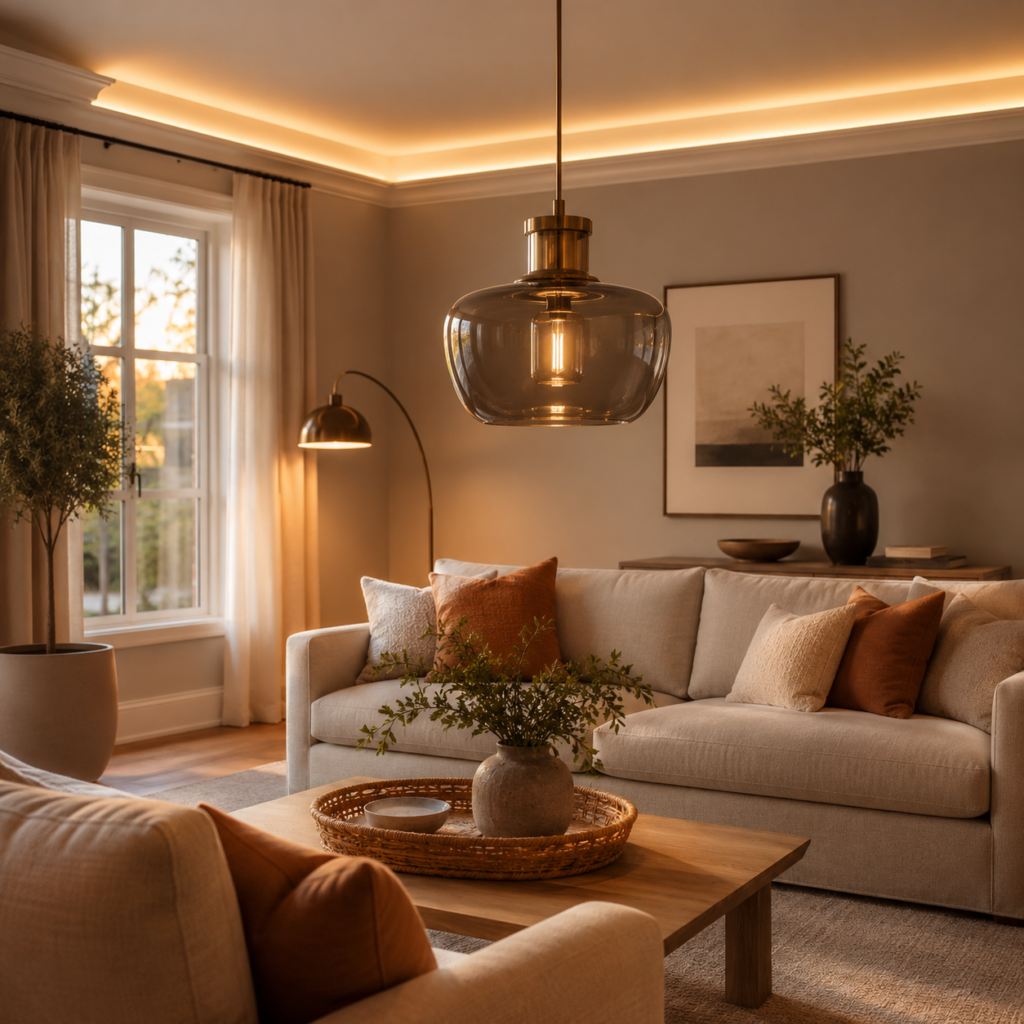
Layered living room lighting — warm pendant over seating area, sculptural floor lamp in corner, cove LED strip along ceiling perimeter. Warm 2700K color temperature. Brushed brass accents.
74%of homeowners cite lighting as the most transformative single change in a renovation
3+independent light sources recommended by designers for any living room
5’7″the optimal center height for any light source in a living space
What Are the Latest Trends in Living Room Lighting for 2026?
The clearest through-line in 2026’s modern lighting ideas for living room design is a deliberate move away from the utilitarian and toward the atmospheric. Designers are specifying fixtures that function as sculptural objects first, light sources second — and the market has followed. Here is what is driving that shift.
Warm Metallics Have Definitively Replaced Cool Chrome
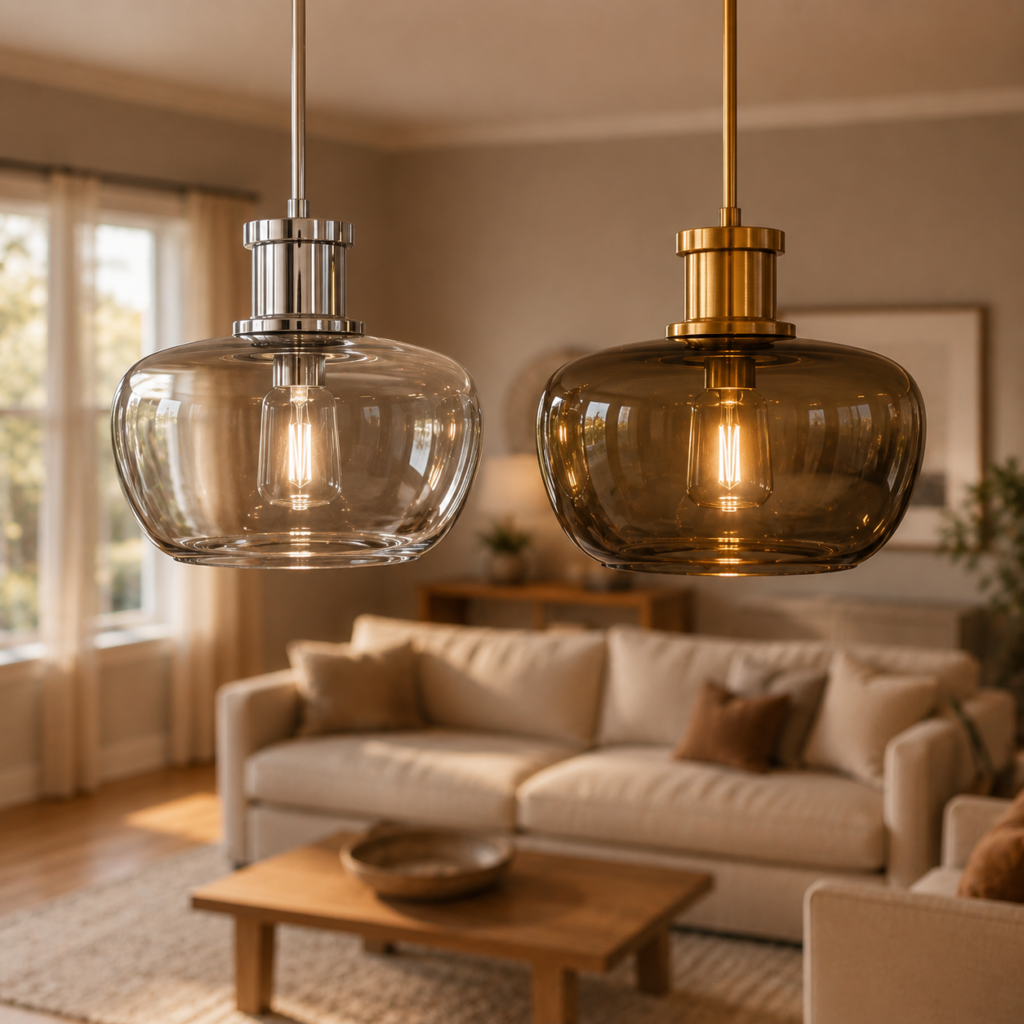
Brushed brass, unlacquered brass, aged bronze, and satin gold are the fixture finishes that interior designers are calling for at every price point. Cool chrome and polished nickel — which dominated living room lighting for the better part of two decades — now reads as corporate. If your current fixtures have a cold, blue-silver cast, that single element may be responsible for more visual dating than any other feature in the room.
Sculptural Floor Lamps as Focal Points
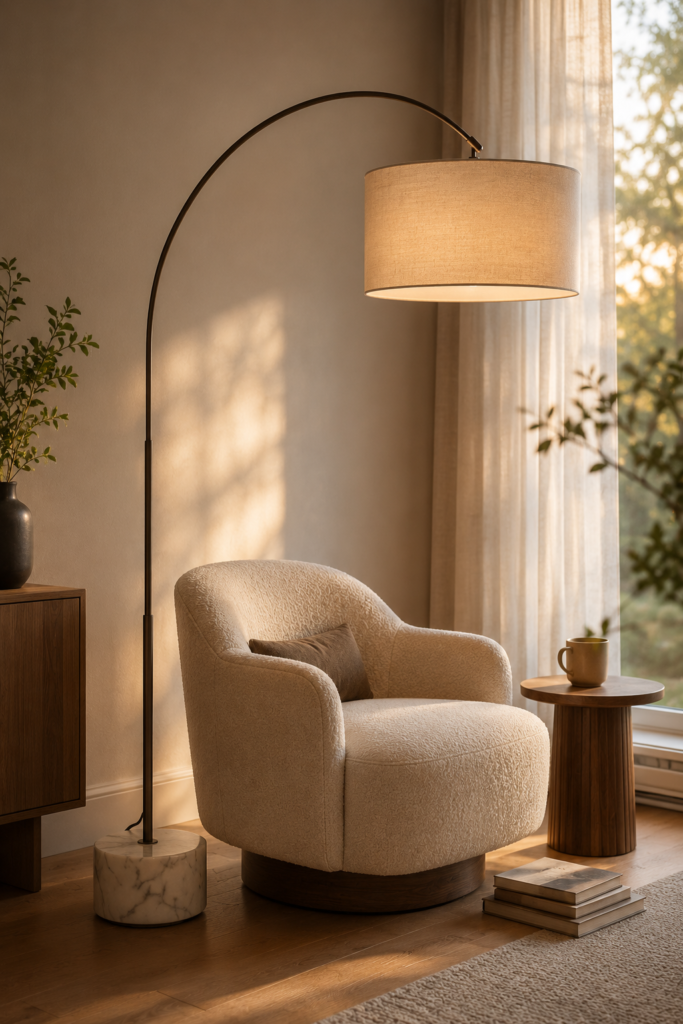
The arc floor lamp has matured from a practical solution to a genuine design statement. In 2026, the most interesting examples feature organic, asymmetric forms — curved steel, hand-blown glass shades, marble or travertine bases. They are positioned not just to read by, but to anchor a seating arrangement with the same intentionality as a statement chair.
Integrated LED Cove and Perimeter Lighting
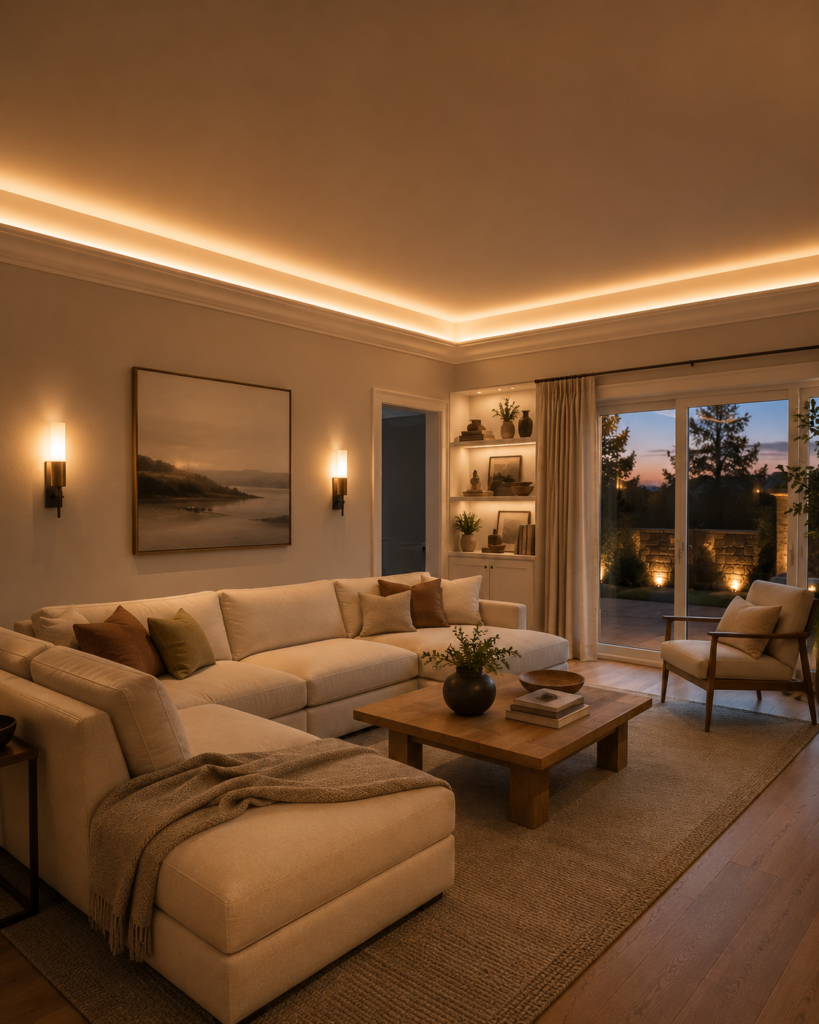
Cove lighting — warm LED strips recessed into crown molding or a dropped ceiling detail — has crossed from the hospitality industry into residential design with real momentum. When properly specified (2700K color temperature, high CRI of 90+, on a dimmer), it adds a layer of ambient warmth that no surface-mounted fixture can replicate. It is also one of the most search-consistent renovation choices homeowners are making right now.
Smoked Glass and Ceramic Shades
After years of transparent clear glass dominance, shaded pendants and sconces with smoked, amber, or ribbed glass are appearing in virtually every 2026 design direction. Terracotta ceramic shades — particularly in matte finishes — are the specific trend that multiple design editors and forecasters have flagged as having multi-year durability rather than flash-in-the-pan appeal.
“The biggest error I see in living rooms is treating lighting as infrastructure rather than design. Every fixture you choose should earn its place aesthetically, not just functionally.”— Widely cited principle among ASID-certified interior designers
What Is the 5’7” Lighting Rule — and Why Does It Matter?
If there is a single technical principle worth understanding before making any lighting decisions, it is the 5’7” rule. The rule is elegantly simple: the center of any light source should sit at approximately 5 feet 7 inches (roughly 170 centimeters) from the floor.
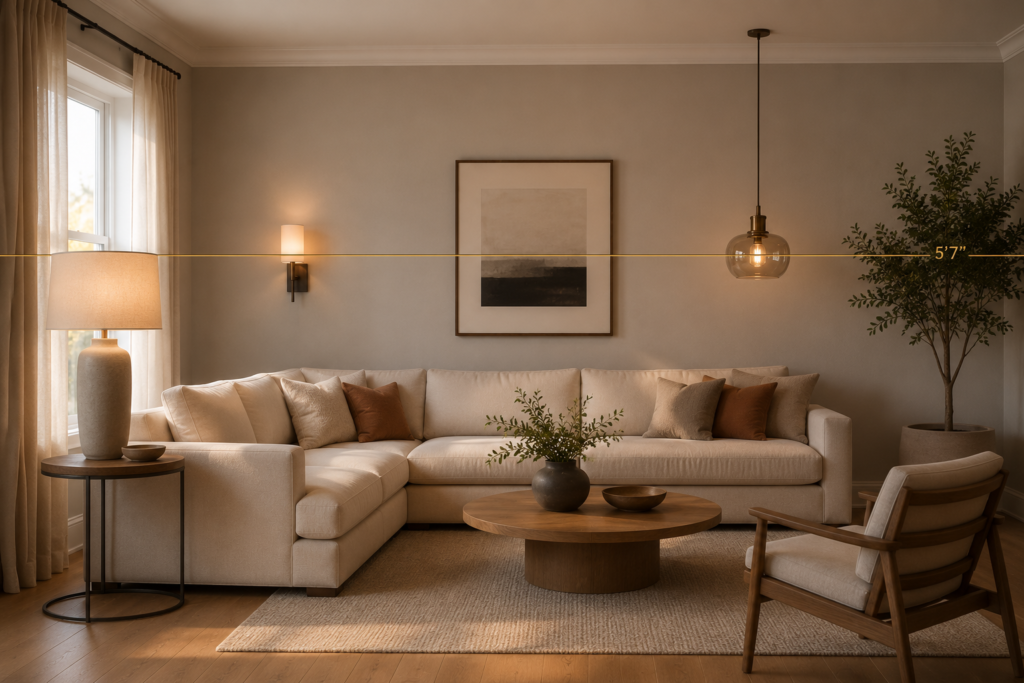
This figure is not arbitrary. It aligns with the average human eye level and represents the height at which light is most flattering, least glare-producing, and most effective at illuminating the vertical plane of a room — walls, faces, artwork — rather than just the floor. Fixtures positioned higher cast downward pools. Fixtures at eye level wrap the room.
In practical application, this means:
- Table lamps: The bottom of the shade should sit at approximately 5’7”, which usually means a lamp total height of 58–64 inches on a standard side table.
- Floor lamps: The shade center should approach 5’7”, making 60–65 inch total heights the professional standard.
- Pendants over seating areas: The bottom of the shade should hang between 5’4” and 5’10” from the floor, adjusted for ceiling height and shade diameter.
- Wall sconces: Center the shade at 5’7” for reading and conversational use; slightly higher (6′) for purely decorative or accent applications.
The 4 C’s of Lighting Design
Color: Specify 2700–3000K for living spaces. This range reproduces warm, natural light. Anything above 3500K skews clinical. Always check CRI (Color Rendering Index) — 90+ is the professional minimum.
Cut: How a fixture directs and controls its light output. Open-bottom shades cast downward pools; drum shades diffuse; uplighters wash ceilings. Match the cut to the layer’s job.
Coverage: No corner of the room should read as a shadow. Map your furniture plan and identify gaps — they almost always need a floor lamp or sconce, not a brighter bulb in the ceiling.
Control: Every circuit should be independently dimmable. A room that cannot be adjusted for different times of day and activities is, by definition, not well-lit.
Other Design Rules Worth Knowing
The rule of three (or “3-5-7 rule”) holds that lighting should operate in at least three distinct layers — ambient, task, and accent — ideally from five to seven individual sources. The 357 decorating rule extends this to proportional groupings: objects arranged in odd numbers of three, five, or seven create more visual dynamism than even pairs, and the same principle applies to lighting clusters.
Illustrated cross-section of a living room showing the three lighting layers: ambient (ceiling), task (floor/table lamp), accent (picture light/shelf strip). Mark the 5’7” height line.
What Are the Lighting Design Trends for 2026?
Beyond the broad directional shifts, several specific trends are shaping modern living room lighting in 2026. The following have been consistently cited across design week coverage, interior design publications, and major trade show exhibitions.
Trending: Ceiling Design as a Design Surface
Ceiling lighting in 2026 is no longer a single recessed can or a centred flush mount. Designers are treating the ceiling as a fifth wall — using cove LED channels, decorative surface-mount pendants in clusters, and plaster ceiling roses as genuine design features. This approach has become one of the most talked-about modern lighting ideas for living room ceilings specifically, driven partly by a broader shift toward maximalism after years of stark minimalism, and partly by improvements in LED strip technology that make integrated ceiling lighting more accessible than ever.
Trending: Mixing Metals Intentionally
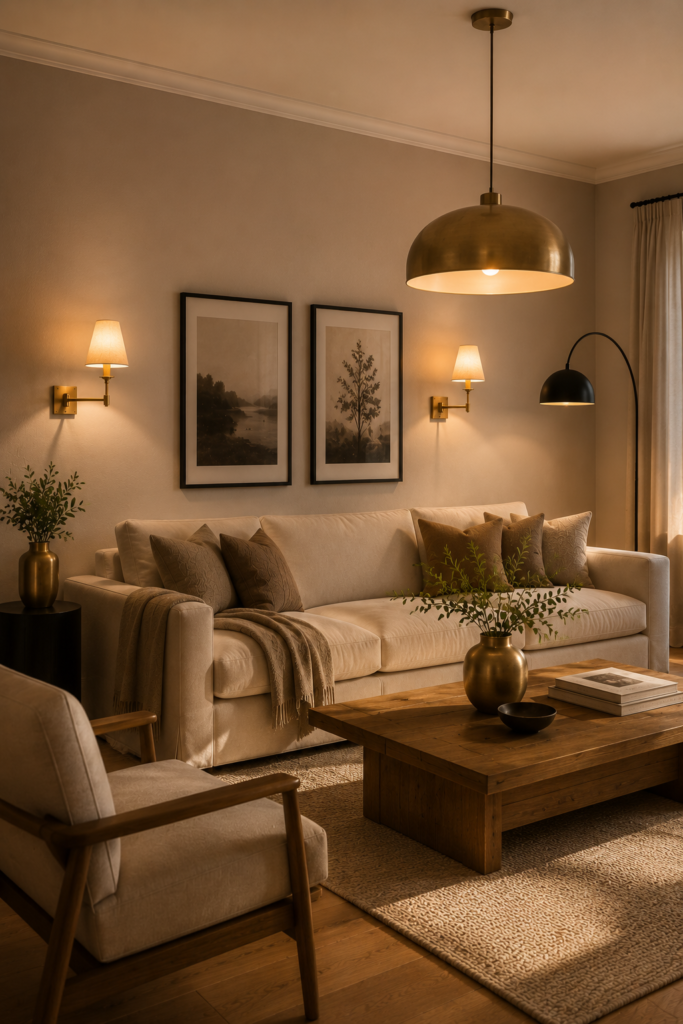
The design orthodoxy that all hardware and fixtures must match is firmly finished. In 2026, the most sophisticated modern lighting ideas for living room interiors mix two or occasionally three metal finishes — typically anchored by a dominant warm tone (brass, bronze) with a secondary contrast (matte black, dark iron) used for smaller elements. The key word is intentional: random mismatching reads chaotic, but a deliberate pairing of brushed brass pendants with matte black floor lamp hardware reads curated and current.
Trending: Biophilic and Natural Material Fixtures
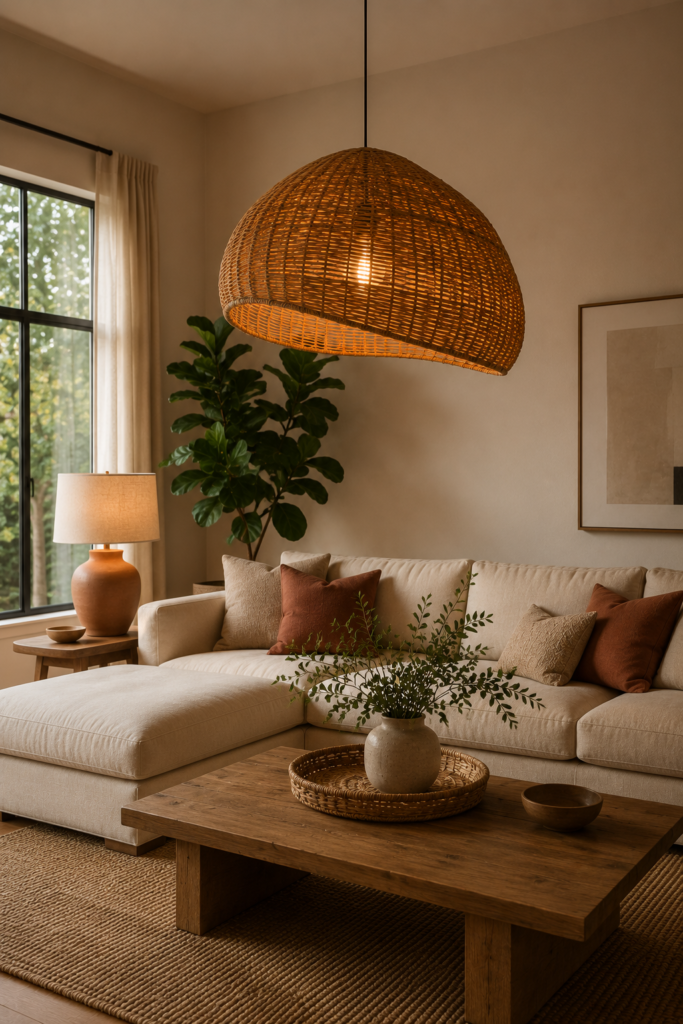
Rattan, woven grass, hand-thrown ceramic, and carved stone light fixtures have grown from a niche aesthetic into a mainstream design category. They bring textural warmth that manufactured materials cannot replicate and age attractively in a way that trendy metallics sometimes do not. If the broader 2026 biophilic interior trend resonates with you, lighting is one of the highest-impact places to express it — and among all the modern lighting ideas for living room spaces trending right now, natural materials are delivering the most lasting results.
What Lighting Trends Should You Avoid in 2026 Renovations?
Knowing what to invest in and knowing what to walk away from are equally important in any renovation. The following are the lighting choices that interior designers are consistently identifying as the most aging elements in living rooms right now.
| What’s Out | Why It Dates the Room | What to Do Instead |
|---|---|---|
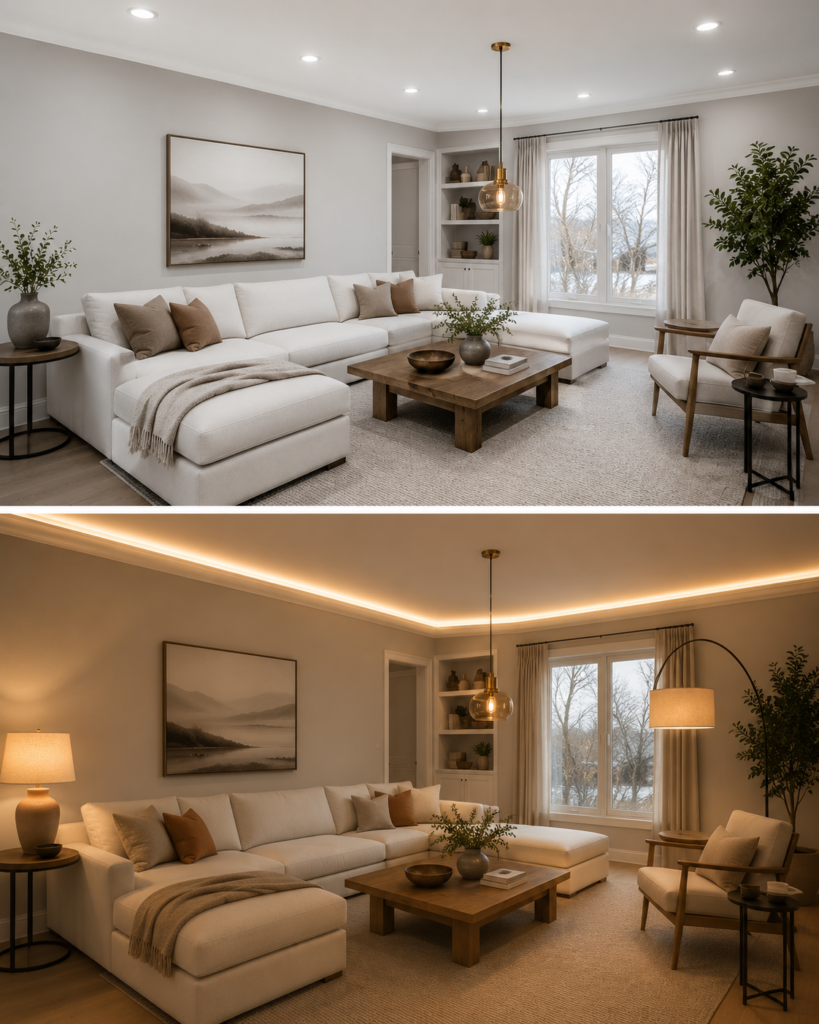
| Recessed can lighting as the only source | Creates a flat, shadow-free “big box store” atmosphere with no depth or warmth | Layer in pendants, floor lamps, and accent lighting; keep cans for task zones only |
| Cool white / daylight LED bulbs (4000K+) | Strips colour from furnishings, flattens skin tones, reads clinical in residential spaces | Specify 2700–2900K throughout; warm white is the professional standard for living rooms |
| Matching fixture sets | Looks catalogue-purchased, lacks the visual interest of a curated approach | Anchor with one dominant fixture family, then add complementary individual pieces |
| Flush-mount centre fixtures in tall rooms | A low-hung fixture in a room with 9+ foot ceilings wastes the vertical space and reads provisional | Use a pendant or semi-flush with appropriate drop for the ceiling height |
| Scale-inappropriate chandeliers | Oversized OR undersized fixtures signal that the room was not designed holistically | Chandelier diameter (in inches) should roughly equal the room’s dimension sum (L+W in feet) |
| Non-dimmable circuits | A room that cannot be tuned for different activities and times of day is functionally incomplete | Install dimmers on every lighting circuit; smart dimming (Lutron, Caséta) adds significant value |
Side-by-side comparison: left shows recessed-only ceiling lighting with cool white (flat, dated); right shows layered warm lighting with pendant and floor lamp (warm, modern, dimensional).
Expert-Recommended Modern Living Room Lighting Fixtures
These categories represent the highest-impact investments across different budget levels. Within each, the design principles above should guide your specific selection: finish, scale, color temperature, and dimmability are non-negotiables.
Sculptural pendant, warm metal finish

- UNIQUE DESIGN:This glass pendant light has an industrial and vintage design, Amber handblown glass dome shade with oil r…
- ADJUSTABLE HEIGHT:This kitchen pendant lighting over island comes with a 47.2 inch length black cord, can easily shorten…
- BULB REQUIREMENTS:This pendant lighting for kitchen island is compatible with LED, CFL, incandescent, and halogen bulbs …
Best for: Seating Areas
Sculptural Pendant (Smoked Glass or Ceramic)
Position over a coffee table or seating group at 5’6”–5’10” from floor. Look for a shade diameter of 12–18″ for standard rooms. Specify brushed brass or aged bronze hardware. Price range: $180–$900.
Arc floor lamp, marble base, linen shade

- Modern White Arc Design for Versatile Decor: This classic arched floor lamp features a sleek curved pole and a minimalis…
- Adjustable Height & Rotating Shade for Targeted Light: Designed for ultimate flexibility, this tall arc floor lamp featu…
- Stable Marble Base & Soft White Linen Shade: Built with a solid 10.24″ wide natural marble base, this lamp offers except…
$56.99
Best for: Reading Corners
Arc Floor Lamp (Marble or Stone Base)
The weighted marble base provides stability for the long arc. Linen or lightly smoked glass shades at 60–65” shade height. Dimmable inline switch essential. Price range: $250–$1,200.
LED cove strip, warm white, installed in crown

- WHAT’S IN THE BOX: Includes one 3-meter (10FT) PHILIPS Hue Solo lightstrip base kit with one plug to create extraordinar…
- BRILLIANT LIGHT: Experience 1700 lumens of superior light with the LED lightstrip, comfortable to touch with a premium s…
- TRUE COLORS AND WHITES: We believe RGB LEDs should never be blended to create white light, that’s why our strip lights o…
$59.95
Best for: Ambient Layer
LED Cove Strip (2700K, CRI 90+)
Tunable warm white strips installed in crown molding detail or a shallow cove channel. Must be paired with a quality dimmer. Specify minimum 90 CRI — lower-rated strips wash out wall colours. Price range: $4–$12/ft installed.
Wall sconce pair, brass arm, fabric shade
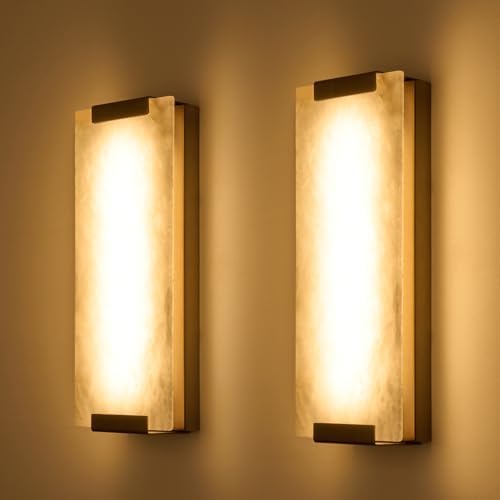
- 【Marble Wall Sconce】:Discover the elegance of our Modern Nordic Wall Lamp, featuring an aluminum base that’s resistant t…
- 【Unique Work Of Art】:Each wall light is cut from natural ore into trapezoidal shapes, hand polished to preserve natural …
- 【Wide Application】:This elegant indoor wall mounted light is suitable for your hallway, dining room, living room, bedroo…
$166.69
Best for: Accent + Task
Swing-Arm Wall Sconce (Hardwired Pair)
Flanking a sofa wall or fireplace at 5’6” center height. Hardwired versions read more intentional than plug-in; brass swing arm with fabric shade is the 2026 default. Price range: $180–$650 per fixture.
Table lamp, ceramic base, linen drum shade

- Glass
- Mid Century Modern Lamp— Its minimalist design with a cute egg tart glass lampshade and a solid chrome base to enhance…
- Aesthetic Hand-Blown Bedside Lamp— Glivpny modern table lamp combines Silver metal lamp pole with unique hand-blown la…
$37.99
Best for: Side Tables
Table Lamp (Ceramic or Textured Base)
Hand-thrown ceramic or plaster bases in warm neutrals. Drum or empire shades in linen or cotton. Total height 28–32” to place shade bottom at eye level when seated. Price range: $90–$500.
Smart dimmer switch, Lutron Caséta

- App-Guided Install: The Kasa or Tapo app guides you through step-by-step setup. Requires neutral wiring and 2.4 GHz Wi-F…
- 0%-100% Dimming with Scheduling: Adjust brightness via the button or Kasa App. Single-click for instant light, double-cl…
- Voice Control: Enjoy the hands-free convenience of controlling the lights in your home with your voice via Amazon Alexa …
$55.99
Best for: Control Layer
Smart Dimmer System (Lutron Caséta or Similar)
Often the highest-ROI lighting investment. Individual scene programming for morning, evening, and entertaining eliminates the need to adjust individual fixtures. Works with most existing LED fixtures. Price range: $60–$160 per switch.
Bringing It All Together: Your Modern Lighting Plan
The most important shift in modern lighting ideas for living room design is conceptual: stop thinking about lighting fixtures and start thinking about lighting layers. A room that has three independently dimmable layers — ambient, task, and accent — at the right color temperature, with fixtures that are correctly scaled and positioned at eye level, will outperform a room with expensive furniture and bad lighting every single time.
Work through the 4 C’s before making any purchase. Verify the 5’7” rule against your specific furniture plan. Replace any cool white bulbs this week — that single change costs almost nothing and is immediately noticeable. Then build the layers in order: ambient first, task second, accent third.
The rooms that look professionally designed are not always the ones with the most expensive fixtures. They are the ones where someone understood how light actually behaves in a space — and designed accordingly. That understanding is exactly what the best modern lighting ideas for living room spaces are built on.
Frequently Asked Questions: Modern Lighting Ideas for Living Room
What are the best modern lighting ideas for a living room in 2026?
The best modern lighting ideas for living rooms in 2026 center on layered lighting: combining ambient ceiling fixtures, directional task lighting, and accent layers. Warm-toned LED pendants, sculptural arc floor lamps, and integrated LED cove lighting are the standout choices this year. Avoid single-source overhead lighting — it is the most common mistake designers see, and the most correctable. What is the 5’7” lighting rule?
The 5’7” lighting rule states that the center of any light source — whether a pendant, sconce, or lamp shade — should sit at approximately 5 feet 7 inches (170 cm) from the floor. This height aligns with the average human eye level, preventing glare and creating the most flattering, comfortable illumination in a living space. It applies to table lamps, floor lamps, wall sconces, and pendants over seating areas .What color light fixtures are in style in 2026?
Brushed brass, matte black, and aged bronze are the dominant fixture finishes for 2026. Warm metallic tones are replacing the cool chrome and polished nickel that dominated the previous decade. For shades and diffusers, terracotta-tinted ceramics, smoked glass, and woven natural materials (rattan, grass cloth) are gaining significant traction among interior designers at all price points. What lighting trends should I avoid in 2026 renovations?
Avoid: (1) Recessed can lighting as the sole light source — it creates a flat, clinical atmosphere; (2) Cool white or blue-toned LED bulbs in living spaces — specify 2700–2900K; (3) Matching fixture sets — mixing metals and styles reads far more sophisticated; (4) Flush-mount fixtures in rooms with adequate ceiling height; (5) Non-dimmable circuits — every living room layer should be independently adjustable. What are the 4 C’s of lighting design?
The 4 C’s are: Color (the temperature and CRI of your light source — target 2700K and CRI 90+), Cut (how the fixture directs and controls light spread), Coverage (ensuring no dark zones or harsh shadows exist in the room), and Control (the ability to dim, zone, and adjust lighting independently for different activities and moods). Applying all four consistently is what separates a well-lit room from a merely illuminated one .How many lamps should you have in a living room?
A well-lit living room typically needs a minimum of three independent light sources operating in layers: one ambient source (ceiling), one or two task sources (floor or table lamps), and at least one accent source (picture light, shelf lighting, or LED strip). For rooms over 300 sq ft, five to seven sources across three layers is the professional standard. More important than quantity is ensuring each source is independently dimmable. What is the most popular color of light for a living room?
Warm white at 2700–2900K is the most widely recommended and used color temperature for living rooms. This range closely mimics the warmth of incandescent and halogen light, enhances wood tones and textile colors, and creates the relaxed, residential atmosphere that living spaces are designed for. Avoid anything labeled “cool white,” “daylight,” or above 3500K — these work well in kitchens and offices but age poorly in living spaces. Why does Gen Z avoid overhead lighting?
The preference for ambient, layered, and lamp-based lighting over overhead fixtures is driven by a genuine aesthetic and functional preference: overhead ceiling lights at full power eliminate shadows, flatten spaces visually, and create an atmosphere associated with workplaces, hospitals, and retail environments. Research and design commentary consistently show that younger homeowners prioritize atmospheric, warm, multi-source lighting — a preference that aligns precisely with professional design principles.