Make Your Home Smarter, One Step at a Time


Table of Contents
Summer energy saving tips are something every homeowner desperately searches for the moment that first shocking July electricity bill arrives. You stare at the number longer than you should. You promise yourself things will be different next month. And then August shows up — and somehow the bill is worse.
Here is what nobody tells you: the problem is almost never what you think it is. Most households hemorrhage money through a small cluster of completely fixable habits — habits that have nothing to do with leaving lights on or forgetting to unplug your phone charger.
This guide walks you through the most effective summer energy saving tips that energy professionals actually recommend — organized so you can act on them today, this week, and throughout the season. Whether you are renting a studio apartment or managing a four-bedroom house, every tip here is practical, affordable, and built around how real homes actually work.
Settings saved.
Best Summer Energy Saving Tips to Start With Today
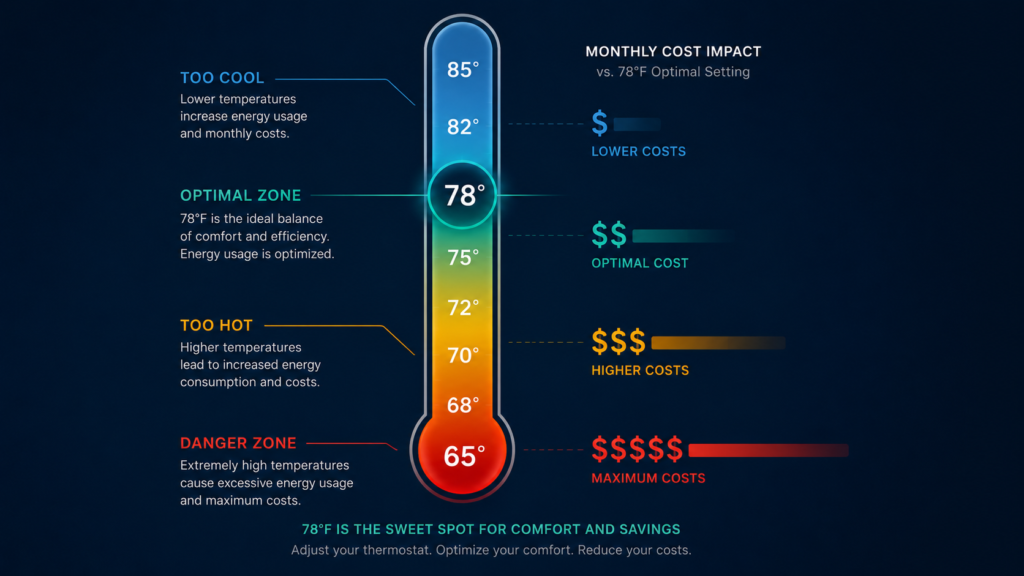
Ask any home energy auditor where to start, and the answer is always the same: your air conditioner. Walk through your home on a July afternoon and ask yourself what is working hardest. It is almost certainly your cooling system — and it dominates your electricity bill more than every other appliance in your house combined. Every genuinely useful summer energy saving tip ultimately circles back to how intelligently you manage that one system.
Beyond the AC, these habits build on each other quickly:
Build a smarter thermostat schedule. Upper 70s when you are home and moving around, low 80s when you are away. Nudging that number up by even a single degree quietly trims your cooling costs — and those small reductions stack into real dollars by the time September arrives. Over a full summer, the difference between a careless thermostat and a programmed one can be substantial.
Try the 30-minute pre-cooling rule. Do not walk through the door into a blast of cold air you paid to create from scratch. Instead, set your smart thermostat to begin cooling 30 minutes before you arrive home. You get the comfort without the waste of cooling an empty house all afternoon.
Move high-heat chores to after dark. Your oven, clothes dryer, and dishwasher all release heat into your home while they run. Scheduling those tasks after 9 PM does two things at once: it keeps your home naturally cooler in the evening, and on time-of-use billing plans, it often costs less per kilowatt-hour as well.
Intercept the sun before it heats your rooms. Close blinds on south- and west-facing windows before noon. Research on window coverings consistently shows that properly managed window shading can cut unwanted solar heat gain dramatically — and a room that never heats up in the first place is a room your AC never has to rescue.
Use early morning air while it is still free. Opening windows on opposite sides of your home between 5 and 8 AM pulls cool outdoor air through naturally. This cross-ventilation technique costs nothing, requires no hardware, and can meaningfully drop indoor temperatures before the heat of the day builds up outside.
AC Settings: The Summer Energy Saving Tip Most People Get Wrong
This is the question that most directly moves the needle on your bill, and there is a clear, evidence-backed answer to it.
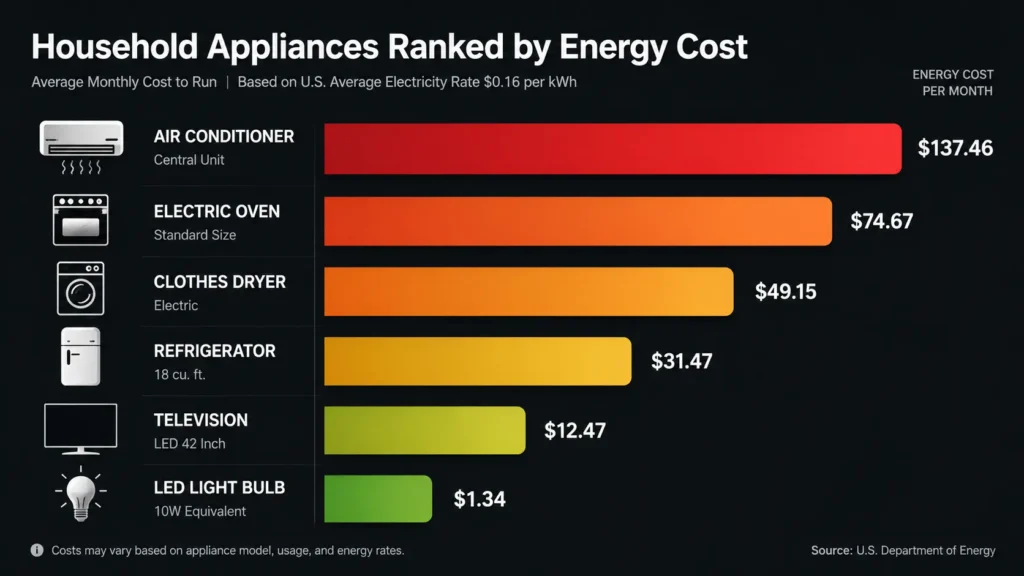
Energy experts consistently recommend the upper 70s as the sweet spot for home cooling during summer — comfortable enough for most people living normal lives, efficient enough to prevent your bill from climbing into uncomfortable territory. Most households set their AC far lower than this, and they pay for that gap every single month without realizing it.
More Summer Energy Saving Tips: What About 65°F or 68°F?
Running your AC at 65 or 68°F in summer means asking your system to work at near-maximum capacity for most of the day. For the average healthy adult, that temperature is a personal preference — not something the body requires — and it carries a cost that compounds over weeks and months. If someone in your household has a medical condition that genuinely requires cooler indoor temperatures, that conversation belongs with their doctor, not their thermostat app.
The Fan Trick: A Summer Energy Saving Tip Worth Four Free Degrees
Pairing a ceiling fan with your AC is one of those summer energy saving tips that sounds too simple to matter — until you understand the physics behind it. Moving air pulls heat away from your skin faster than still air does. A room sitting at 78°F on the thermostat can feel genuinely comfortable the moment a ceiling fan starts running, because your body is shedding heat more efficiently. That perception gap gives you four degrees of free cooling without touching the thermostat at all.
One important detail: this only works when someone is actually in the room. A fan running in an empty bedroom is not cooling anything — it is just adding to your bill. Make turning off fans when you leave a room as automatic as turning off lights.
What If the Outdoor Temperature Hits 100°F?
Once outdoor temperatures push past the mid-90s, the conversation stops being about efficiency and becomes about safety. Keeping your home reasonably cool during an extreme heat event is a health decision — particularly for elderly family members, young children, and pets. On those days, run the AC without guilt. The efficiency conversation can resume when the weather breaks.
What Kills Your Bill — And Why Most Summer Energy Saving Tips Skip This
If you surveyed a hundred homeowners about what drives their summer electricity bill, most would say lighting. Almost all of them would be wrong.
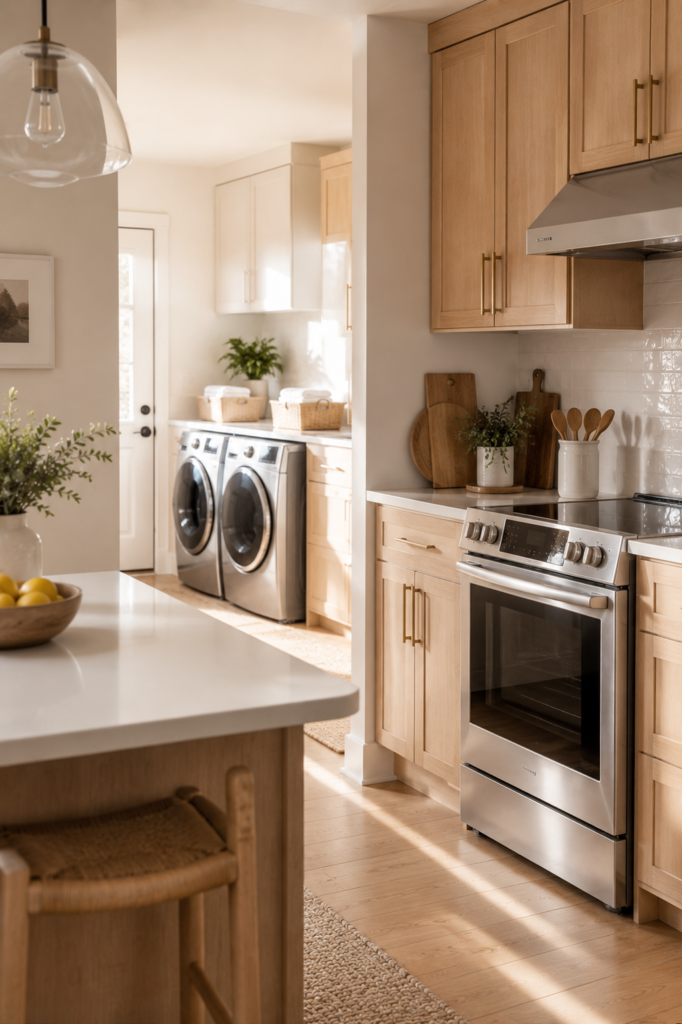
Here is what the numbers actually look like:
| Appliance | Typical Monthly Cost | Impact Level |
|---|---|---|
| Central air conditioning | Largest single expense by far | High |
| Electric oven (daily use) | Significant, especially in summer | High |
| Clothes dryer | Comparable to oven per cycle | High |
| Older refrigerator | Steady drain, month after month | Medium |
| Entertainment system standby | Invisible but consistent | Medium |
| LED lighting (whole home) | Surprisingly small | Low |
Estimates based on typical U.S. household usage patterns
Here is the comparison that tends to surprise people: your oven running for a couple of hours generates roughly the same electricity cost as leaving every LED light in a medium-sized home burning all day long. That is why swapping your oven for a microwave, air fryer, or outdoor grill during summer months is not just a cooking convenience — it is a genuinely smart financial decision.
The 50/50 Rule: A Summer Energy Saving Tip Nobody Talks About
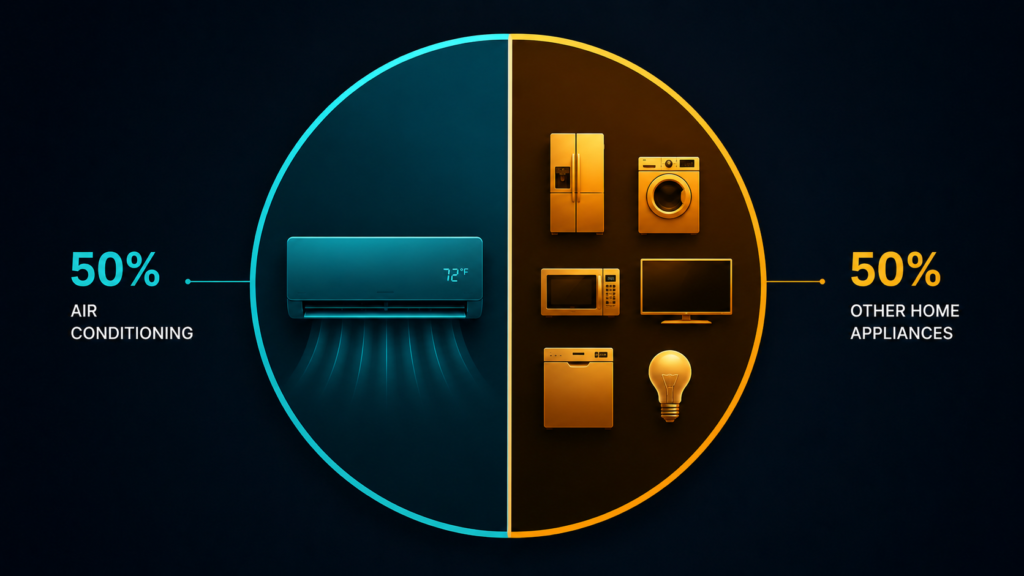
Think of your home’s energy use in two equal buckets. One bucket is entirely your heating and cooling system. The other bucket holds everything else — every appliance, every light, every device, every charger. This means a meaningful reduction in your cooling costs produces a noticeable reduction in your total bill, while heroic efforts to reduce everything else might barely move the needle. The math points in one direction: thermostat adjustments first, everything else second.
Summer Energy Saving Tip: Which Appliances Should You Unplug?
Your devices do not fully sleep when you think they do. That faint glow on your cable box, the clock display on your microwave, the gaming console waiting for a voice command — each one is quietly drawing power around the clock. Across a full household, those individual trickles add up to a surprisingly large monthly total that most people never notice because it never announces itself.
The biggest offenders are gaming consoles, cable boxes and DVRs, older television sets, desktop computers left in sleep mode, and second refrigerators in garages. A smart power strip with built-in scheduling handles all of these automatically — you set it once and it manages the rest.
Room-by-Room Summer Energy Saving Tips That Actually Work
Top Summer Energy Saving Tip: Fix Your Thermostat Schedule First
A programmed temperature schedule is the single highest-return action most homeowners never bother to set up. It costs nothing, takes about ten minutes to configure, and then silently saves money every day without any further effort from you. A schedule that works for most households:
- Morning through afternoon: Comfortable but not cold
- Evening hours away from home: Relaxed up significantly
- Sleeping hours: Brought back down for comfort
Set it once. Let it run. The savings compound across every single day of the season.
Summer Energy Saving Tip: Fans vs AC — Which One Actually Costs Less?
A ceiling fan draws a tiny fraction of the electricity that central AC consumes. The honest answer, though, is that framing this as an either-or choice is the wrong approach entirely. Fans and AC work best as partners, not competitors. Running fans allows you to keep your thermostat set higher while maintaining the same perceived comfort level — and that higher thermostat setting is where the real savings come from.
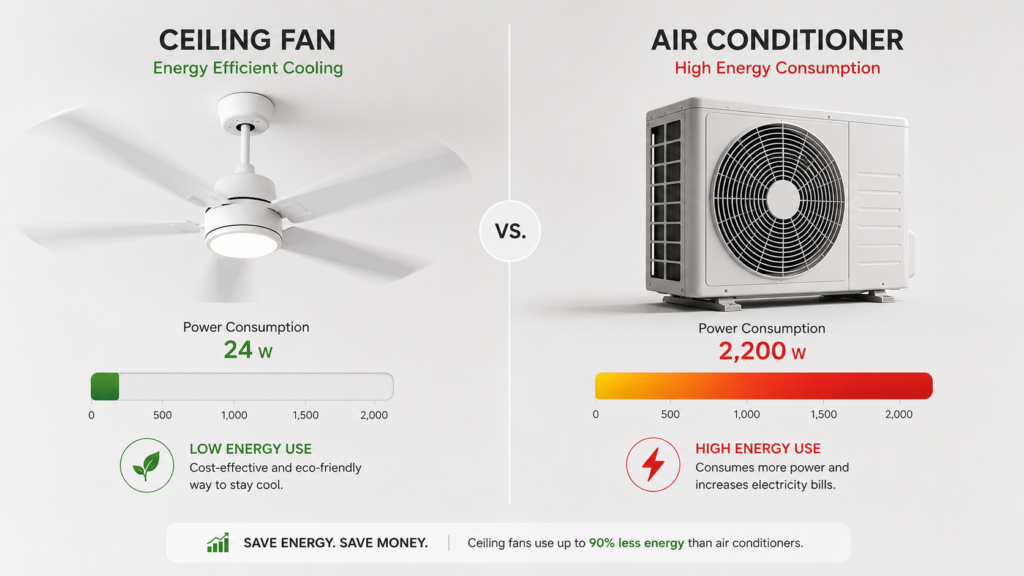
Relying on fans alone on a genuinely hot afternoon does not cool your home — it circulates warm air through a warm space. Use fans to extend the comfort range of your AC, not to replace it.
Does Switching Off Lights Make a Real Difference?
With modern LED bulbs throughout your home, the electricity consumed by lighting is genuinely modest. Where lighting choices actually matter is the heat that older bulb types produce. Incandescent bulbs convert a significant portion of their electricity into heat rather than light — heat that your AC then has to work against. If any incandescent bulbs remain in your home, replacing them pays off not through lighting savings but through reduced cooling demand.

- PRIVACY PROTECTION*: Sensi won’t sell your personal information to third parties
- EASY DIY INSTALLATION: Use the built-in level and step-by-step app instructions for a quick installation. Works with HVA…
- SAVE ABOUT 23% ON HVAC ENERGY*: The ENERGY STAR-certified Sensi smart thermostat can help you save energy with features …
$79.99
Does Unplugging the Washer and Dryer Actually Help?
The standby power draw from washers and dryers is minimal — physically unplugging them saves almost nothing. The genuine opportunity is in timing. A dryer running on a hot afternoon adds heat to your home at exactly the wrong moment, forcing your AC to compensate. Shifting laundry to after 9 PM sidesteps that problem entirely, and households on time-of-use billing plans often pay less per kilowatt-hour during those off-peak hours as well.
Summer Energy Saving Tips: Frequently Asked Questions
Is it cheaper to run your AC all day or turn it off and on?
For most homes, keeping the system running at a moderately raised temperature while you are away outperforms full shutdown. Bringing a very hot home back down to a comfortable temperature requires a sustained burst of high-energy operation that typically costs more than simply maintaining a warmer-but-stable baseline throughout the day. Homes with excellent insulation that will be empty for many hours are the exception where full shutdown can make sense.
Does keeping the AC at a higher temperature really save money?
Think about what this looks like in concrete terms. A household that adjusts its cooling habits and trims its summer electricity spend by even a modest percentage is looking at real money returned across a three-month season — with zero hardware purchased and zero installation required. Just a number on a screen moved a few degrees in the right direction.
Does leaving the TV running increase my electric bill noticeably?
A modern flat-screen television consumes a modest amount of electricity while playing. The more significant drain is the surrounding ecosystem — the cable box that never truly powers down, the sound bar in permanent standby, the gaming console listening for activation commands at all hours. Those devices draw power continuously, and their combined monthly cost is more than most people would expect if they measured it.
What are the five household items quietly running up your energy bill?
The consistent culprits across most homes: a refrigerator that predates current efficiency standards and works twice as hard as a modern replacement would; cable and streaming boxes that never reach a true off state; desktop computers left in sleep mode overnight; water heaters factory-set higher than any household actually needs for comfortable hot water; and secondary freezers or refrigerators operating in hot, uninsulated garage spaces where they struggle constantly against the ambient heat.
How do you stay genuinely comfortable in summer without air conditioning?
Early morning cross-ventilation before outdoor heat builds, blackout or insulating curtains on sun-facing windows throughout the day, ceiling fans running at full speed in occupied rooms, and cold water applied to pulse points during peak heat hours all provide meaningful relief. A single window unit or portable AC in the room where you sleep at night is often the most cost-effective approach for households looking to minimize whole-home cooling costs while preserving actual sleep quality. When outdoor heat becomes extreme and sustained, especially for vulnerable household members, mechanical cooling shifts from a comfort question to a safety one.

- Control Your Appliances and Devices: Control lights, fans, lamps, humidifiers, and any other appliances or electronics t…
- Monitor Your Home Energy Like a Pro: Emporia smart plugs let you stay on top of energy used by your devices and applianc…
- Smart Scheduling for Maximum Control: With built in on/off scheduling capability, use your smart plugs to automatically …
$34.99
Trusted External Resources
The following authoritative sources informed the research and recommendations throughout this article:
- U.S. Department of Energy — Home Cooling Tips
- Energy Star — Heating and Cooling Guidance
- U.S. Energy Information Administration — Residential Energy Use
- Natural Resources Defense Council — Wasted Energy at Home
- Consumer Reports — Air Conditioner Guide
The Bottom Line on Summer Energy Saving Tips

The most powerful summer energy saving tips share a common thread: they work with how your home actually behaves rather than against it. No extreme sacrifices. No expensive overhauls. Just a clearer understanding of where your energy actually goes — and a few deliberate adjustments that compound quietly across an entire season.
Start with your thermostat schedule. Pair your AC with ceiling fans to extend its comfort range. Push high-heat appliances to the evening hours. Spend five minutes checking whether your utility offers time-of-use pricing — that single discovery can outperform a dozen other changes combined.
Smart home technology — energy monitoring plugs, programmable thermostats, smart power strips — earns its place in a genuinely efficient home. But it works best on top of good habits, not as a substitute for them. Understand your home’s patterns first. Then let the technology help you maintain and optimize what you have already built.
Have a specific appliance you are puzzling over, or a room in your home that always seems to run warmer than everywhere else? Leave it in the comments below — we read every one and love working through the specific cases.
Affiliate disclosure: TechNest Decor may earn a small commission from qualifying purchases made through links in this article, at no additional cost to you. We only recommend products we have independently researched and believe provide genuine value to our readers. Usage estimates reflect typical U.S. household patterns and will vary based on your specific home, climate, and utility provider.