Make Your Home Smarter, One Step at a Time
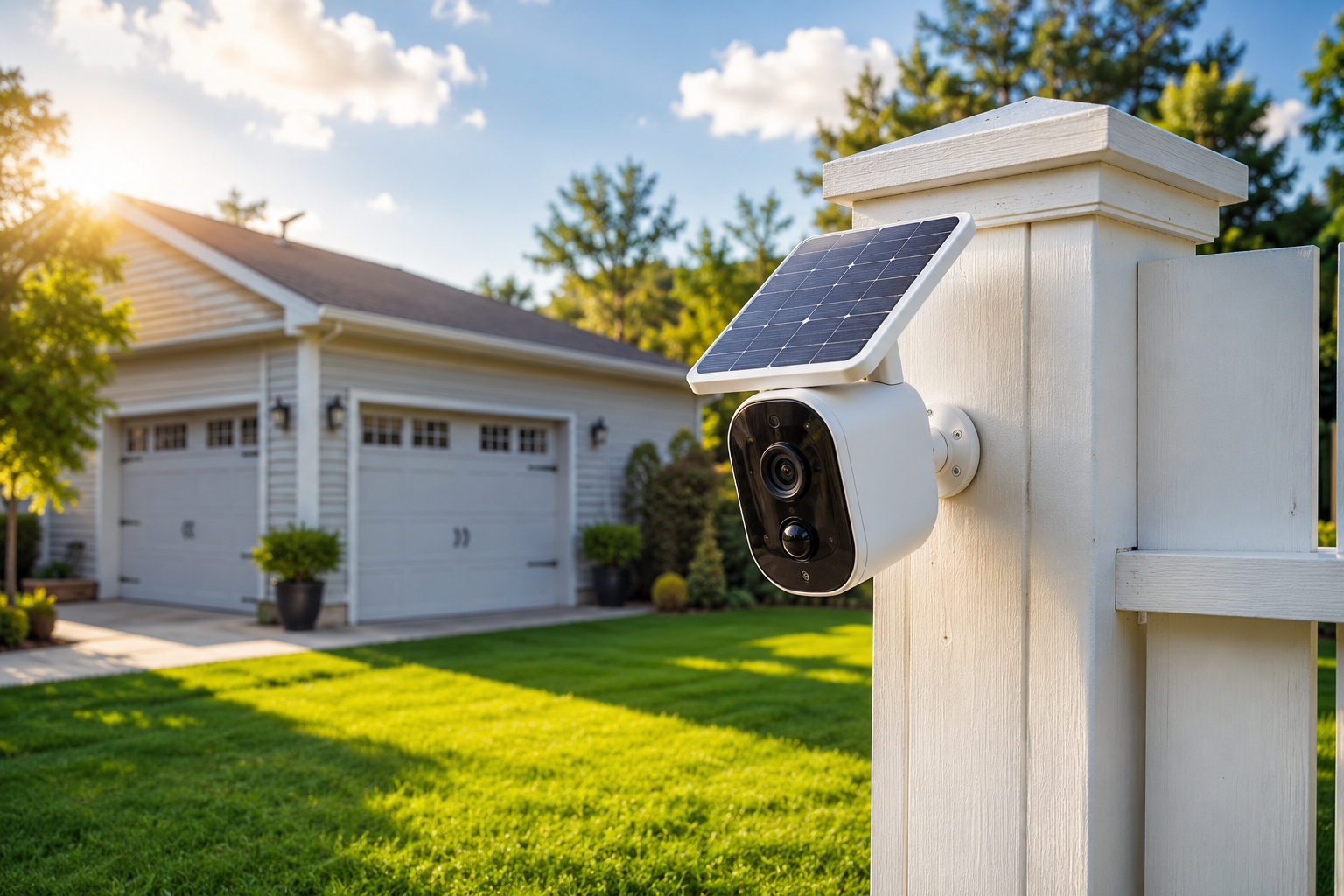
Table of Contents
Introduction
Imagine waking up one morning to find your Wi-Fi is down — and your cloud-based security camera recorded absolutely nothing all night. That’s not just frustrating. That’s a real security gap.
That’s exactly why best solar powered security cameras with local storage have become one of the smartest investments in home security today. They run on free sunlight, store footage directly on a memory card or hard drive, and keep working even when the internet goes out. No monthly fees. No privacy concerns with cloud servers. Just 24/7 protection on your terms.
In this guide, I’ll walk you through everything you need to know about the best solar powered security cameras with local storage — from top camera picks and must-have features to common mistakes buyers make and expert tips to get the most out of your setup.
Settings saved.

- No Subscription Required with aosuBase: All recordings will be encrypted and stored in aosuBase without subscription or …
- New Experience From AOSU: 1. Cross-Camera Tracking* Automatically relate videos of same period events for easy reviews. …
- Solar Powered, Once Install and Works Forever: Built-in solar panel keeps the battery charged, 3 hours of sunlight daily…
$299.98
Why Choose a Solar Powered Security Camera With Local Storage?
Before diving into specific models, let’s talk about why this combination — solar power + local storage — is genuinely superior for many homeowners.
No Monthly Subscription Fees
Cloud storage plans can cost anywhere from $3 to $30 per month, per camera. Over five years, that’s potentially hundreds of dollars per device. With local storage, you pay once for a memory card or NVR (network video recorder) and you’re done.
Works Without Internet
If your internet goes down — whether due to a storm, outage, or even a deliberate cut by an intruder — cloud cameras go dark. A solar powered camera with local storage keeps recording regardless. The footage stays right on the device.
Better Privacy Control
Your footage never leaves your property unless you choose to share it. No third-party servers. No data breaches. No company policy changes that suddenly lock your recordings behind a paywall.
Zero Wiring Required
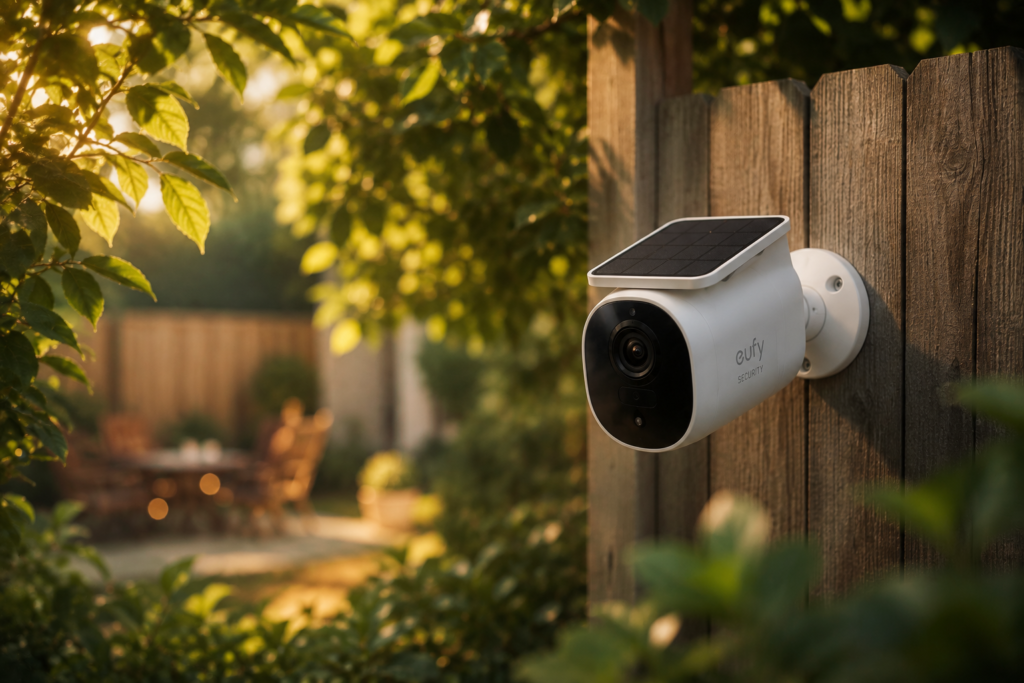
Solar-powered cameras eliminate the need for electrical wiring. You can mount them virtually anywhere — a barn, a detached garage, a fence post a hundred feet from your house — as long as there’s sunlight.
Key Features to Look for in Solar Powered Security Cameras With Local Storage
Not all cameras are created equal. Here’s what separates a solid buy from a regrettable one:
1. Solar Panel Quality and Battery Capacity
Look for cameras with at least a 2,000mAh to 6,000mAh battery. The solar panel should be large enough to sustain the battery in partial sunlight conditions. Some cameras include a dual solar panel setup for faster charging.
2. Local Storage Options
The best cameras support:
- MicroSD card slots (look for Class 10 / U3 speed rating, up to 256GB)
- NAS (Network Attached Storage) compatibility
- Local NVR/DVR integration for multi-camera setups
Avoid cameras that only offer cloud storage as the primary option — that defeats the entire purpose.
3. Video Resolution
1080p Full HD is the minimum you should consider. Many modern cameras now offer 2K or 4MP resolution, which makes a real difference when trying to read a license plate or identify a face.
4. Night Vision
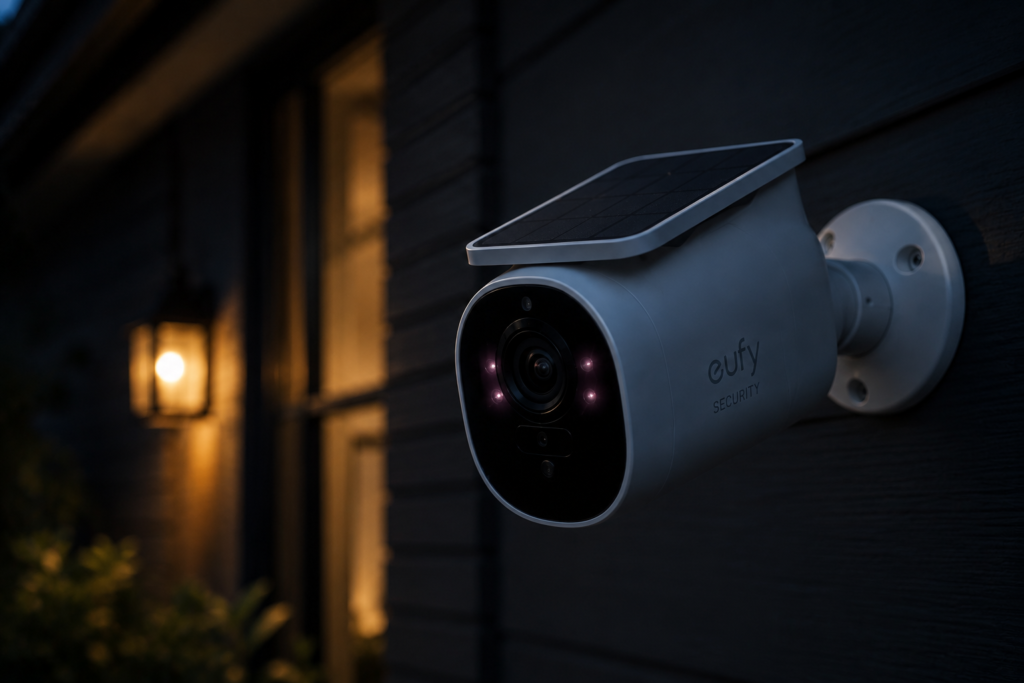
Look for color night vision (uses ambient light to produce color footage) or infrared night vision with at least a 30-foot range. Starlight sensors are even better for low-light environments.
5. Motion Detection and AI Alerts
Basic PIR motion detection works, but cameras with AI-powered person, vehicle, and animal detection dramatically reduce false alerts. You don’t want your phone buzzing every time a leaf blows past.
6. Weather Resistance
Your camera will live outdoors — it needs to handle it. Look for an IP65 or IP66 rating as a minimum. If you’re in a region with extreme weather, IP67 or IP68 is even better.
7. Two-Way Audio
A built-in microphone and speaker let you communicate through the camera — useful for greeting delivery drivers or warning off would-be intruders.
Best Solar Powered Security Cameras With Local Storage (2026 Picks)
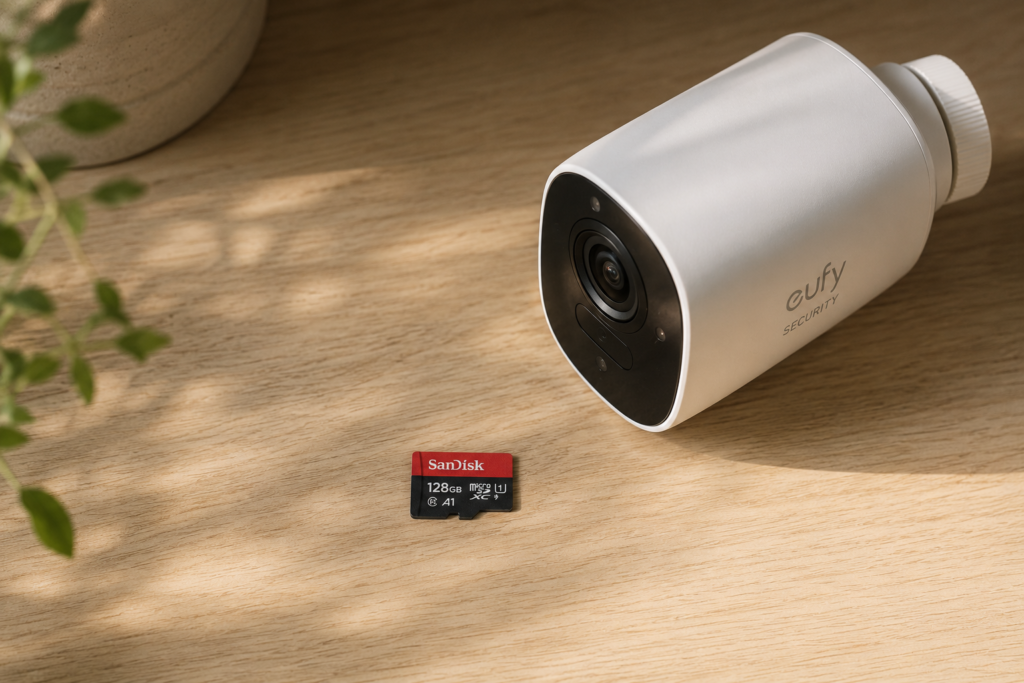
Here’s a curated breakdown of cameras that genuinely deliver on the solar + local storage promise:
1. Reolink Argus 3 Pro
Best Overall for Most Homeowners
The Reolink Argus 3 Pro hits an impressive sweet spot between performance and price. It offers 2K resolution, color night vision, a built-in solar panel slot, and supports up to a 128GB microSD card for local storage.
What sets it apart is its smart detection — it can distinguish between people, vehicles, and pets, cutting down on junk alerts significantly.
- Resolution: 2K (5MP)
- Storage: MicroSD up to 128GB
- Battery: 5,200mAh
- Weather rating: IP65
- Solar panel: Included or sold separately
Personal take: I’ve seen this camera handle consecutive cloudy days in the Pacific Northwest and still maintain charge. The solar panel is small but surprisingly efficient.
2. Eufy SoloCam S340 (Solar)
Best for Long-Range Detection
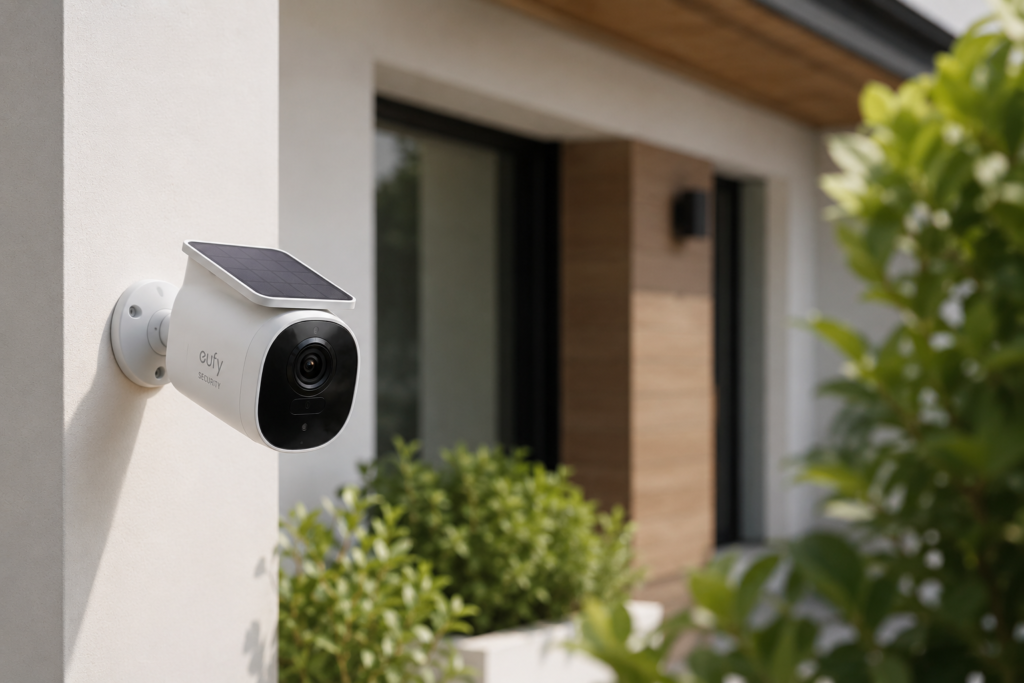
Eufy’s SoloCam S340 features a 360° pan and 90° tilt, dual-lens system, and a built-in microSD slot for local storage up to 128GB. It requires no hub and handles its own processing locally — no cloud required by default.
The integrated solar panel means zero maintenance once installed. Eufy’s HomeBase also supports local NVR-style recording if you’re building a larger system.
- Resolution: 3K dual-lens
- Storage: MicroSD up to 128GB (no hub required)
- Weather rating: IP65
- Notable: Pan/tilt with smart tracking
3. Reolink Go Plus (4G LTE + Solar)
Best for Remote Locations With No Wi-Fi
This one is for the off-grid crowd. The Reolink Go Plus works over 4G LTE, meaning it doesn’t need Wi-Fi at all. Combined with a solar panel and microSD storage, it’s the ideal camera for remote cabins, farms, construction sites, or rural driveways.
- Resolution: 2K
- Connectivity: 4G LTE (no Wi-Fi needed)
- Storage: MicroSD up to 128GB
- Solar panel: Compatible with Reolink solar panel
4. Annke C800 (Wired Solar Hybrid)
Best for Large Properties
If you want solar-charged cameras that also integrate into a wired NVR system for bulk local storage, the Annke C800 series is worth considering. It offers 4K resolution and PoE compatibility, with the solar panel extending battery life in areas where running power is difficult.
- Resolution: 4K (8MP)
- Storage: PoE NVR (local hard drive storage)
- Weather rating: IP67
- Best for: Multi-camera setups, warehouses, ranches
5. Soliom S600 Pro
Best Budget Option
For buyers on a tighter budget, the Soliom S600 Pro offers solid 1080p footage, PIR motion detection, and microSD support up to 64GB. It’s not packed with premium features, but it gets the job done and the solar charging is reliable in most climates.
- Resolution: 1080p
- Storage: MicroSD up to 64GB
- Weather rating: IP65
- Price point: Under $60
Common Mistakes People Make When Buying Solar Security Cameras
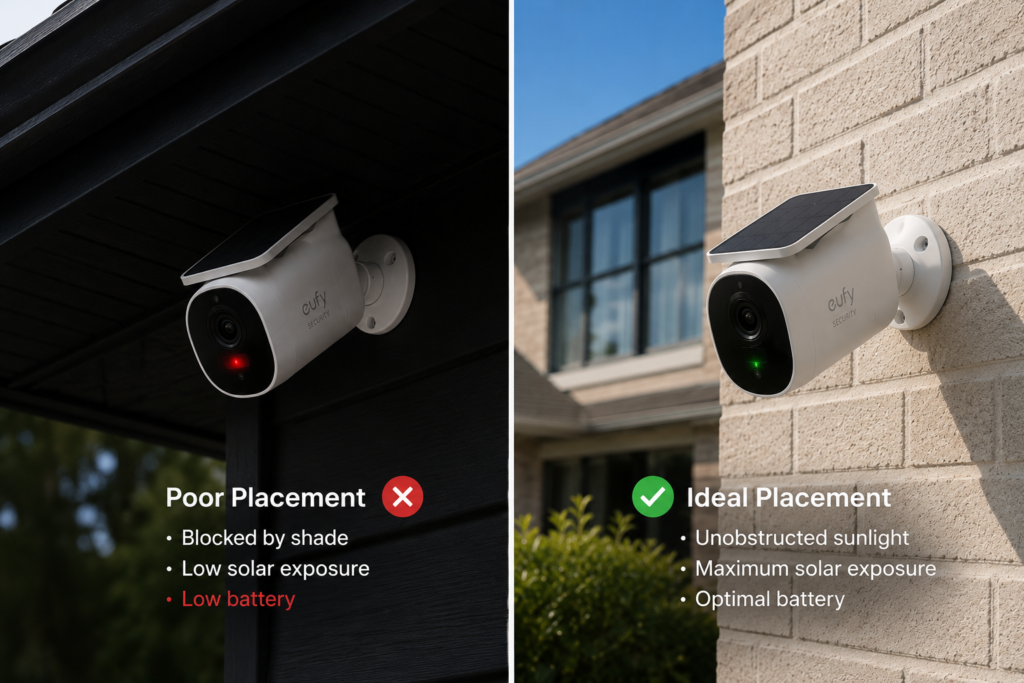
I’ve talked to dozens of homeowners who were disappointed with their solar camera purchases — and the same mistakes come up again and again.
Mistake #1: Placing the camera in shade It sounds obvious, but I’ve seen cameras installed under eaves or behind trees that never get direct sunlight. The camera drains its battery within days. Always audit sun exposure before mounting.
Mistake #2: Buying cameras with cloud-only storage Many cameras marketed as “solar” still require a cloud subscription to access footage. Read the fine print. Always confirm that local storage is available without a subscription.
Mistake #3: Ignoring microSD card quality Using a cheap, slow SD card in a high-resolution camera causes corrupted files and dropped frames. Use a Class 10, U3-rated card from a trusted brand like SanDisk or Samsung.
Mistake #4: Choosing 1080p when 2K or 4K is available At 1080p, faces and license plates at 20+ feet become blurry and unusable as evidence. Go for at least 2K resolution if identification matters.
Mistake #5: Forgetting about night-time battery drain Motion-triggered infrared LEDs consume significant battery at night. In high-traffic areas, cameras can drain faster than expected overnight. Choose cameras with efficient IR arrays or adjustable sensitivity.
How to Set Up Your Solar Powered Security Camera With Local Storage
Setting up is simpler than most people expect. Here’s a quick step-by-step:
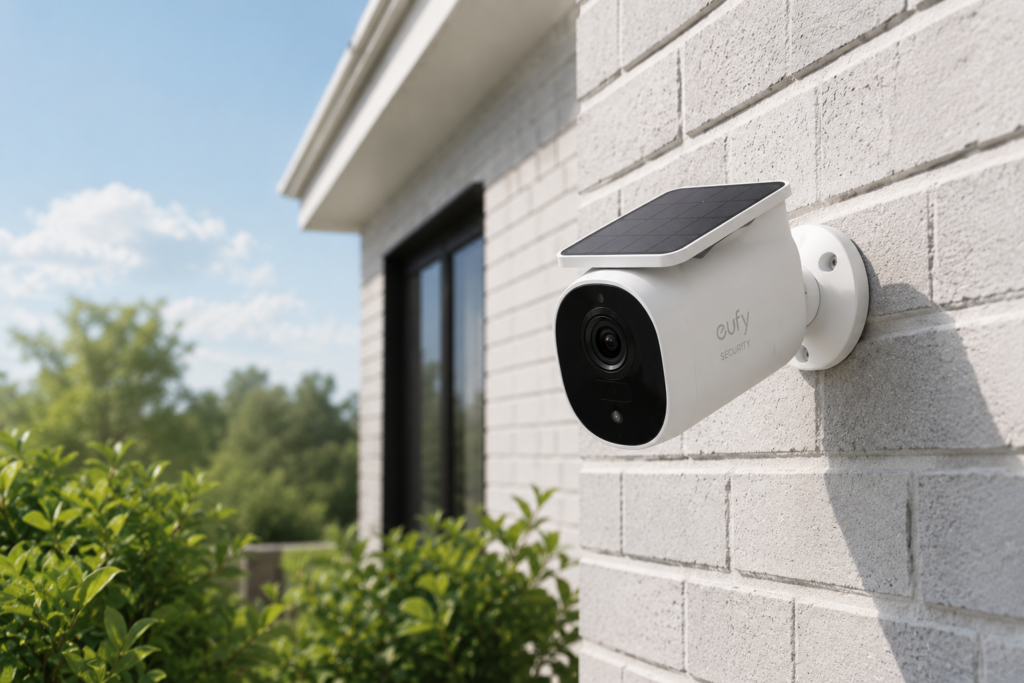
- Choose your mounting location — south-facing (in the Northern Hemisphere) for maximum sun exposure, with a clear sightline to the area you want to monitor.
- Insert your microSD card before mounting — it’s much easier at ground level.
- Charge the battery fully before installation (most cameras come partially charged).
- Connect to your Wi-Fi via the manufacturer’s app, and configure motion zones and alert preferences.
- Adjust the solar panel angle to maximize sun exposure — most allow 30–45° tilt adjustment.
- Test the footage and night vision before finalizing the position.
- Check the app after 24 hours to confirm the battery is sustaining charge.
Expert Tips for Getting the Most Out of Solar Security Cameras
Pro Tip #1: Use a larger solar panel than comes in the box. Many manufacturers sell upgraded panels (6W instead of 3W). In cloudy climates, the extra wattage makes a real difference in maintaining charge year-round.
Pro Tip #2: Enable “event recording only” instead of continuous recording. This dramatically reduces battery consumption and storage usage. Most local storage systems last weeks on event-only mode.
Pro Tip #3: Set motion detection zones carefully. Exclude busy streets or swaying trees from your detection zone to reduce false alerts and unnecessary recordings.
Pro Tip #4: Format your SD card every 3–6 months. This prevents file system corruption and extends the card’s lifespan.
Pro Tip #5: For multi-camera setups, consider a solar-powered NVR. Brands like Reolink and Annke offer complete solar-powered NVR kits that store footage locally on a hard drive shared across all cameras.
Solar Powered Camera vs. Battery Camera vs. Wired Camera — A Quick Comparison
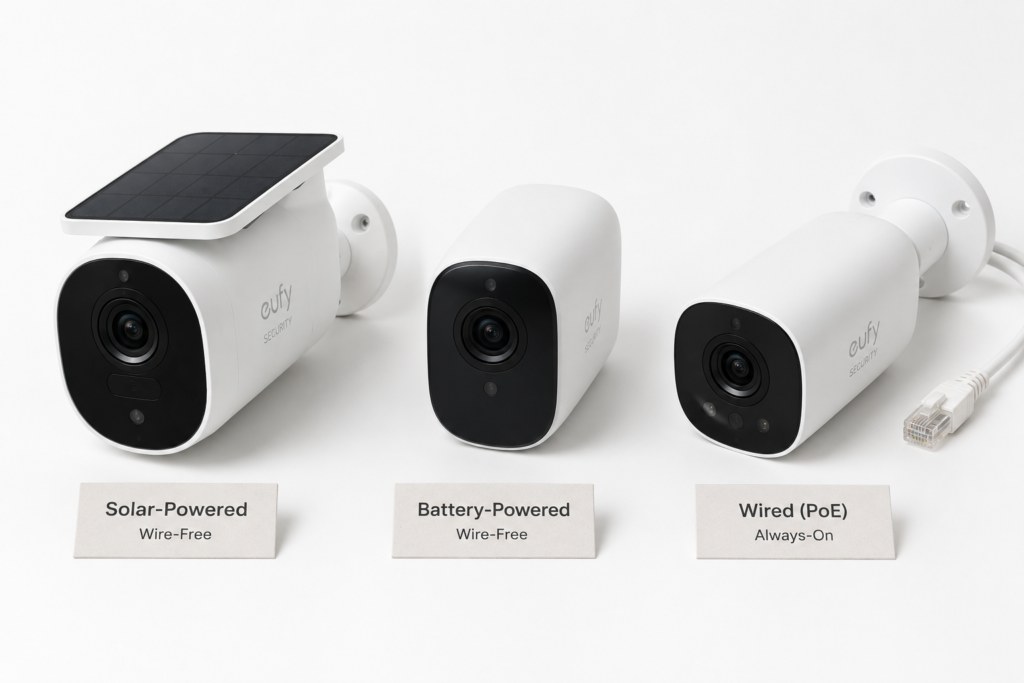
| Feature | Solar Powered | Battery Only | Wired |
|---|---|---|---|
| Installation complexity | Low | Very Low | High |
| Ongoing maintenance | Very Low | Medium (recharging) | Very Low |
| Works without power grid | Yes | Yes (limited) | No |
| Best for remote locations | ✅ | Limited | ❌ |
| Continuous recording | Partial | Limited | Yes |
| Long-term cost | Low | Low | Low |
The solar option wins for remote locations, long-term convenience, and off-grid reliability — especially when combined with local storage.
Frequently Asked Questions (FAQs)
Q1: Do solar powered security cameras work at night?
Yes — the solar panel charges the built-in battery during the day, and the camera runs on that stored power at night. Quality cameras with a 5,000mAh+ battery can operate through an entire night of moderate activity with no problem.
Q2: Can solar security cameras record continuously, or only when motion is triggered?
Most solar cameras default to motion-triggered recording to conserve battery. Some higher-end models support continuous recording when the battery and solar charge allow it, but event-based recording is recommended for most users.
Q3: What is the best local storage option for solar cameras?
A Class 10, U3-rated microSD card (128GB is a good starting size) is the most common and convenient option. For larger setups, a local NVR system offers more storage capacity and easier management of multiple cameras.
Q4: How much sun does a solar security camera need each day?
Most solar cameras need 3–5 hours of direct sunlight per day to maintain a full charge under normal usage. In winter or consistently cloudy climates, consider a camera with a larger solar panel or a higher-capacity backup battery.
Q5: Will a solar camera still work if it’s cloudy for several days in a row?
Yes — but it depends on the battery capacity and how frequently motion events are triggered. A camera with a 5,000mAh+ battery can typically last 3–5 cloudy days under moderate activity before needing sunlight to recharge.
Q6: Are solar powered security cameras with local storage safe from hackers?
Local storage cameras are significantly less vulnerable to remote hacking than cloud-based cameras because footage is stored on-device and doesn’t travel over the internet. That said, always set a strong password and keep the camera firmware updated to minimize any security risks.
Conclusion
The best solar powered security cameras with local storage aren’t just a convenience upgrade — they’re a genuinely smarter approach to home security in 2026. You’re not paying monthly subscription fees, you’re not dependent on a cloud server’s uptime, and your footage stays exactly where it should: in your hands.
Whether you go with the versatile Reolink Argus 3 Pro, the feature-packed Eufy SoloCam S340, or the off-grid powerhouse Reolink Go Plus, the key is matching the camera’s capabilities to your specific environment and needs.
Don’t wait for a security incident to prompt the upgrade. Pick the camera that fits your property, install it in a sun-exposed spot, insert a quality SD card, and sleep better knowing your home is protected — rain or shine, internet or no internet.
Ready to secure your home on your own terms? If you’re still comparing options, our guide to the best solar powered security cameras with local storage covers everything you need to make the right call. Start by assessing your property for sun exposure and identifying your top priority coverage zones. The right choice will handle the rest