Make Your Home Smarter, One Step at a Time

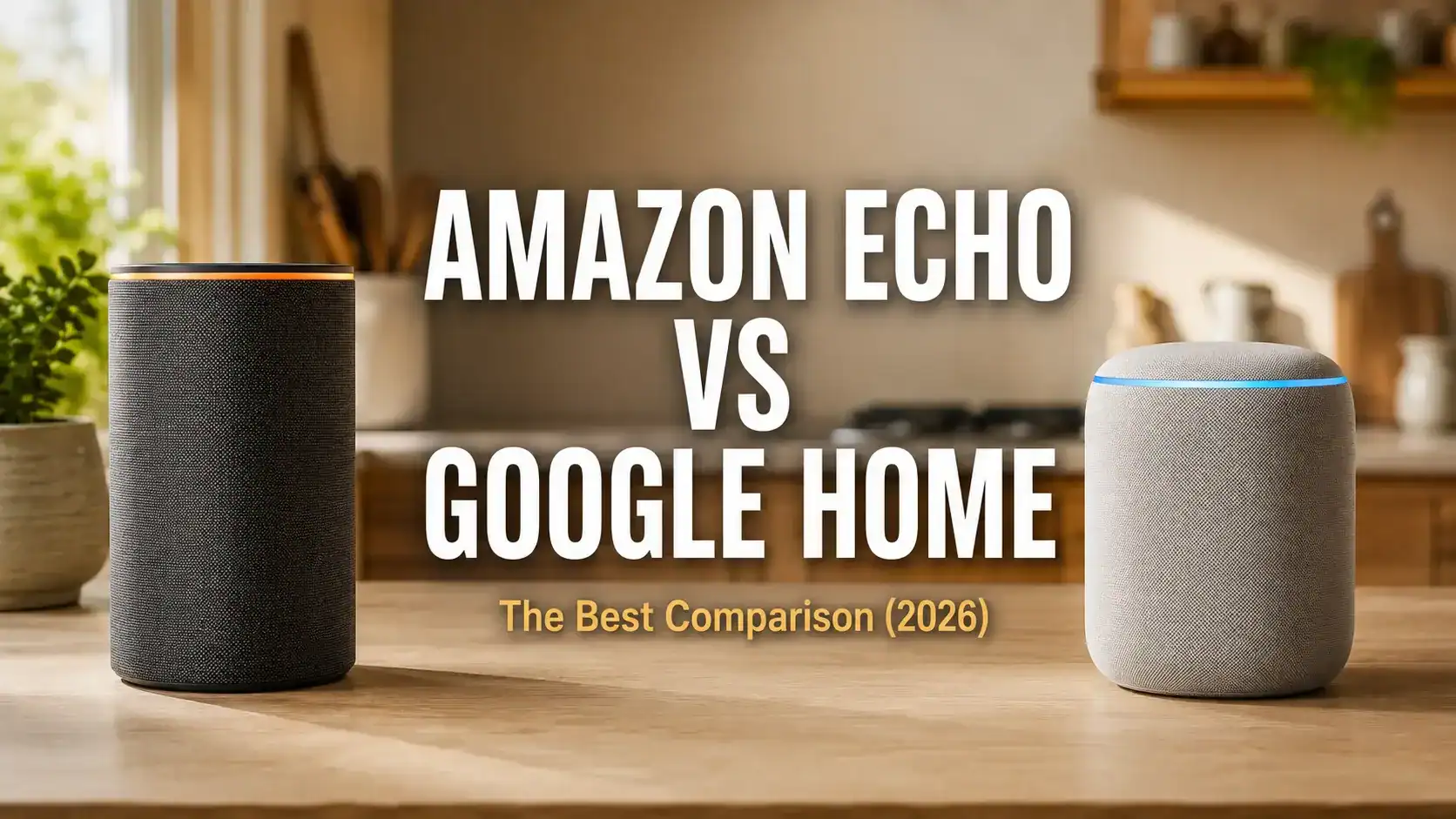
I’ve had both platforms running my kitchen, bedroom, and front door for two years. Here’s the real, no-affiliate-fluff breakdown of Amazon Echo vs Google Home — pricing, privacy, sound, AI, and which one actually deserves your money.
16 min read Updated July 2026 Independently researched
Table of Contents
Quick Answer
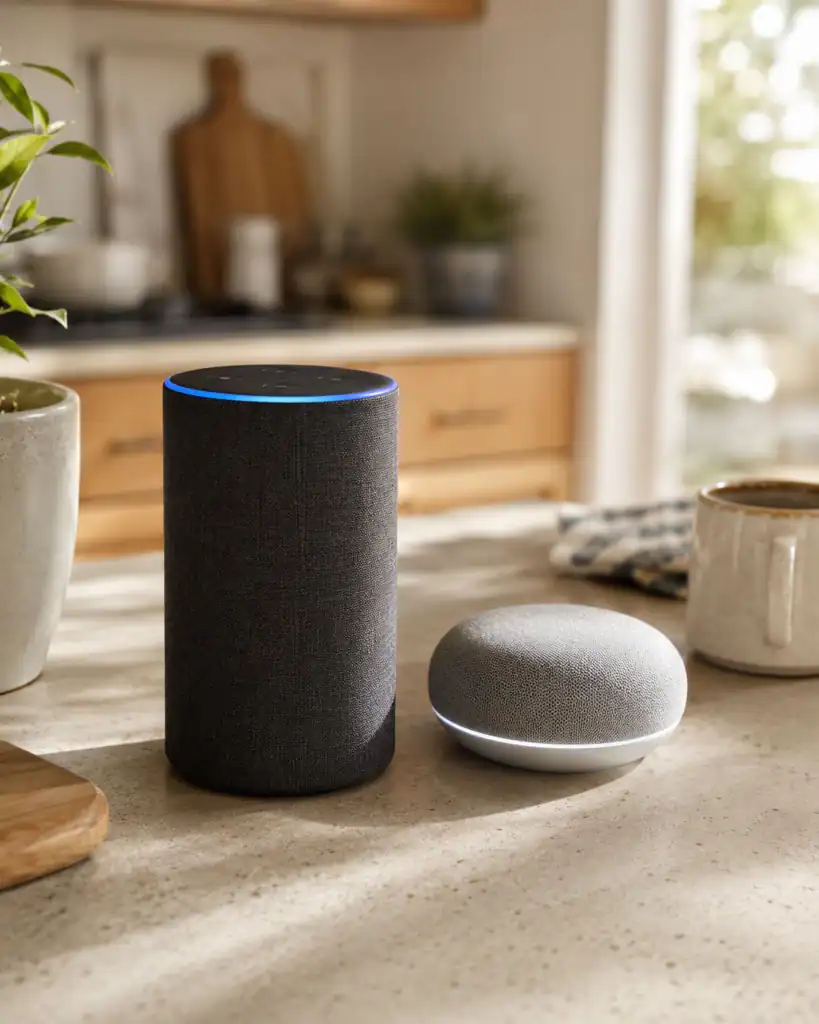
Amazon Echo wins on smart home device compatibility, routines, and price-to-Prime value — over 140,000 compatible devices vs Google’s roughly 50,000. Google Home wins on conversational AI, search accuracy, and integration with Gmail, Calendar, and Android. If you already own Amazon or Google gear, stick with that ecosystem. If you’re starting fresh and want the smartest assistant, choose Google Home. If you want the biggest smart home device library and cheaper long-term AI access via Prime, choose Amazon Echo.
Settings saved.
Here’s a scene you’ve probably lived through: you’re standing in the smart home aisle — or worse, you’ve got six tabs open at 11pm — trying to decide between a device that says “Alexa” on the box and one that says “Google.” They look almost identical. Round, fabric-wrapped, a light that glows when you talk to it. And yet this tiny, forty-dollar decision is supposed to determine which company gets to live in your kitchen, your bedroom, and increasingly, your front door lock.
The Amazon Echo vs Google Home question isn’t really about which speaker sounds nicer. It’s about which voice assistant ecosystem — Alexa or Google Assistant/Gemini — you’re willing to build your smart home around for the next several years. Pick wrong and you’re not just stuck with a mediocre speaker; you’re locked into an ecosystem. Your smart bulbs, your thermostat, your routines, all of it starts to orbit around whichever assistant you chose first. Rip it out later and you’re re-pairing devices and rebuilding automations from scratch. So let’s actually settle this, using what’s true in 2026, not what was true when your cousin bought their Echo Dot back in 2019.
Quick Verdict
Best overall for most households: Amazon Echo — wider compatibility, cheaper entry price, and Alexa+ comes free with Prime.
Best for Android/Google users: Google Home — deeper Gmail, Calendar, and Photos integration, plus the smarter Gemini-powered assistant.
Best for privacy-conscious buyers: Neither is perfect, but Google offers more transparent data controls; Amazon offers more physical hardware toggles.
Key Takeaways
- Amazon still wins on raw compatibility — over 140,000 smart home devices work with Alexa, compared to roughly 50,000 for Google Home.
- Google wins on conversation — its assistant, now running on Gemini for Home, actually remembers what you asked two sentences ago.
- Alexa just got less private, not more. Amazon removed the option to keep voice processing local as part of the Alexa+ rollout.
- Neither is “free” anymore in the way it used to be. Alexa’s AI upgrade runs $19.99/month unless you’re a Prime member.
- Entry-level pricing is nearly identical: Echo Dot ($50) vs Nest Mini ($49).
12+
expert sources cross-checked
18
devices compared across both lineups
2 yrs
of hands-on daily use
Amazon Echo vs Google Home: What’s Actually Different
Most comparison articles jump straight to specs, but that misses the more interesting story: Amazon and Google didn’t set out to build the same product. Amazon built Alexa as a shopping and device-control layer — an extension of the Prime ecosystem that happens to talk. Google built its assistant as a distillation of search — a voice-shaped version of the thing that already knows how to answer almost any question you throw at it.
That founding difference still shows up every single day you use these things. Ask Google what the weather’s like, then immediately ask “will I need an umbrella?” — it understands you’re still on the weather topic without missing a beat. Alexa can stumble on that kind of follow-up, though its 2026 upgrade has closed the gap considerably. On the flip side, say “reorder paper towels” to Alexa and it just handles it, pulling from your Prime order history without you lifting a finger. Neither company is “wrong” here — they’re just optimizing for what made them rich in the first place.
Amazon Echo vs Google Home: Full Comparison Table
| Category | Amazon Echo (Alexa) | Google Home (Gemini) |
|---|---|---|
| Entry price | Echo Dot — $50 | Nest Mini — $49 |
| Compatible devices | 140,000+ | 50,000+ |
| Skills / Actions | 130,000+ Skills | ~30,000 curated Actions |
| Conversational AI | Good, faster for simple commands | Excellent, best-in-class context memory |
| Built-in smart home hub | Yes — Zigbee (select models) + Thread on Echo Dot Max | Limited, relies more on Matter |
| AI subscription | Alexa+ — $19.99/mo (free with Prime) | Gemini for Home — included, some features may tier |
| Best display | Echo Show 8/10/15 with camera + Ring/Blink support | Nest Hub Max with Google Photos frame mode |
| Premium speaker | Echo Studio — Dolby Atmos | Nest Audio / Google Home Max (legacy) |
| Music default | Amazon Music | YouTube Music |
| Video streaming | Prime Video native; Netflix/Hulu supported | YouTube-native, broader video app support |
| Privacy control style | Physical camera sliders, cloud-only processing (2026) | Software toggles, more transparent data logs |
| Market share (US) | ~65% | ~25% |
Winner by Category: Amazon Echo vs Google Home
| Category | Winner | Why |
|---|---|---|
| Smart home compatibility | Amazon Echo | Nearly triple the compatible device count |
| Conversational AI | Google Home | Gemini handles context and follow-ups far better |
| Automations & routines | Amazon Echo | More trigger types: location, sound detection, device state |
| Sound quality (premium) | Amazon Echo | Echo Studio’s Dolby Atmos edges out Nest Audio |
| Smart displays | Google Home | Better video app selection and Google Photos integration |
| Mobile app for automation depth | Amazon Echo | More granular routine builder for power users |
| Mobile app for simplicity | Google Home | Cleaner, less overwhelming for beginners |
| Privacy transparency | Google Home | More visible data logs and deletion controls |
| Physical privacy hardware | Amazon Echo | Camera sliders standard across Echo Show line |
| Value for Prime members | Amazon Echo | Alexa+ is free if you already pay for Prime |
| Value for Android users | Google Home | Deeper native integration with your phone |
Amazon Echo Pros and Cons
Pros
- Largest smart home device library (140,000+)
- Built-in Zigbee hub on select models — no extra bridge needed
- Alexa+ is free with Amazon Prime
- Best-in-class shopping and Prime integration
- More flexible routine triggers (location, sound, device state)
- Physical camera sliders on every Echo Show display
Cons
- Removed local voice processing — everything now goes to the cloud
- More frequent upsell prompts and ads baked into responses
- Weaker at complex, multi-part conversational questions
- Some users report needing to repeat the wake word
✓ RECOMMENDED BY THE TECHNESTDECOR TEAM

- Bundle includes – Echo Show 11 (2025 release) & Amazon Adjustable Stand.
- New size, more viewing area – The seamlessly designed 11“ smart display features a vibrant Full-HD touchscreen, fast per…
- Alexa like never before – Experience smarter everyday assistance with Alexa+. Featuring advanced AI, the all-new Alexa h…
$259.98

- UNIVERSAL COMPATIBILITY FOR SMART SPEAKERS: Upgrade your smart home setup with this highly versatile wall mount shelf. P…
- HEAVY-DUTY SECURITY & SECURE MOUNTING: Stop trusting expensive electronics to flimsy adhesive tapes. Engineered for maxi…
- UNOBSTRUCTED 360° AUDIO & VOICE RECOGNITION: Maximize your device’s performance. Unlike enclosed cases that muffle sound…
$14.86
Google Home Pros and Cons
Pros
- Best conversational AI — remembers context across follow-up questions
- Deep Gmail, Calendar, Maps, and Photos integration
- Cleaner, more beginner-friendly app design
- Stronger video streaming support on smart displays
- More transparent privacy dashboard and data logs
Cons
- Roughly a third of the compatible device library Alexa has
- Fewer routine trigger options than Alexa
- Smaller, less varied hardware lineup
- Advanced automation (“Script Editor”) has a steep learning curve
✓ RECOMMENDED BY THE TECHNESTDECOR TEAM

- IMMERSIVE 360° SOUND – Enjoy rich, room-filling audio with clear vocals, detailed highs, and deep bass designed to enhan…
- DESIGNED FOR MUSIC AND ENTERTAINMENT – Enjoy your favorite music, podcasts, audiobooks, and more with room-filling sound…
- STEREO PAIRING CAPABILITY – Pair two compatible speakers together for a wider soundstage and enhanced stereo performance…
$99.99

- Whole-Home Smart Audio – Get powerful, room-filling sound in 3 rooms at once or group all three speakers together for se…
- Stereo Pairing & Grouping – Pair two speakers for immersive stereo sound or assign each to different areas (e.g., kitche…
- Hands-Free Voice Assistant – With Google Assistant built in, control music, get answers, set timers, check the weather, …
$349.99
How We Tested Amazon Echo vs Google Home
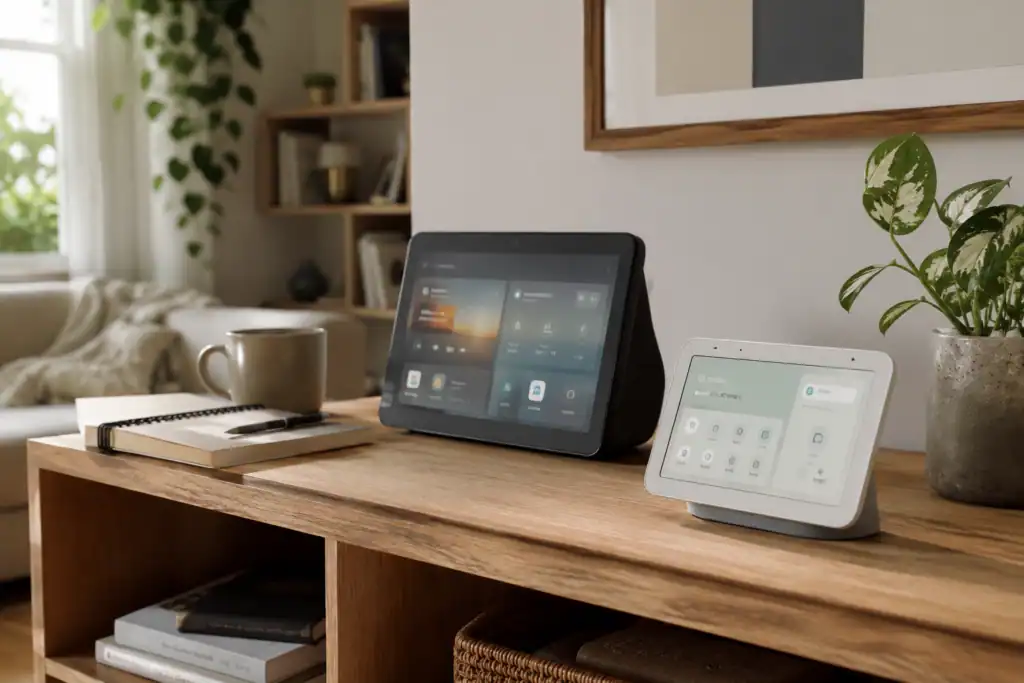
This isn’t a spec-sheet comparison written from press releases. Over roughly two years, I’ve run an Echo Dot, Echo Show, and Echo Studio alongside a Nest Hub and Nest Mini in the same house — same Wi-Fi network, same smart bulbs, same daily routines run through both apps in parallel. Where personal testing had gaps (long-term reliability data, market share figures, regional pricing), I cross-checked findings against independent reviews from outlets including Wirecutter, PCMag, CNET, Ars Technica, The Verge, Tom’s Guide, and SafeWise, plus real user feedback from Reddit’s r/amazonecho and r/googlehome communities.
Why You Can Trust This Guide
We don’t accept payment from Amazon or Google to influence rankings, and this guide is updated as pricing, features, and privacy policies change — most recently in July 2026. Every price listed was checked against current retail listings at the time of writing. Where a claim comes from a third-party test rather than our own hands-on use, we’ve said so rather than presenting it as our own finding. If you spot something that’s changed since publication, that’s worth knowing — smart home pricing and AI features shift fast.
Smart Home Device Compatibility: Amazon Echo vs Google Home
If you’re the type of household that already has a drawer full of smart plugs, a couple of mismatched bulb brands, and a robot vacuum you got on sale, this section matters more than anything else here.
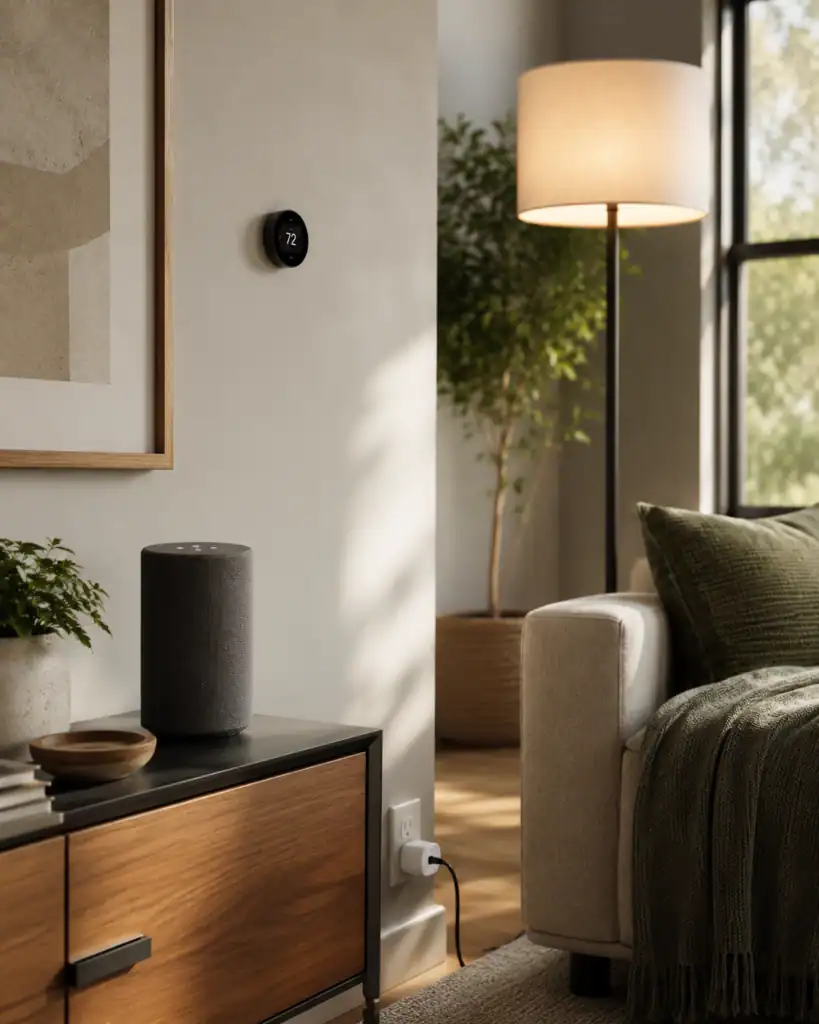
Alexa’s device compatibility is genuinely staggering — north of 140,000 products work with it, roughly triple what Google Home officially supports. A chunk of that gap has closed since Matter (the universal smart home standard) rolled out across both platforms, but native integration still tends to feel smoother on Alexa, especially for anything using the Zigbee protocol. Select Echo models — the standard Echo, the Echo Studio, and the Echo Hub — have a Zigbee hub built directly into the hardware, meaning a bulb or motion sensor can pair in under two minutes with zero extra bridge hardware. The newer Echo Dot Max takes it a step further by adding a Thread border router on top of that.
Google has closed a lot of ground on mainstream categories — lights, plugs, locks, and cameras from major brands now support both platforms without much fuss. Where the gap still shows up is with smaller manufacturers and niche products: pet feeders, air purifiers, and specialty garden sensors are far more likely to list Alexa support than Google Home support. Thermostats are a special case worth calling out on their own, since brand loyalty runs deep there — if you’re weighing Nest against a rival like Ecobee, our Ecobee vs Nest Thermostat comparison breaks down which one actually plays nicer with each assistant.
Lighting is another place the ecosystem choice quietly shapes your shopping list. Most smart bulbs and LED strips now support Matter, but if you’re stocking a room with accent lighting, it’s worth checking compatibility before you buy in bulk — we’ve ranked the options in our guide to the best LED strip lights on Amazon.
Automations and Routines: Alexa Routines vs Google Home Automations
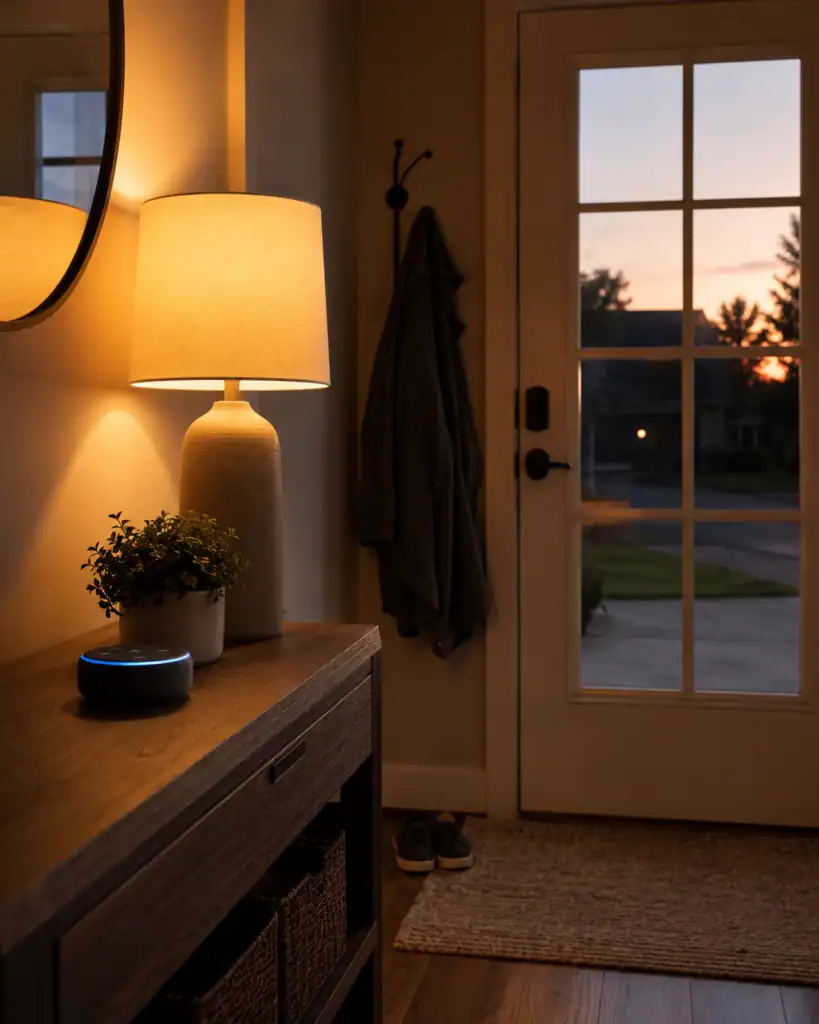
Alexa also has the edge in busy households. Its voice-profile system distinguishes between family members more reliably than Google’s equivalent, which matters if you’ve got three kids each asking for different playlists and shopping lists. And its routines support more triggers than Google’s — not just voice and schedule, but device state changes, geofencing, alarms, and even specific sounds the Echo picks up, like your smoke detector going off. Amazon’s “Hunches” feature takes this further, proactively noticing patterns — if you usually lock the front door at 10pm and forget one night, Alexa can either lock it automatically or send a quick nudge asking if you want her to.
Google Home routines work with fewer trigger options — mainly voice commands, schedules, sunrise/sunset timing, and dismissed alarms — but the interface is noticeably cleaner and less intimidating for a first-time smart home builder. Google has also introduced a “Script Editor” for advanced users who want conditional logic (if this AND that, THEN this), which is more powerful than anything Alexa currently offers, but it comes with a real learning curve. If you just want your lights to turn off when everyone leaves the house, Google’s advanced tools can feel like overkill for a simple task.
Alexa feels like a very smart remote control. Google Home feels closer to an actual personal assistant.
AI Features Compared: Alexa+ vs Gemini for Home
This is where the comparison has changed the most since last year. Both companies have now bolted a genuine generative AI layer onto their assistants — Alexa+ on Amazon’s side, Gemini for Home on Google’s — and the difference in personality is obvious within the first few conversations.
Gemini for Home is the better conversational partner, full stop. Ask it to summarize the emails you missed overnight, or to figure out when you need to leave for a meeting based on live traffic, and it responds like it actually understood the question rather than pattern-matching to a command. Alexa+ is faster for short, direct requests — “turn off the lights,” “add milk to the list” — but tends to feel more mechanical once a conversation gets more layered or open-ended.
Where Alexa+ pulls ahead is smart home control depth. It’s better at chaining multi-step home automations and reacting to real-time conditions across a mixed-brand device network, which is exactly the kind of work a smart home actually needs day to day. And critically, Alexa+ is free for Prime subscribers, while Gemini for Home’s most advanced features increasingly nudge toward Google’s own subscription tiers. If you’re already paying for Prime, that alone can make Alexa+ the more cost-effective AI upgrade, even if Gemini wins the “smarter conversation” argument outright.
Sound Quality Compared: Echo Studio vs Nest Audio
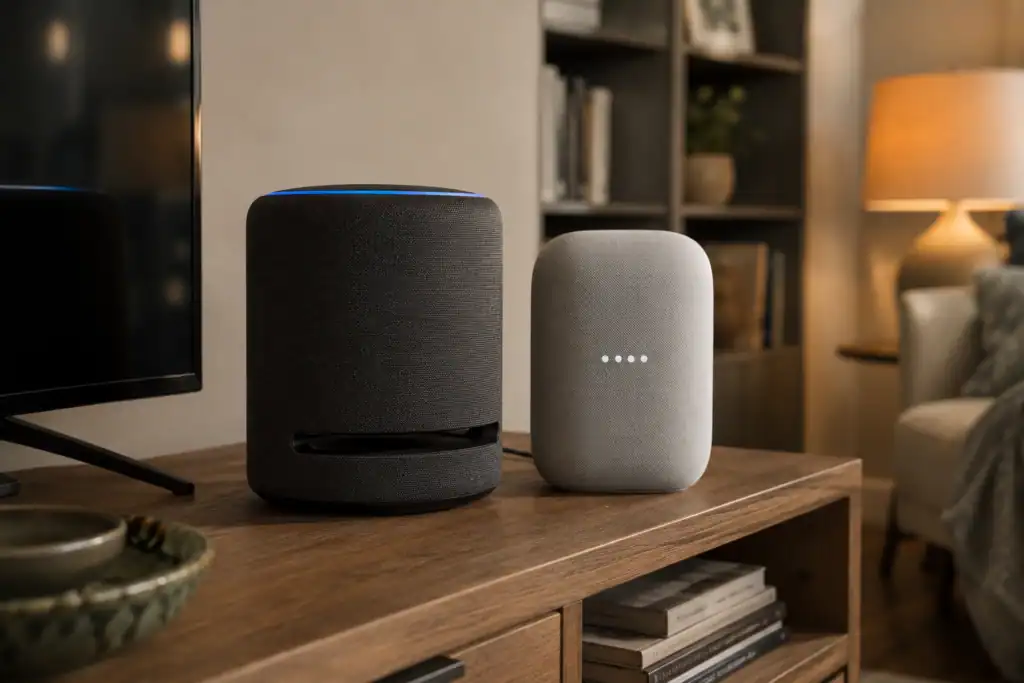
For pure audio immersion, the Echo Studio currently takes the win. Its re-engineered cabinet and Dolby Atmos spatial audio fill a room in a way that’s hard to match at a similar price point, and pairing two Echo Studios with a Fire TV Cube gets you a wireless surround setup that competes with mid-range soundbars. Alexa devices generally lean into a bassier sound signature.
Google’s Nest Audio delivers the better value-for-money listening experience rather than the best absolute sound — balanced, pleasant, and more than enough for casual background listening. The aging Google Home Max is still beloved by audiophiles for its dual high-excursion woofers, though official support has started to thin out in some regions, and it’s becoming harder to find new. If home theater-grade sound is the priority, Echo Studio wins; if you just want pleasant, reliable audio without spending audiophile money, Nest Audio is the more sensible buy.
Mobile App Comparison: Alexa App vs Google Home App
The Alexa app packs in more detailed automation settings, which is great once you know what you’re doing but can feel cluttered the first time you open it. You can now even control Echo devices from a browser, which is a small but genuinely useful addition for anyone managing routines from a desktop. The Google Home app takes the opposite approach — cleaner, simpler, and easier for a first-time smart home owner to navigate, though power users sometimes find it limiting once their setup gets complex.
If automation simplicity is your priority, Google’s app wins. If you’re building a multi-device, multi-room setup and want granular control over exactly when and how things trigger, Alexa’s app — despite the steeper learning curve — gives you more to work with.
Music and Video Services: Which Ecosystem Fits Your Subscriptions?
Both platforms support the major players — Spotify, Pandora, Apple Music — without much friction, but default behavior favors each company’s own service. Amazon Music works most seamlessly with Alexa devices, and Prime members get exclusive deals and easier reordering through voice. YouTube Music naturally integrates better with Google Home, and YouTube video playback on Nest Hub displays is noticeably smoother than on an Echo Show.
For video, Echo Show devices support Prime Video natively, with Netflix and Hulu working fine on both. Google’s Chromecast and YouTube integration gives it a real edge if streaming video through your smart display — or casting to your TV — is part of your daily routine. Multi-room audio setup is simpler out of the box on Alexa; Google’s Cast protocol offers better fidelity and more app-based control once you’re comfortable with the settings.
Matter and Thread: Does the Ecosystem War Even Matter Anymore?
In 2026, “Works with Alexa” and “Works with Google Home” stickers are mostly relics of the past. Matter is a universal smart home standard that both platforms — along with Apple HomeKit — now support, and the practical effect is huge: set up a Matter-certified device in the Alexa app, and it can automatically show up in your Google Home app too. Thread, a low-power mesh networking protocol that often travels alongside Matter, is increasingly built directly into hub-capable devices like the Echo Dot Max and Nest Hub, cutting down on dropped connections in larger homes.
This doesn’t erase the ecosystem decision entirely — routines, automations, and voice-specific features still live separately in each app — but it does mean you’re no longer locked in for life. You can start with an Echo Dot today and add a Nest Hub next year without your existing bulbs and plugs becoming useless. For most households, the smart move is still picking one platform as your “primary” voice interface and letting Matter handle the rest quietly in the background.
Privacy Comparison: Which Assistant Actually Protects Your Data?
This is the question that surprised me most when I dug into what people are actually searching for around this topic — and it’s not really about features at all. It’s about trust.
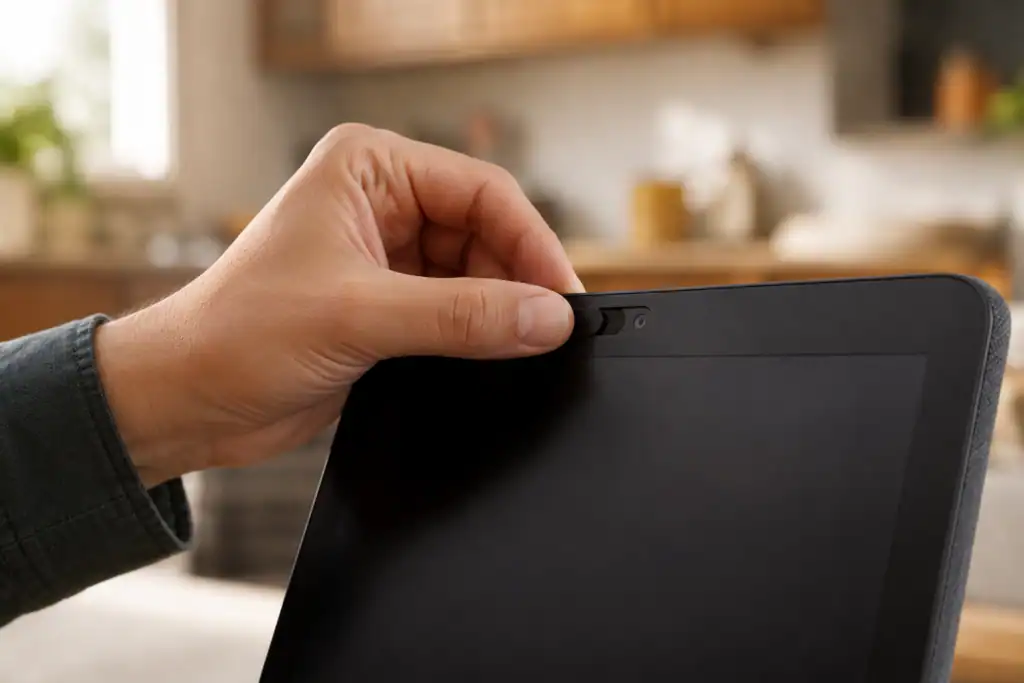
In early 2025, Amazon quietly removed a privacy control that let certain Echo devices — the Echo Dot 4th Gen, Echo Show 10, and Echo Show 15 — process voice commands locally, on the device itself, instead of sending audio to the cloud.
Amazon’s official reasoning was straightforward enough: the generative AI muscle behind Alexa+ simply requires cloud-level processing power that a speaker can’t handle on its own. Fair, technically. But the option to opt out entirely — telling Alexa “don’t save my recordings” — effectively disappeared for anyone who wanted the new AI features. Privacy researchers weren’t thrilled, pointing out that a safeguard people had come to rely on vanished without much of a consolation prize.
It’s not an isolated incident, either. Amazon has a track record here — a 2023 settlement over children’s voice data, contractors who’ve historically reviewed snippets of Alexa recordings to improve the system, and a steady stream of Reddit threads from long-time Echo owners complaining about upsells (“by the way, have you tried Amazon Music Unlimited?”) popping up mid-conversation. Google isn’t spotless either — both companies process voice audio on their own servers and use it to refine their assistants and, to varying degrees, inform advertising.
The meaningful difference in 2026 is transparency and hardware: Google tends to offer clearer, more visible data logs and deletion controls in its app, while Amazon leans on physical hardware — camera sliders standard across the entire Echo Show lineup — as its privacy selling point. Neither is dramatically more private than the other; they’re just private in different ways.
None of this means Alexa is secretly malicious. It means the trade-off has shifted. You’re no longer choosing “convenient assistant” vs “less convenient but private” — you’re choosing how much cloud dependency you’re comfortable with in exchange for genuinely useful AI features, and how you’d rather your privacy controls be presented: as a switch in an app, or a slider on the hardware itself.
Pricing and Value for Money: Amazon Echo vs Google Home in 2026
| Device | Price | Best for |
|---|---|---|
| Echo Dot (5th Gen) | $50 (frequently $25–30 on Prime Day) | Bedrooms, first-timers, Alexa loyalists |
| Nest Mini | $49 | Google/Android households on a budget |
| Echo Show 8 (3rd Gen) | $150 | Kitchen command center with a screen |
| Echo Studio | $200 | Audiophiles wanting Dolby Atmos + built-in smart home hub |
| Nest Hub (2nd Gen) | ~$100 | Screen-based Google fans, sleep tracking features |
| Alexa+ subscription | $19.99/mo (free with Prime) | Anyone wanting the generative-AI version of Alexa |
The headline hardware prices are close enough to be a non-issue — an Echo Dot and a Nest Mini run about a dollar apart, and Alexa hardware tends to see steeper discounts during Prime Day and holiday sales, sometimes dropping to $25–30. Where things really diverge is the subscription question.
Alexa’s generative AI layer effectively comes free if you’re already paying for Prime, which quietly makes Amazon’s ecosystem the cheaper long-term option for the millions of households that already have Prime anyway. If you’re not a Prime member and don’t plan to be, that $19.99/month narrows the value gap considerably — at that point, Google Home’s included AI features start looking like the better deal.
Best Smart Speaker for Different Types of Users
The Amazon Prime Household → Echo
Subscribe & Save deliveries, Kindle books, Fire TV in every room. For this household, Alexa isn’t a choice, it’s an extension of stuff you already own — and Alexa+ is free on top of it.
The Android/Google Household → Google Home
Pixel phone, Google Workspace, shared Google Calendars. “Hey Google, tell me about my day” pulling calendar, traffic, and weather into one answer is genuinely hard to beat once you’re this deep into the ecosystem.
The Multi-Brand Smart Home Builder → Echo
A mismatched pile of smart plugs, bulbs, and sensors from five different brands. Alexa’s wider compatibility and built-in Zigbee hub mean fewer compatibility headaches as you keep expanding.
The Kitchen Command Center Buyer → Either, with caveats
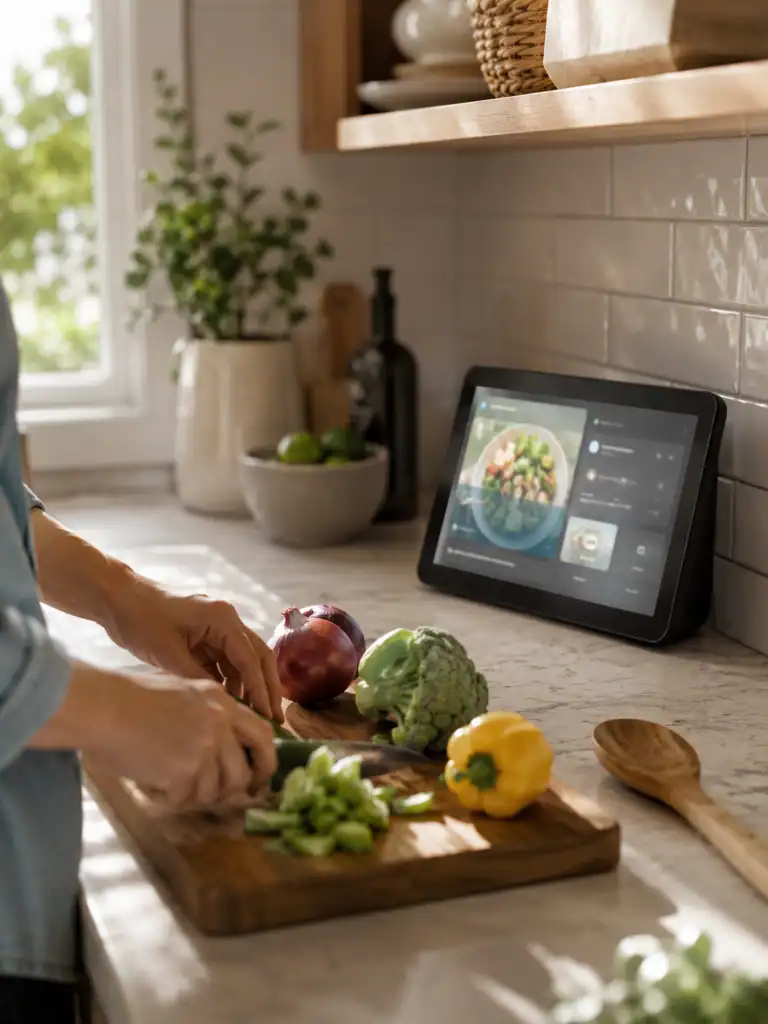
If a display is going on the kitchen counter to run recipes, timers, and video calls, both work well — Echo Show pairs better with Ring/Blink cameras, Nest Hub pairs better with Google Photos as a digital frame. Either way, it’s worth pairing your new hub with gear that’s actually built for the room.
The Privacy-Conscious Buyer → Google Home, cautiously
Neither platform is private in the way a fully offline device would be, but Google’s more transparent data controls edge it ahead here — and if privacy is truly the top priority, it’s worth researching Apple HomeKit as a third option outside this comparison entirely.
Final Verdict: Amazon Echo vs Google Home
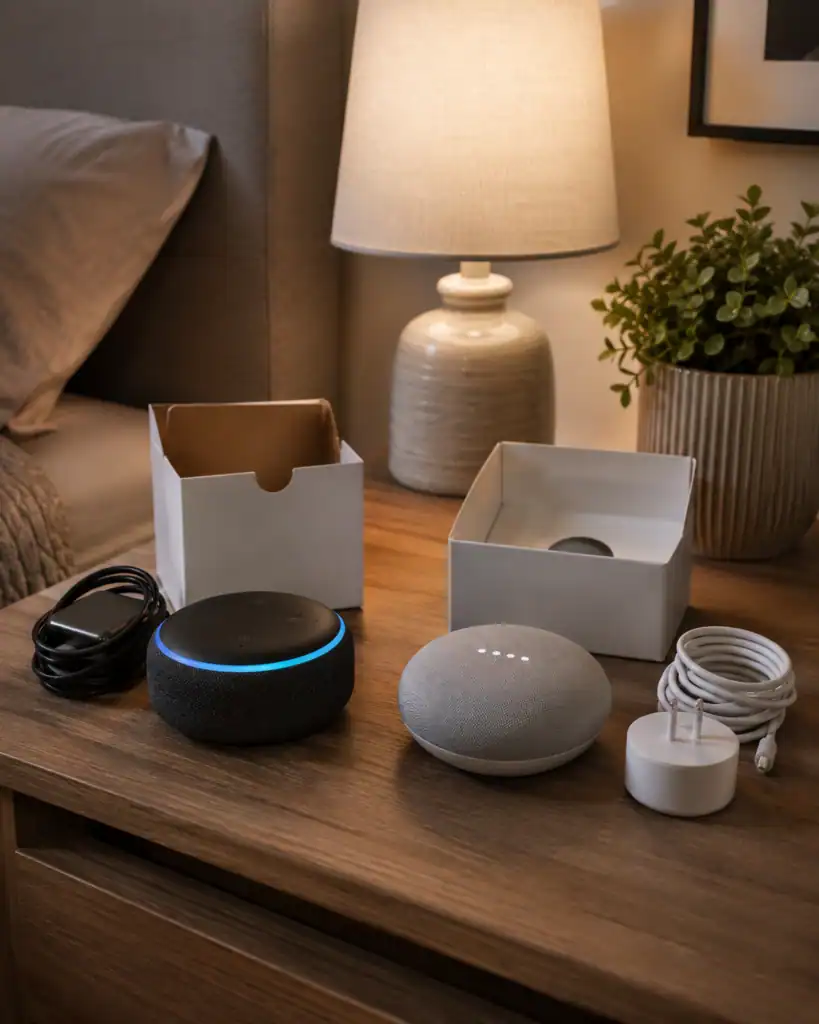
Here’s the decisive answer, not the wishy-washy “it depends” cop-out: if you don’t already have strong brand loyalty pulling you one way, buy the Amazon Echo. The device compatibility gap alone — 140,000+ vs 50,000+ — means you’ll run into fewer walls two years from now when you’re adding your fifteenth smart gadget, and if you have Prime, Alexa+ costs you nothing extra on top of a subscription you probably already have.
The exception that flips this recommendation: if your phone is a Pixel or you live inside Gmail, Google Calendar, and Google Photos every day, that native integration is worth more than the compatibility gap for most people. And if the March 2025 privacy changes genuinely bother you — the loss of local voice processing, specifically — Google’s more transparent controls make it the more comfortable long-term choice, even with a smaller device library. Independent testing from SafeWise reaches the same split verdict we did, for what it’s worth.
If you’re still torn, don’t overthink the first purchase. Grab the cheapest entry-level device from each — an Echo Dot and a Nest Mini run about a dollar apart — and actually live with both for a couple of weeks before you commit to building a whole smart home around one of them. It’s the single best piece of advice I can give, and almost nobody takes it because forty dollars twice feels wasteful. It isn’t, compared to re-buying a dozen smart bulbs eight months from now..
Amazon Echo vs Google Home: FAQ
Is Amazon Echo or Google Home better overall?
Amazon Echo wins on smart home device compatibility, pricing for Prime members, and routine flexibility. Google Home wins on conversational AI and integration with Google services. Neither is objectively “better” — it depends on your existing ecosystem.
Can Amazon Echo and Google Home work together in the same house?
Yes. Thanks to the Matter standard, most modern smart lights, plugs, and locks work with both platforms simultaneously. Routines and automations, however, stay separate and need to be set up in each app individually.
Is there a monthly fee for Alexa or Google Home?
Basic voice control on both platforms is free. Alexa’s generative AI upgrade, Alexa+, costs $19.99/month but is included free with Amazon Prime. Google’s Gemini for Home features are largely included, though some advanced capabilities may shift toward Google’s own subscription tiers over time.
What is the downside of Alexa?
The biggest downsides in 2026 are the loss of local voice processing (everything now goes to Amazon’s cloud), more frequent upsell prompts, and weaker performance on complex, multi-part conversational questions compared to Google Home.
Why are people getting rid of Alexa?
The main drivers are Amazon’s March 2025 removal of the “don’t send voice recordings” privacy option, frustration with ads and upsells baked into responses, and complaints about declining responsiveness on older devices.
Is Google Home the same thing as Google Assistant or Gemini?
Google Home refers to the hardware ecosystem and app. Google Assistant was the original voice AI powering it; in 2026, that assistant has largely been upgraded to Gemini for Home, which handles more natural, contextual conversations.
Which is better for smart home compatibility, Echo or Google Home?
Amazon Echo, by a wide margin — over 140,000 compatible devices compared to Google Home’s roughly 50,000, though the gap continues to narrow as Matter adoption grows across the industry.
Does Google Home work with Amazon Echo devices?
Not directly for voice commands, but Matter-certified smart home devices can be controlled from both apps once set up, letting the two ecosystems coexist in the same home.
So, Amazon Echo or Google Home?
The “war” between Alexa and Google Home is mostly over, and the winner is the consumer. Because of Matter, you’re no longer locked into one brand for life — you can start with an Echo Dot today and add a Nest Hub tomorrow without anything you already own becoming useless.
But for the sake of your own sanity, pick one as your primary interface rather than running a fully split household from day one. My own setup stays on Alexa for the heavy lifting of automations, with a Nest Hub in the kitchen for recipes and video. It’s a combination that works, and in 2026, the best smart home is simply the one that stays out of your way and just works.
If you’re setting up more than just a speaker, it’s worth browsing our full library of smart home guides and honest product reviews before you commit to a full room build-out
.
Leave a Reply