Make Your Home Smarter, One Step at a Time
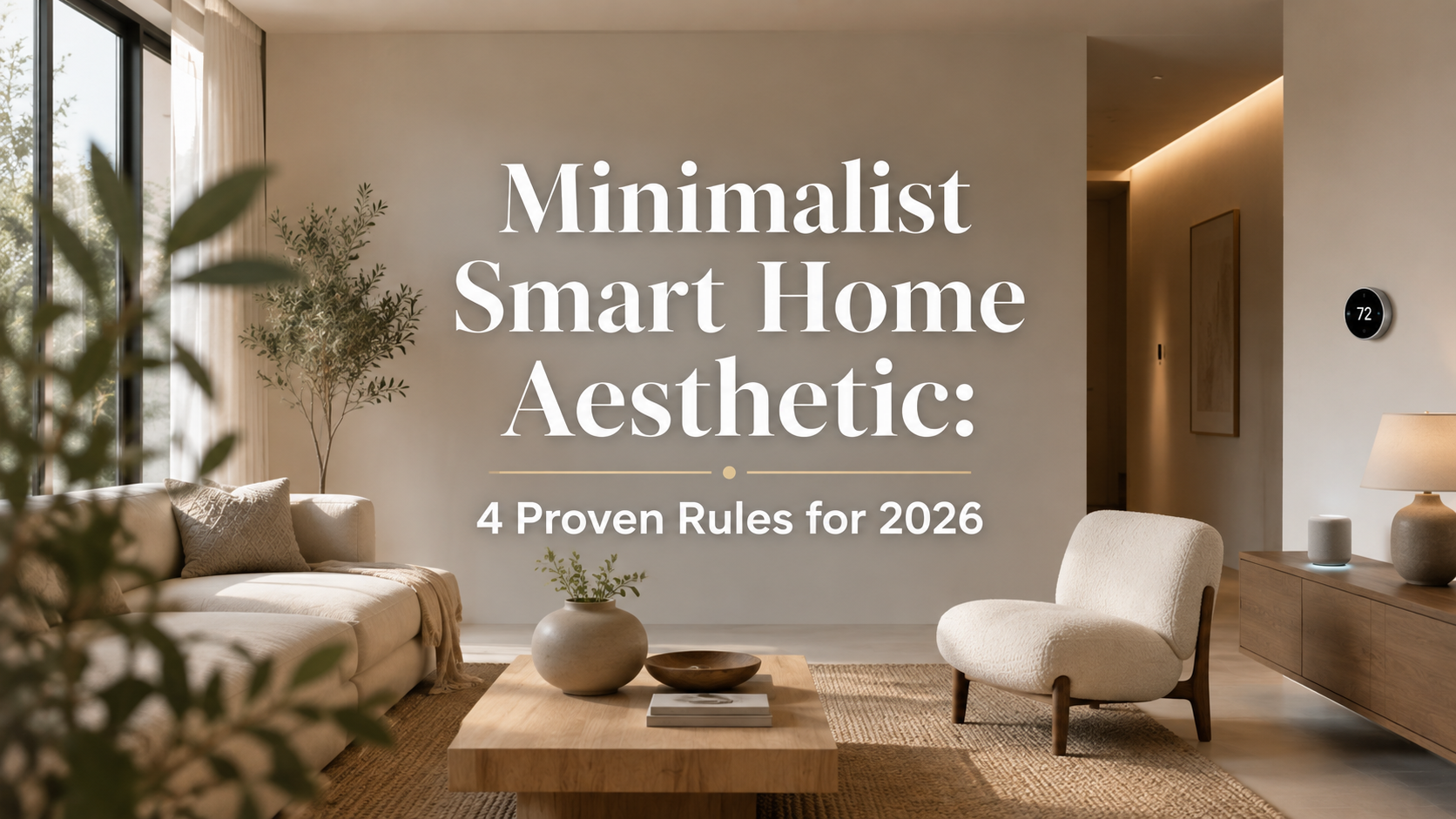
Table of Contents
The minimalist smart home aesthetic used to sound like a contradiction to me. Minimalism, to me, meant empty countertops and a single houseplant. Smart home meant a coffee table covered in remotes, a hub blinking blue in the corner, and an app for literally everything — including one just to turn off the other apps. It felt like the opposite of calm.
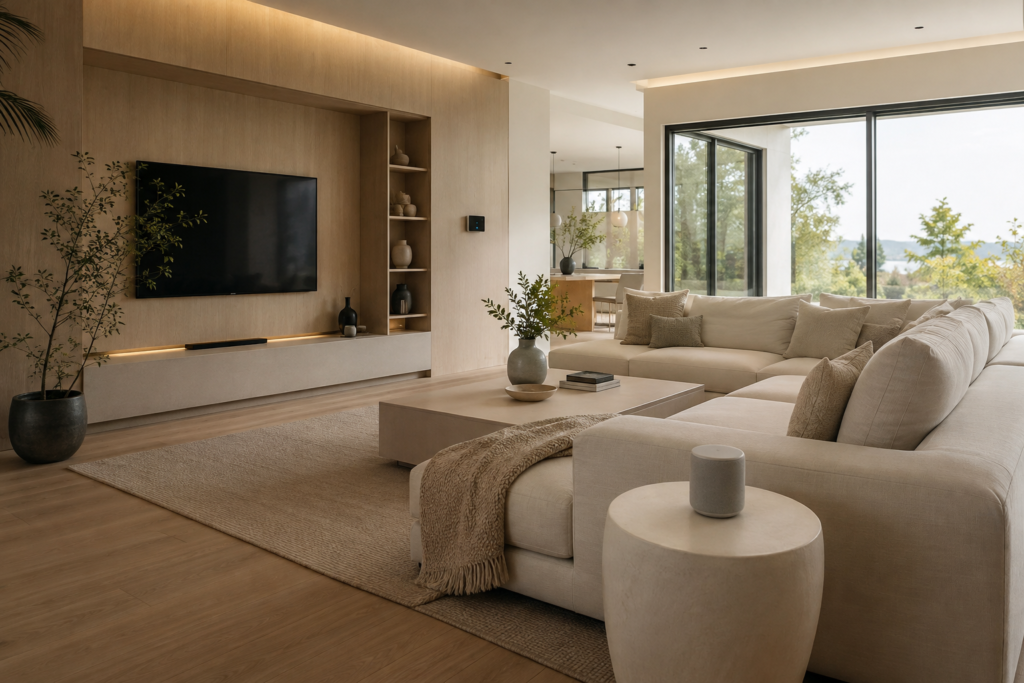
Then I actually lived with both for a year, and I realized I had it backwards. Done right, a smart home isn’t the enemy of minimalism — it’s the thing that makes minimalism possible. No visible switches cluttering the wall. No stack of manuals. No junk drawer full of chargers. Just a home that quietly does what you need, when you need it, without shouting about it.
That’s the aesthetic more and more people are chasing in 2026: fewer things, fewer distractions, but not less capability. Let’s break down what’s actually happening with minimalism right now, the daily habits that keep a home feeling clear-headed, and where smart tech genuinely earns its place in the room.
Settings saved.
Key Takeaways
- Minimalism isn’t fading in 2026 — it’s evolving into something more personal, sometimes called “intentionalism” or “soft minimalism.”
- Simple decluttering rules (like the 3-3-3 or 90-day rule) work better than vague “get rid of stuff” advice.
- Smart home tech supports minimalism when it hides itself — invisible sensors, voice control, and automation beat visible gadgets and clutter.
- The biggest complaint about smart homes (too many apps, too much visible tech) is solvable with the right, minimal setup.
- Gen Z is reshaping minimalism into something warmer and more expressive — not the stark white boxes of the 2010s.
Is Minimalism Still Popular in 2026, or Are We Over It?
Here’s the honest answer: minimalism isn’t dying, it’s just growing up. The stripped-down, almost clinical version that dominated Pinterest boards a decade ago has softened. What’s replacing it isn’t maximalism — it’s a warmer, more intentional version of the same idea, sometimes tagged “quiet luxury” or “soft minimalism.”
Interestingly, Gen Z is a big part of this shift. Contrary to the maximalist, dopamine-decor stereotype you might have seen online, a large share of younger homeowners and renters actually lean minimalist — but for practical reasons as much as aesthetic ones. Smaller living spaces, frequent moves, and a general fatigue with consumerism all push toward owning less. There’s also a genuine link between minimalist environments and reduced overwhelm for people with ADHD — CHADD, the leading U.S. nonprofit for ADHD support, notes that fewer visual triggers can mean less decision fatigue and a calmer, more manageable space.
So no, minimalism isn’t fading out. It’s just no longer about empty rooms for the sake of empty rooms — it’s about a home that doesn’t add to your mental load.
The Daily Habits That Actually Keep a Home Minimal
Nobody’s home stays minimal by accident. It’s maintained through small, repeatable habits — and honestly, having a rule of thumb makes this so much easier than “just declutter more.” A few that keep coming up, and that I’ve actually tested myself:
- The 3-3-3 rule: Get rid of three items you no longer use, wear, or need at once. Small enough to not be overwhelming, frequent enough to matter.
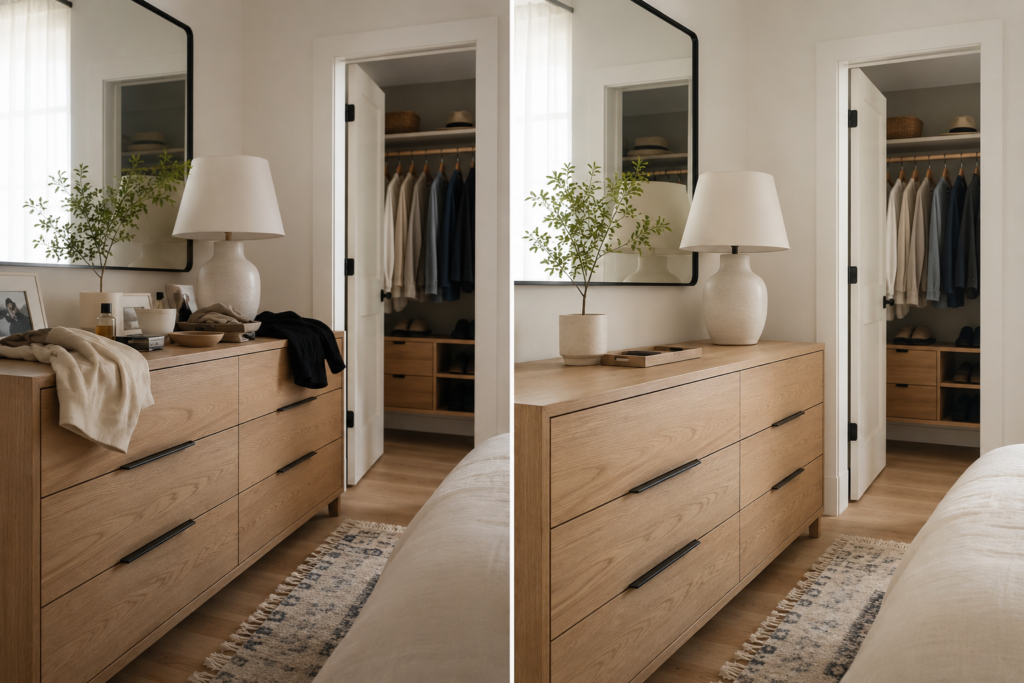
- The 90/90 rule: If you haven’t used something in the last 90 days and don’t expect to in the next 90, it’s probably safe to let go.
- The 20/20 rule: Before keeping “just in case” items, ask if you could replace them for under $20 in under 20 minutes if you actually needed them again.
- The 5-7 rule (yes, it applies to lighting too): This one’s borrowed from interior design — layering around 5 to 7 light sources in a room instead of one harsh overhead. It keeps a space feeling calm rather than sterile, which we go into more in our Modern Lighting Ideas for Living Room guide.
None of these require a weekend-long purge. That’s the point — minimalism that survives long-term is built from tiny, boring, repeatable habits, not one dramatic decluttering binge you never repeat.
Where Smart Home Tech Actually Fits the Minimalist Aesthetic
This is where most people get it wrong. They picture a “smart home” as more stuff: more gadgets, more screens, more things to manage. But the smart home trends actually gaining traction in 2026 point the opposite direction — toward tech that disappears into the background.
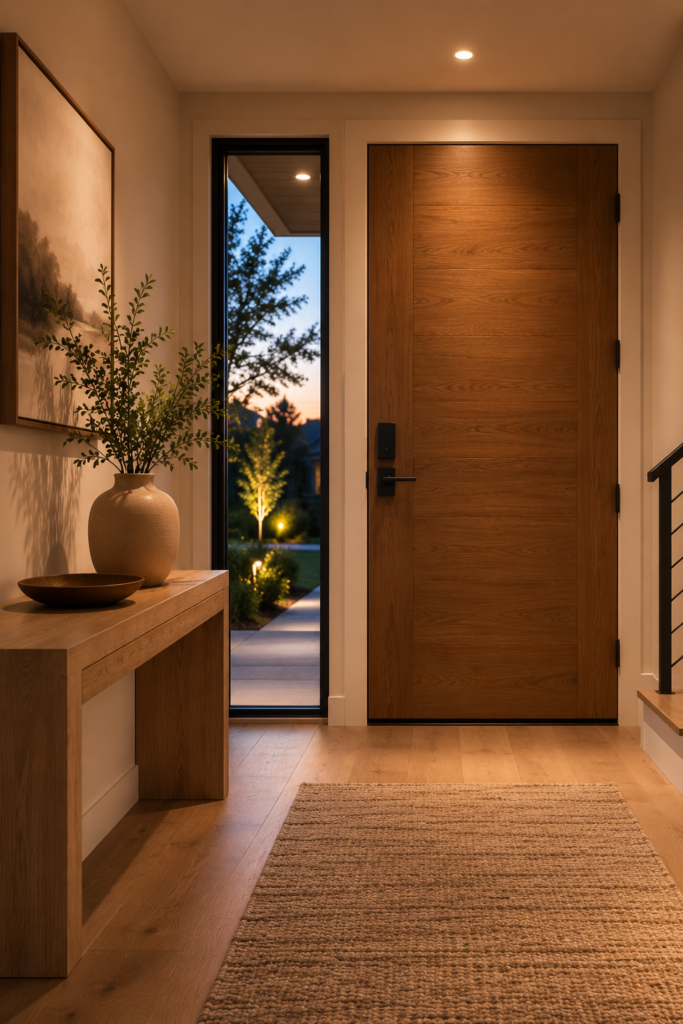
Think voice control instead of a wall of switches. Motion-based lighting instead of remembering to flip anything. A single smart lock instead of fumbling for keys — something we go deep on in our Best Smart Lock for Front Door guide. The goal isn’t to have more technology visible in your home; it’s to have less friction in your day, with the tech mostly invisible.
That said, it’s worth being honest about the downsides too, because they’re real and they’re exactly why “more gadgets” isn’t the minimalist answer. The most common complaints people have about smart homes are app overload (a different app for every brand), privacy concerns, and the sheer visual clutter of hubs, cameras, and sensors everywhere. A cluttered app drawer is still clutter — it’s just digital.
The fix is picking a lean, well-integrated setup rather than buying every gadget that looks cool. If you’re starting from zero, our Smart Home Technology: The Complete Beginner’s Guide is the best starting point, and our Affordable Smart Home Starter Kits guide shows exactly how to build a minimal, functional setup without buying more than you need.
On the “is it worth it” question — yes, generally. Beyond convenience, thoughtfully installed smart home features (like locks, lighting, and climate control) can genuinely improve resale value. The National Association of REALTORS® tracks this shift closely, noting that smart home hub systems have moved from niche gadgets to an expected convenience for many buyers — the same way updated appliances are expected today.
What’s Actually Replacing Minimalism?
Nothing is replacing it outright — it’s fragmenting into more personal versions of itself. You’ll see it labeled “soft minimalism,” “intentional living,” or “quiet luxury,” but the throughline is the same: fewer, better things, chosen deliberately rather than default clutter. Some people are folding a spiritual or values-based angle into it too, treating minimalism less as an aesthetic and more as a form of intentional living tied to what actually matters to them.
The minimalist fashion crossover is a good signal of where this is heading — capsule wardrobes, muted palettes, fewer but higher-quality pieces. It’s the same philosophy just applied to a closet instead of a living room. Minimalism in 2026 isn’t a strict rulebook anymore. It’s a filter: does this thing earn its place in my home, or is it just here?
Building Your Own Minimalist Smart Home (Without Overbuying)
If you’re actually trying to build this look and feel in your own space, here’s the order I’d tackle it in:
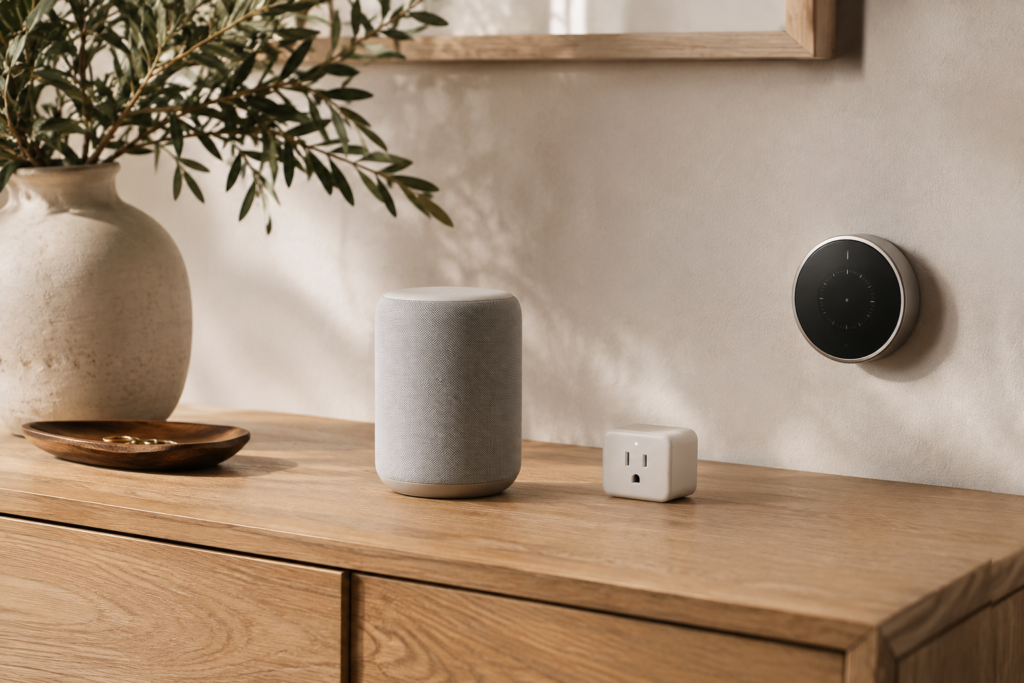
- Start with one hub, not five gadgets. Compare platforms before you commit — our Amazon Echo vs Google Home comparison breaks down which ecosystem fits a lean setup best.
- Automate the annoyances, not everything. Locks, lighting, and thermostats give the biggest daily payoff for the least visual clutter.
- Budget doesn’t mean bulky. You can build a genuinely minimal, functional setup without overspending — see our Best Budget Smart Home Devices for Beginners and Best Budget Smart Home Devices Under $100 roundups for picks that don’t clutter a space or a budget.
- Apply the same filter to small rooms. Minimalist design and smart tech pair especially well in tight spaces, where every object has to justify itself — our Small Bedroom Style Ideas guide covers this with a smart home twist built in.
TechNestDecor Editor’s Picks: Gear That Fits the Minimalist Smart Home Aesthetic
We tested a lot of gadgets while researching this piece, and these are the ones that actually earned a permanent spot in a minimal setup — nothing bulky, nothing that adds visual noise, just tech that quietly does its job. Heads up: some links below are affiliate links, meaning we may earn a small commission if you buy through them, at no extra cost to you.
Best Command Center Pick

Amazon Echo (Newest Model) Smart Speaker

One speaker replaces your hub, your music system, and your wall switches. Premium 360° sound pairs with a built-in Zigbee, Matter, and Thread border router, so you’re not stacking extra hardware just to connect other devices — the single “command center” every minimalist smart home should start with.
Best for: Users who want room-filling audio and a smart home hub in one device
Pros
- Excellent sound quality for its size
- Built-in Zigbee, Matter, and Thread hub reduces the need for extra hardware
- Fast and accurate Alexa voice recognition
- Supports multi-room audio
Cons
- Audio isn’t as powerful as dedicated premium speakers
- Best experience requires the Amazon Alexa ecosystem
- Some advanced features may require additional subscriptions
~$99.99
Check Price on Amazon
Best for Keyless Entry

ULTRALOQ U-Bolt SE Fingerprint Smart Lock
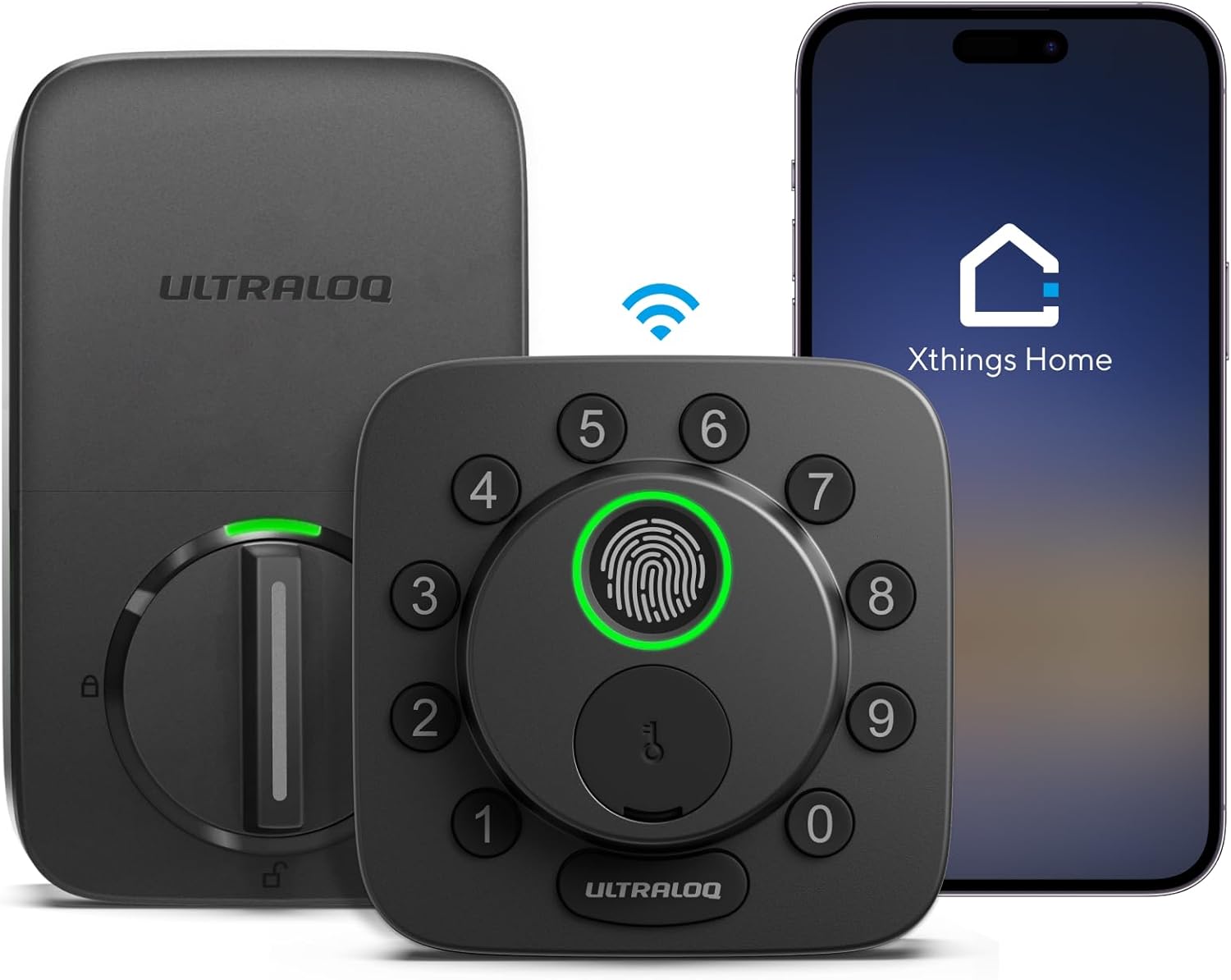
No visible keypad clutter, no fumbling for keys — fingerprint unlock keeps entry invisible and fast. It’s Matter-certified, so it plays nicely with whatever hub you already own, and a mechanical key backup means you’re never fully locked out.
Best for: Replacing the last piece of “old tech” left on your front door
Pros
- Fast and reliable fingerprint recognition
- Matter support works across major smart home ecosystems
- Easy DIY installation on most standard doors
- Multiple unlocking methods (fingerprint, PIN, app, key)
Cons
- Remote access requires an optional Wi-Fi bridge
- Fewer advanced automations than premium ULTRALOQ models
- Fingerprint sensor may struggle with wet or dirty fingers
~$99.99
Check Price on Amazon
Best Value, No Hub Required

Kasa Smart Plug Mini (4-Pack)

The compact “mini” design doesn’t block the second outlet — a small detail that matters when you’re trying to avoid visual clutter around outlets and lamps. No hub required, connects straight to Wi-Fi, and handles scheduling, timers, and away mode entirely through the Kasa app.
Best for: Automating lamps and small appliances without a single wire showing
Pros
- Excellent value, especially in the 4-pack
- Very easy setup with the Kasa app
- Compact design doesn’t block adjacent outlets
- No hub required
Cons
- Does not support Apple HomeKit or Matter
- Requires a stable 2.4GHz Wi-Fi network
- No energy monitoring feature
~$29.99
Check Price on Amazon
Best Set-and-Forget Comfort

ecobee Smart Thermostat Premium

One glass touchscreen replaces a wall of manual dials and vents you’d otherwise fuss with constantly. Occupancy sensing means you set it once and mostly forget it, and the included SmartSensor balances temperature room to room instead of trusting a single reading at the thermostat itself.
Best for: The “set it and forget it” comfort layer of a minimal smart home
Pros
- Excellent energy-saving automation
- Built-in air quality monitoring
- SmartSensor improves room-to-room comfort
- Wide smart home compatibility (Alexa, Siri, HomeKit, Google)
Cons
- Higher price than many competitors
- Some systems require a C-wire or included Power Extender Kit
- Advanced features may take time to configure
~$249.99
Check Price on Amazon
Best for Cutting Energy Costs

Emporia Gen 3 Smart Home Energy Monitor

Instead of adding gadgets to manage energy use, this monitors what’s already there — a very “less but smarter” approach to cutting your utility bill. Sixteen circuit-level sensors identify exactly which appliances are driving your electricity costs, with real-time tracking through the Emporia Energy app.
Best for: Homeowners who want efficiency without adding visible devices to every room
Pros
- Accurate real-time energy monitoring
- Individual circuit tracking identifies power-hungry devices
- Excellent mobile app with detailed reports
- Supports solar energy monitoring
Cons
- Installation inside the breaker panel may require an electrician
- Requires a stable Wi-Fi connection
- No Apple HomeKit support
~$199.99
Check Price on Amazon
Best Minimalist Bathroom Add-On

Withings Body Smart Wi-Fi Scale

A slim, single-device replacement for a scale, a tape measure, and a fitness tracker sync step — it just syncs itself over Wi-Fi with nothing to plug in or manage. Tracks weight, body fat, muscle mass, and more, and automatically recognizes multiple users without any manual switching.
Best for: Rounding out a minimalist bathroom with one purposeful object instead of several
Pros
- Highly accurate body composition measurements
- Automatic Wi-Fi syncing — no phone required during weigh-ins
- Supports multiple users automatically
- Premium build quality and sleek design
Cons
- More expensive than basic smart scales
- Some advanced health insights require a Withings+ subscription
- Body composition metrics can vary with hydration levels
~$99.95
Check Price on Amazon
Frequently Asked Questions
Is Gen Z minimalist or maximalist?
It’s mixed, but a meaningful share of Gen Z leans minimalist — largely driven by smaller living spaces, frequent moves, and a preference for intentional spending over accumulating things.
Is minimalism fading out?
No — it’s evolving rather than disappearing, shifting from stark, clinical spaces toward warmer, more personal versions often called “soft minimalism” or “intentional living.”
What is the 3-3-3 rule for decluttering?
It’s a simple habit of removing three unused, unworn, or unneeded items at a time, making decluttering a small recurring task instead of one overwhelming purge.
Do smart homes increase property value?
Generally yes. Thoughtfully chosen smart features like locks, lighting, and climate control are increasingly expected by buyers and can support resale value, much like updated appliances do.
What is the biggest concern with using smart home devices?
The most common complaints are app fragmentation (a separate app per brand), privacy concerns around data collection, and visual clutter from too many hubs, cameras, or sensors — all of which a lean, well-chosen setup avoids.
What is replacing minimalism?
Nothing is replacing it wholesale — it’s splintering into more personal forms like soft minimalism, intentional living, and capsule-wardrobe style minimalist fashion, all built around the same idea of owning fewer, more deliberate things.
The Bottom Line
A minimalist smart home aesthetic isn’t about choosing between “simple” and “smart.” It’s about letting the technology do the quiet, boring work — locking doors, adjusting lights, managing energy — so your space can stay visually calm while your day gets easier. Less clutter, less friction, more of both at once.
Start small. Pick one habit from the decluttering rules above and one piece of tech from our guides, and build from there instead of trying to overhaul your whole home in a weekend. If you want a next step, our Smart Home Technology Beginner’s Guide is the best place to start — and we’d genuinely love to hear which minimalist smart home habit you’re trying first. Drop a comment and let us know.