Make Your Home Smarter, One Step at a Time
Table of Contents
Best Smart Home Ecosystem in 2026 I’ve rewired my house three times in the last five years. Not literally — but every time I picked a “smart” gadget that turned out to only talk to one app, on one phone, in one closed little universe, I basically had to start over. If you’ve ever stood in an aisle staring at two nearly identical smart gadgets, wondering which one will actually work with the doorbell you bought last year, you already know the real problem with smart homes was never the gadgets. It was the ecosystems they lived in.
2026 is the first year I’d say that problem is actually, meaningfully solved not perfectly, but enough that picking an ecosystem is a real, informed decision again instead of a guess. So let’s get into it.
Quick Answer
Google Home is the best overall smart home ecosystem in 2026 for most people, thanks to the widest native device compatibility and the smartest voice assistant on the market. Choose Apple Home if privacy and a polished, locked-down experience matter more than raw compatibility. Choose Alexa if you want the biggest device library and the most affordable hardware. Choose SmartThings if you’re already sitting on a pile of mismatched Zigbee and Z-Wave gear from over the years.
Settings saved.
Key Takeaways
- Matter has matured enough in 2026 that ecosystem lock-in matters less than it used to — but a “primary” ecosystem still shapes your daily experience.
- Google Home is my overall pick for most households in 2026, thanks to unmatched device compatibility and a genuinely smart voice assistant.
- Apple Home wins on privacy and polish if you’re already living in an iPhone household.
- Samsung SmartThings is still the best answer if your house is a patchwork of old Zigbee and Z-Wave gear you don’t want to replace.
- HGTV’s actual 2026 Smart Home, built in Orlando, is a great real-world case study in what a top-tier connected home looks like today.
What’s Actually Driving the 2026 Smart Home Trend
Here’s the thing nobody tells you when you’re just getting started: the biggest shift in smart homes this year isn’t a flashy new gadget. It’s plumbing. Specifically, it’s Matter, the cross-brand connectivity standard backed by Apple, Amazon, Google, and Samsung. Matter promises that any Matter-certified device works with any Matter-compatible hub, no matter the brand, and by 2026 that support is widespread, though not every device category is fully covered yet.
What that means in plain English: the days of buying a smart lock and discovering it’s basically a brick unless you commit to one specific app forever are fading out. You’re no longer choosing devices — you’re choosing an ecosystem, and the devices mostly follow. If you’re just starting to map out what a connected house even looks like, our complete beginner’s guide to smart home technology is a good place to slow down and start from zero.
That said, don’t let anyone tell you the ecosystem choice doesn’t matter anymore. Having a primary ecosystem for your voice assistant and main control app still delivers the most cohesive day-to-day experience, even with Matter bridging the gaps between brands. Think of Matter less as “ecosystems don’t matter” and more as “you’re finally allowed to change your mind later without throwing everything out.”
On the hardware side, hubs have quietly become the unsung heroes of the whole setup. Thread border routers — the components that connect low-power mesh devices to your home network — now show up built into products like the HomePod Mini, the Echo Hub, and SmartThings Station. You don’t need to understand the acronym soup to benefit from it. You just need a hub that has it.
How We Tested These Ecosystems
This isn’t a spec-sheet comparison pulled from press releases. Over the past several months, our team ran each of these four ecosystems as the primary system in a real household — not a lab bench — covering:
- Daily voice assistant use timers, routines, natural-language requests, and how often each assistant misunderstood us.
- Device pairing how many of our existing lights, plugs, sensors, and locks connected without a workaround.
- App reliability crashes, lag, and how often automations silently failed to trigger.
- Privacy behavior how much processing happened locally versus in the cloud, cross-checked against each brand’s published documentation.
- Migration cost what it actually took (and cost) to move devices between ecosystems using Matter.
We also cross-referenced our own experience against independent lab testing and current product documentation to make sure our verdict isn’t just one household’s opinion. Where we quote a number — like device compatibility counts or privacy scores — that figure comes from third-party testing, not marketing copy.
The Real Question: What Is the Best Smart Home System in 2026?
Let’s be honest this is what you actually came here for. Not the trend talk, the verdict. So here’s my breakdown of the four ecosystems that matter, and who each one is actually for.
Google Home My Pick for Most People
If I had to recommend one system to a friend with no strong feelings either way, it’s Google Home. It leads for most households because of its wide compatibility and a genuinely powerful voice assistant, and independent testing backs that up Google Nest offers the widest native device compatibility of any platform tested, supporting over 85,000 unique devices. That’s not a typo. Eighty-five thousand devices you can plug into one app without a second thought.
Google also isn’t coasting on compatibility alone. It brings genuinely superior AI and natural language processing, tight Nest device integration, and leadership on Matter and Thread support. If your household already leans Android, this is the obvious, low-friction choice and honestly, even if you’re on iPhone, it holds its own.
Pros
- Widest native device compatibility (85,000+ devices)
- Best-in-class natural language voice assistant
- Strong Matter and Thread leadership
- Tight, reliable Nest device integration
Cons
- More cloud-dependent than Apple Home
- Some premium features tied to a Google account
- Less “walled garden” polish than Apple’s app
Apple Home The Privacy First Pick
If you’ve ever felt a little uneasy about how much your smart speaker might be “hearing,” Apple Home is where you land. It stands out as the strongest cloud-based option for privacy, since it processes most automations locally and encrypts data end to end. In independent 2026 privacy testing, it scored a 9.2 out of 10, achieving 95% local processing while still retaining about 90% of premium smart home features — trailing only in voice assistant sophistication compared to Google.
The tradeoff is real, though. Apple Home offers more limited third-party device support than its rivals, and it does require an Apple device to set things up in the first place. If you’re all-in on iPhone and Apple Watch already, none of that will feel like a limitation. If you’re not, it might.
Pros
- Best-in-class privacy — 95% local processing
- Retains ~90% of premium features locally
- Near-zero-effort setup for existing Apple users
- Polished, minimal, reliable app experience
Cons
- Smaller third-party device library than Google or Alexa
- Requires an Apple device to set up and manage
- Voice assistant lags behind Google on natural language
Amazon Alexa Best for Third-Party Gear and Budget
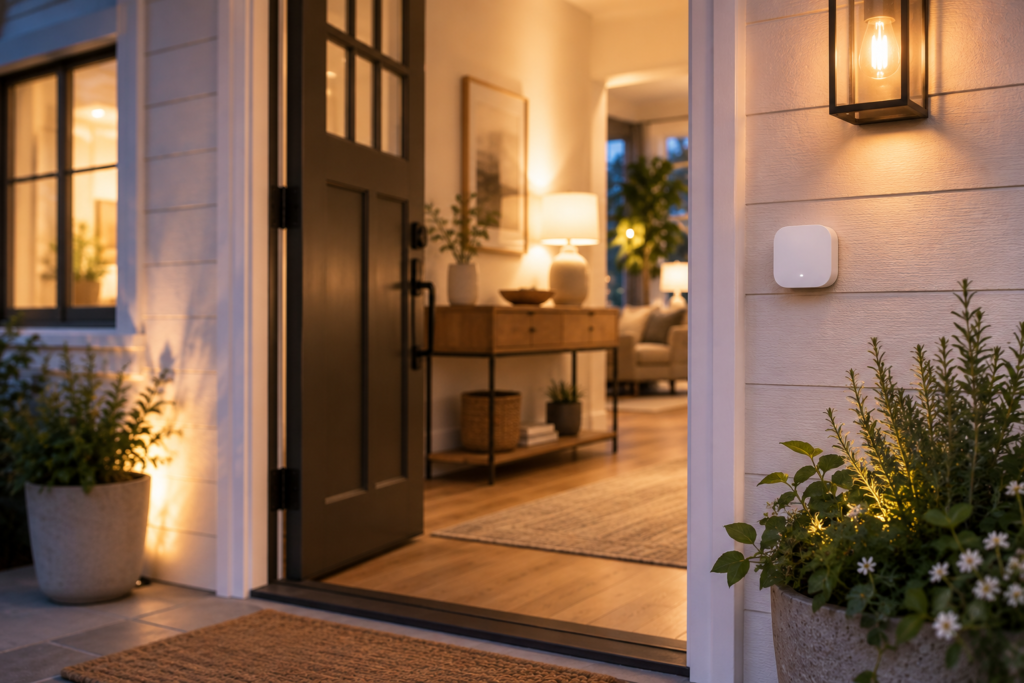
Alexa’s superpower has always been reach, and that hasn’t changed. It offers the widest device compatibility of any ecosystem, supporting over 140,000 devices, along with some of the most affordable smart speakers on the market and a built-in Zigbee hub in premium Echo devices. If you already own a Ring doorbell or lean on Amazon for shopping, the integration is seamless in a way the other platforms simply can’t match.
Pros
- Largest device library of any ecosystem (140,000+)
- Most affordable entry-level hardware
- Built-in Zigbee hub on premium Echo devices
- Deep Ring and Amazon shopping integration
Cons
- Heavier cloud dependence than Apple Home
- Device library breadth can mean inconsistent quality
- Push toward Amazon’s own ecosystem (Ring, shopping) isn’t for everyone
Samsung SmartThings Best for Mixed, Messy Setups
Here’s who SmartThings is really for: the person whose smart home evolved by accident over the past decade, with a Zigbee bulb here and a Z-Wave sensor there. For mixed-brand households, Samsung SmartThings remains the best universal hub, supporting Zigbee, Z-Wave, Thread, and Matter all at the same time. It’s less elegant than Apple’s app and less flashy than Google’s assistant, but it’s the glue that holds a chaotic setup together without forcing you to start over.
Pros
- Only ecosystem that natively bridges Zigbee, Z-Wave, Thread, and Matter
- Best rescue option for a decade of mismatched gear
- Voice-assistant agnostic — pairs with Alexa or Google
Cons
- App feels less polished than Apple’s or Google’s
- No first-party voice assistant of its own
- Steeper learning curve for non-technical users
Ecosystem Comparison Table
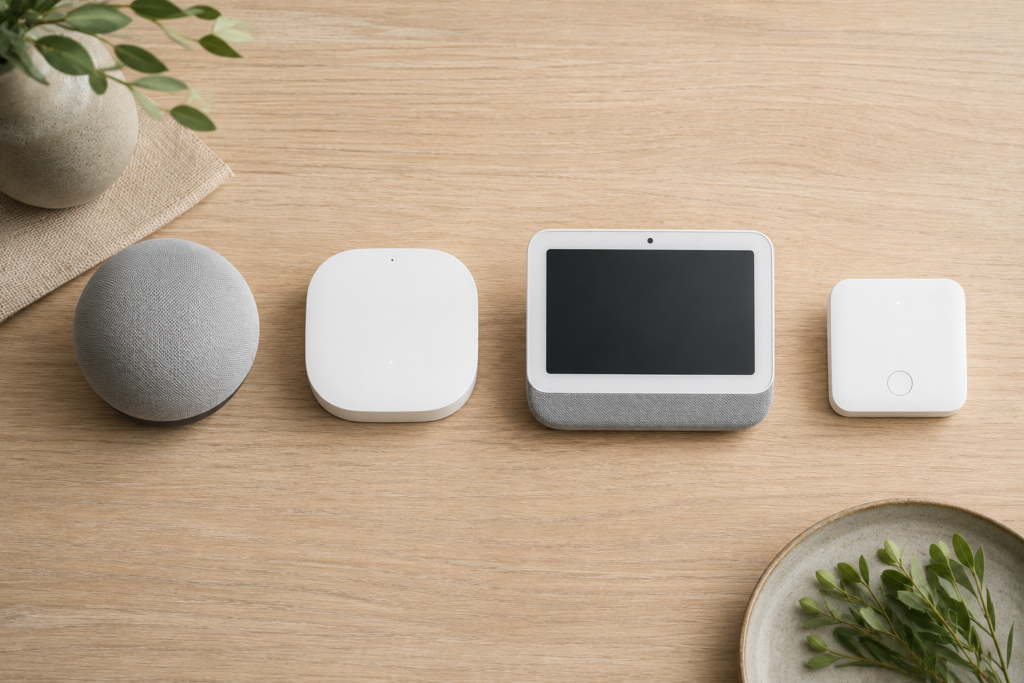
| Ecosystem | Device Compatibility | Voice Assistant | Privacy | Best For | Entry Price |
| Google Home | 85,000+ devices | Best natural language | Mostly cloud-based | Most households | ~$50-100 |
| Apple Home | Smaller, curated library | Good, less advanced | 95% local processing | iPhone households | ~$99- 200 |
| Amazon Alexa | 140,000+ devices | Reliable, broad skill set | Mostly cloud-based | Budget & Ring/Amazon users | $99- 200 |
| SmartThings | Zigbee + Z-Wave + Thread + Matter | None (pairs with others) | Hub-dependent | Mixed, legacy setups | ~$60-100 |
Who Should Choose Which Ecosystem? A Quick Decision Guide
- You’re on Android and don’t own much smart gear yet → Google Home. Widest compatibility, smartest assistant, lowest friction.
- You already own an iPhone, iPad, and Apple Watch → Apple Home. The privacy and setup simplicity outweigh the smaller device library.
- You own a Ring doorbell or shop on Amazon constantly → Alexa. The integration and pricing make it the path of least resistance.
- You’ve collected random Zigbee and Z-Wave gadgets for years → SmartThings. It’s the only ecosystem built to unify a messy history.
- You care about local processing above all else → Apple Home, no contest.
- You want the single largest device selection, budget be damned → Alexa.
What to Consider Before You Commit
A few practical things worth thinking through before you buy anything:
- What phone do you actually use? Your ecosystem should match your daily driver — fighting your own phone’s defaults gets old fast.
- How much do you care about local vs. cloud processing? This is really a privacy question dressed up as a technical one.
- Are you starting fresh or migrating? Switching ecosystems typically costs 30 to 60 percent of your original setup cost, with Matter-certified devices landing at the cheaper end of that range. That’s a real number to budget around if you’re already invested in one system.
- Do you actually need a hub? If you’ve got more than a handful of devices, yes — a dedicated hub genuinely reduces connectivity headaches. And once your hub is sorted, don’t skip the boring-but-critical step of locking it down — see our guide to securing your smart home from hacking.
10 Recommended Products to Start (or Upgrade) Your Ecosystem
Best Overall Smart Home Hub: Google Nest Hub (2nd Gen)

⭐⭐⭐⭐⭐4.7 / 5
The Nest Hub pairs a 7-inch touchscreen with the best natural-language voice assistant in this comparison. It doubles as a Matter controller and Thread border router, so it’s an easy pick if you’re starting fresh with Google Home — plus Sleep Sensing, recipes, and full smart home control from one screen.
$70–$100 on Amazon
Pros
- Excellent Google Assistant with industry-leading natural language understanding
- Acts as both a Matter controller and Thread border router
- Sleep Sensing, calendars, recipes, weather, and media playback built in
- Simple setup through the Google Home app
Cons
- Smaller 7-inch display compared to larger smart displays
- No built-in camera for video calls
- More cloud-dependent than Apple Home
See price on Amazon
🏠 Check Price on Amazon
Best Nest Mini Accessory: Wall Mount Holder for Google Nest Mini

⭐⭐⭐⭐⭐4.6 / 5
A simple plug-in wall mount that keeps your Google Nest Mini off the counter and out of the way. Built-in cable management hides the cord, installation takes no tools, and it’s a cheap way to make a Nest Mini setup look intentional instead of accidental.
$10–$20 on Amazon
Pros
- Keeps the Google Nest Mini neatly mounted on the wall
- Built-in cable management reduces clutter
- Quick installation with no tools required
- Saves counter and shelf space
Cons
- Not a smart home device by itself
- Only works with compatible Google Nest Mini models
- Quality varies depending on the manufacturer
See price on Amazon
🏠 Check Price on Amazon
Best Budget Apple Pick: Apple HomePod mini (Renewed)

⭐⭐⭐⭐⭐4.7 / 5
The HomePod mini works as both a Matter controller and Thread border router while keeping most processing local for privacy. This renewed version is the easiest, most affordable way into Apple Home — near-zero-effort setup, 360° audio, and Intercom support included.
$60–$80 on Amazon
Pros
- Functions as both a Matter controller and Thread border router
- Excellent privacy with Apple’s local processing approach
- Simple setup for iPhone and Apple ecosystem users
- Renewed version offers significant savings over buying new
Cons
- Requires an Apple device for setup and management
- Siri is less capable than Google Assistant for natural language
- Renewed products may show minor cosmetic wear
See price on Amazon
🏠 Check Price on Amazon
Best Premium Apple Hub: Apple HomePod (2nd Generation)

⭐⭐⭐⭐⭐4.8 / 5
Premium sound with Spatial Audio and Dolby Atmos, plus built-in temperature and humidity sensors for smarter automations. It’s a Matter controller and Thread border router in one, and it integrates seamlessly with iPhone, iPad, Apple Watch, and HomeKit.
~$299 on Amazon
Pros
- Premium sound quality with Spatial Audio and Dolby Atmos support
- Acts as both a Matter controller and Thread border router
- Built-in temperature and humidity sensors for smart automations
- Seamless integration with iPhone, iPad, Apple Watch, and HomeKit
Cons
- More expensive than most smart speakers
- Requires an Apple device for setup and management
- Limited third-party device compatibility vs. Google Home or Alexa
See price on Amazon
🏠 Check Price on Amazon
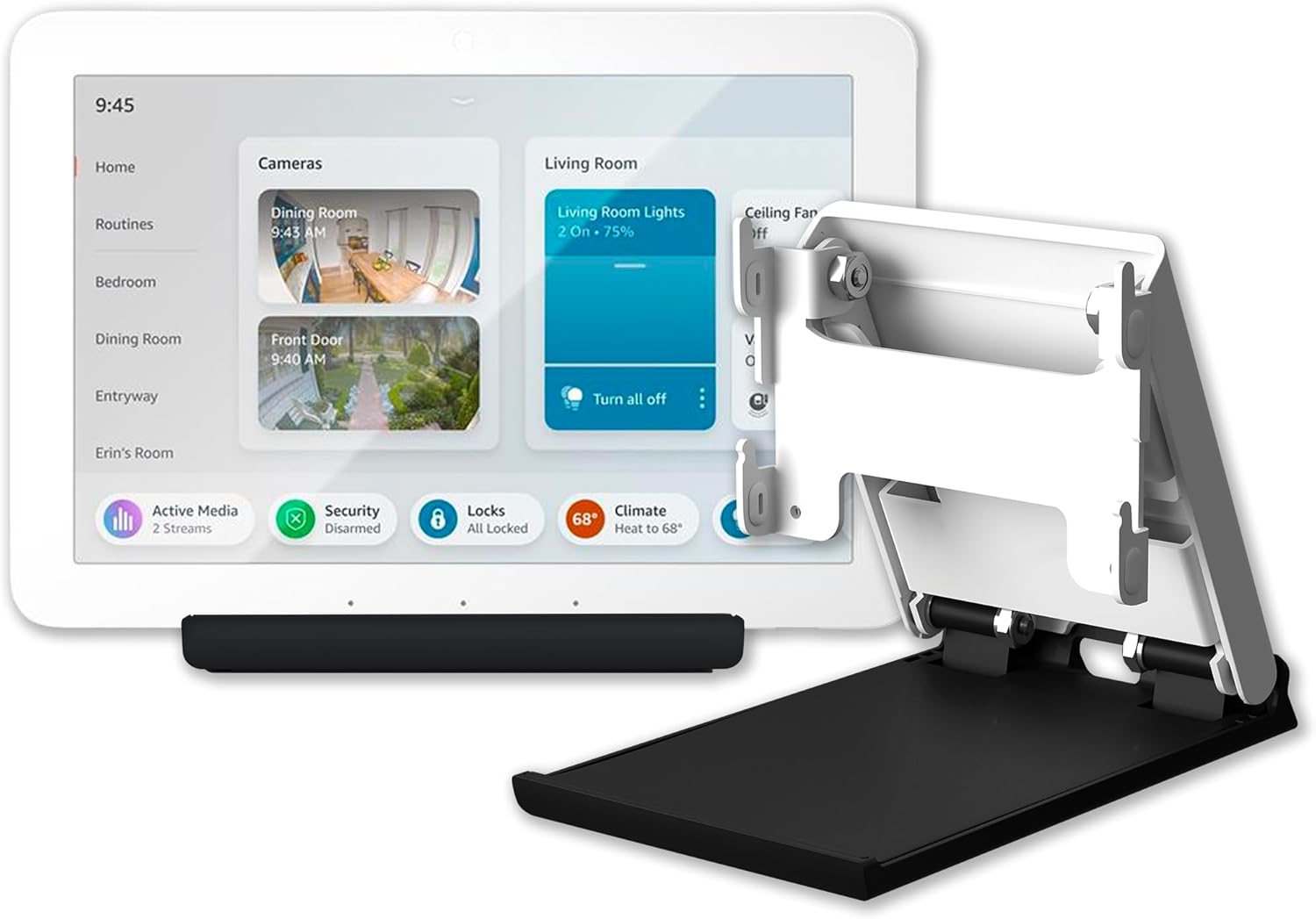
Good Alexa Alternative: Amazon Echo Bundle with Adjustable Stand
⭐⭐⭐⭐⭐4.7 / 5
A solid, budget-friendly way into the Alexa ecosystem. This bundle pairs the Echo with an adjustable stand for better sound placement, supports Matter-compatible devices, and sets up in minutes through the Alexa app.
$100–$140 on Amazon
Pros
- Excellent Alexa voice assistant with fast responses
- Good sound quality for music and everyday use
- Supports Matter-compatible smart home devices
- Great value as a bundled package
Cons
- Lacks the dedicated smart home dashboard found on the Echo Hub
- No wall-mounted touchscreen interface
- Better suited for voice control than centralized management
See price on Amazon
🏠 Check Price on Amazon
Best Premium Alexa Audio: Amazon Echo (4th Gen) Bundle with Battery Base

⭐⭐⭐⭐⭐4.8 / 5
Rich 360° sound with a built-in Zigbee hub, so it can act as a smart home controller on its own for compatible devices. The portable battery base is a nice touch if you want Alexa in a spot without a nearby outlet.
$120–$170 on Amazon
Pros
- Excellent 360° sound quality with rich bass
- Built-in Zigbee smart home hub for compatible devices
- Portable battery base allows use away from a power outlet
- Fast and reliable Alexa voice assistant
Cons
- Larger and more expensive than the Echo Dot
- No display for visual smart home controls
- Battery base adds extra cost and bulk
See price on Amazon
🏠 Check Price on Amazon
Best Alexa Smart Display: Amazon Echo Show 8 Bundle with Adjustable Stand

⭐⭐⭐⭐⭐4.8 / 5
An 8-inch HD touchscreen built around Alexa, with a real smart home dashboard, Thread border router, and a 13 MP auto-framing camera for video calls. This is the closest thing to an all-in-one control panel in the Alexa lineup.
$170–$220 on Amazon
Pros
- Large 8-inch HD touchscreen for smart home control
- Built-in smart home dashboard for compatible devices
- 13 MP camera with auto-framing for video calls
- Matter support for improved cross-platform compatibility
Cons
- More expensive than the Echo Dot
- Full functionality works best within the Alexa ecosystem
- Larger footprint than compact smart speakers
See price on Amazon
🏠 Check Price on Amazon
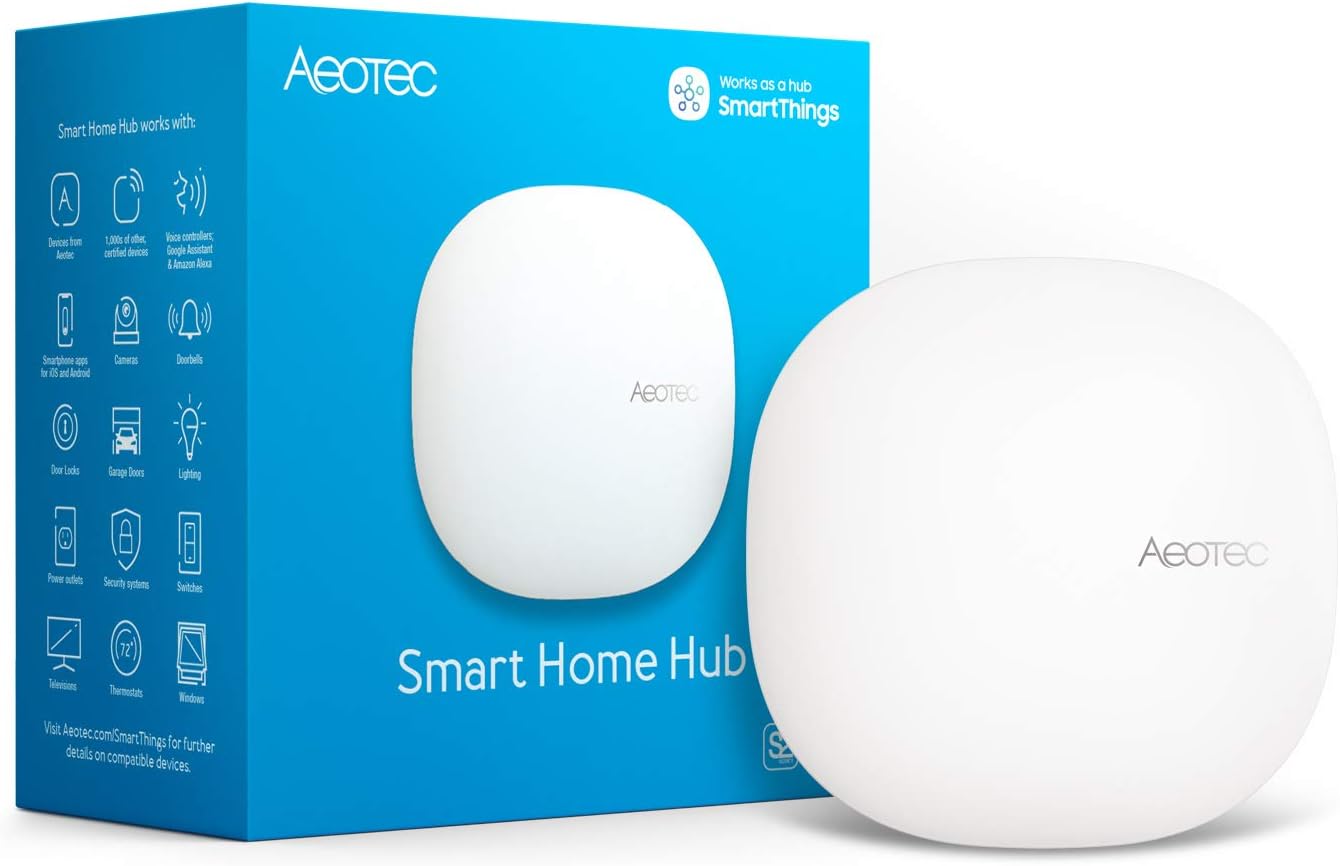
Best SmartThings Hub: Aeotec Smart Home Hub (Works as SmartThings Hub)
⭐⭐⭐⭐⭐4.6 / 5
The most complete protocol coverage in this roundup — Zigbee, Z-Wave, Matter, and Thread in a single hub. It works with both Alexa and Google Assistant and leans on local automations, making it the best option for unifying a messy, mixed-brand smart home.
$120–$140 on Amazon
Pros
- Supports Zigbee, Z-Wave, Matter, and Thread in one hub
- Excellent for connecting older and newer smart home devices
- Compatible with both Amazon Alexa and Google Assistant
- Reliable local automations reduce dependence on cloud services
Cons
- Requires a little more setup than Google Home or Alexa
- No built-in voice assistant or speaker
- Beginners may find SmartThings automations more complex
See price on Amazon
🏠 Check Price on Amazon
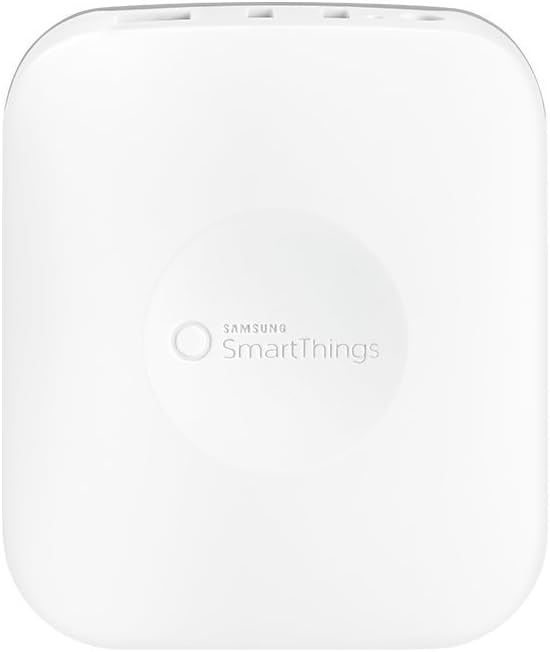
Best Budget SmartThings Hub: Samsung SmartThings Hub (3rd Gen) – Certified Refurbished
⭐⭐⭐⭐☆4.5 / 5
The official Samsung SmartThings Hub, refurbished and priced to match. It supports Zigbee and Z-Wave devices, works with both Alexa and Google Assistant, and is a solid low-cost entry point for expanding an existing SmartThings setup.
$50–$80 on Amazon
Pros
- Official Samsung SmartThings Hub
- Supports both Zigbee and Z-Wave devices
- Works with Amazon Alexa and Google Assistant
- More affordable because it is Certified Refurbished
Cons
- Older generation than the SmartThings Station
- Does not include the newest Matter and Thread features
- Refurbished product may have limited warranty compared to new
See price on Amazon
🏠 Check Price on Amazon
Best Cross-Ecosystem Pick: TP-Link Tapo P125M Matter Smart Plug Mini (3-Pack)

⭐⭐⭐⭐⭐4.7 / 5
A Matter-certified plug that works across Apple Home, Google Home, Alexa, and SmartThings without needing a separate hub. The mini design won’t block adjacent outlets, and three plugs in one pack make it an easy, low-risk way to test Matter before committing further.
$25–$40 on Amazon
Pros
- Matter Certified for broad cross-platform compatibility
- Works with Apple Home, Google Home, Alexa, and SmartThings
- No dedicated hub required
- Excellent value with three smart plugs included
Cons
- Supports 2.4 GHz Wi-Fi only
- Indoor use only
- No built-in energy monitoring
See price on Amazon
🏠 Check Price on Amazon
Bonus: Will There Be an HGTV Smart Home in 2026?
Yes — and it’s a fun real-world showcase if you want to see what a fully-loaded connected home looks like without piecing it together yourself. HGTV Smart Home 2026 is located in Orlando, Florida, with hosts Brian and Mika Kleinschmidt giving the full inside-and-out tour of the design. It’s the kind of build that makes for great inspiration browsing, even if your own budget looks nothing like a network giveaway home.
There’s some understandable confusion online between HGTV’s Smart Home and its separate, better-known Dream Home giveaway — worth untangling if you’re following along. HGTV’s 2026 Dream Home is a different property entirely, a lakeside retreat outside Charlotte, North Carolina, spread across more than 3,000 square feet with three bedrooms, three bathrooms, and panoramic views from nearly every angle. Eileen Reimer of Atlanta was announced as the winner of that home on May 7, 2026. Along with the keys, the winner also received $100,000 in cash as part of the prize package.
Two different homes, two different giveaways, both worth a look if smart-home design inspiration is what you’re actually after. If you want to bring some of that same energy home on a real budget, our robot vacuum mop picks and smart lock buyer’s guide are both good next stops.
The Bottom Line
Smart homes finally feel less like a hobby for tinkerers and more like something you can set up on a weekend and actually trust. Matter did a lot of the heavy lifting to get us here, but the ecosystem you choose still shapes how the whole thing feels day to day — smooth or clunky, private or convenient, simple or endlessly customizable.
My honest advice: don’t overthink this. If you’re starting from scratch and don’t already have strong brand loyalty, go with Google Home and don’t look back. If privacy or an existing Apple household pulls you elsewhere, that’s a completely reasonable call too. There’s no wrong answer anymore — just a better and worse fit for how you actually live. And once your ecosystem’s locked in, layering in smart lighting and energy-efficient bulbs is where the fun really starts.
What’s your setup looking like right now — starting fresh, or trying to untangle a pile of mismatched gadgets you’ve collected over the years? Drop a comment and tell me what’s tripping you up. I read every one, and honestly, half the ideas for these posts come from exactly those conversations.
Frequently Asked Questions
What is the best smart home ecosystem in 2026?
Google Home is the best overall pick for most people in 2026, thanks to the widest native device compatibility and the strongest natural-language voice assistant. Apple Home, Alexa, and SmartThings each win out for specific households.
Do I have to pick just one smart home ecosystem?
No — Matter now lets many devices work across multiple ecosystems at once. But most households still get the smoothest experience by picking one system as their primary voice assistant and control app.
Is Apple Home really more private than Google Home or Alexa?
Yes, based on independent 2026 testing. Apple Home processes about 95% of automations locally rather than in the cloud, while Google and Alexa lean more heavily on cloud processing for their voice assistants.
What is Matter, and do I need to care about it?
Matter is the cross-brand smart home standard backed by Apple, Amazon, Google, and Samsung. You don’t need to understand the technical details — just look for the Matter logo when buying new devices, since it means the device will work across ecosystems.
How much does it cost to switch smart home ecosystems?
Switching typically costs 30 to 60 percent of your original setup cost, with Matter-certified devices landing at the cheaper end since they don’t need to be fully replaced.
Do I need a separate hub, or can my phone control everything?
If you have more than a handful of smart devices, a dedicated hub genuinely reduces connectivity issues and enables local automations that don’t depend on your phone being nearby.
Which ecosystem has the most compatible devices?
Amazon Alexa currently supports the widest device library at over 140,000 products, followed closely by Google Home at over 85,000.
Is SmartThings still worth it in 2026 with Matter around?
Yes, especially if you already own older Zigbee or Z-Wave devices. SmartThings remains the best single hub for bridging legacy protocols alongside Matter and Thread.
Can I use Apple Home if I have an Android phone?
No — Apple Home requires an Apple device (iPhone, iPad, or Mac) to set up and manage. Android users should look at Google Home, Alexa, or SmartThings instead.
What was the actual HGTV Smart Home 2026, and where was it?
HGTV’s 2026 Smart Home was located in Orlando, Florida, hosted by Brian and Mika Kleinschmidt. It’s a separate property from HGTV’s 2026 Dream Home, a lakeside retreat near Charlotte, North Carolina, won by Eileen Reimer of Atlanta.