Make Your Home Smarter, One Step at a Time


By TechNestDecor team Last updated: [August 13, 2026]
Table of Contents
I used to think my kitchen was in good shape. Then I actually went drawer by drawer — cabinet by cabinet — and found a warped nonstick pan from a wedding registry, three garlic presses I’d bought because I forgot I already owned two, and a food scale with a battery so corroded it had left a rust ring on the shelf. Sound familiar?
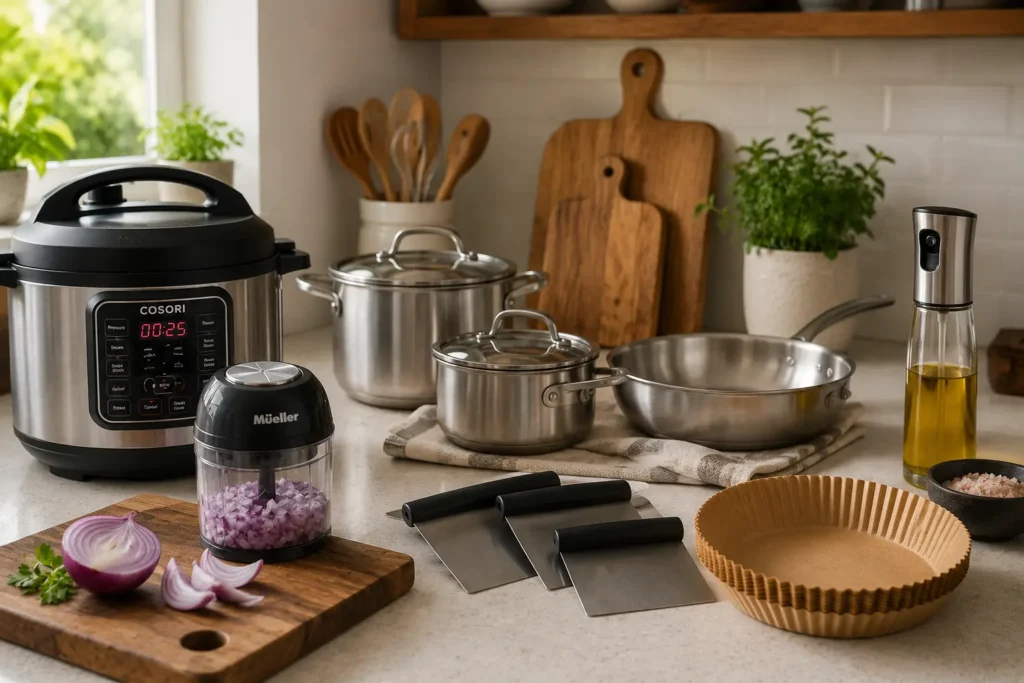
Here’s the thing nobody tells you about building out a kitchen: it’s not really about buying more stuff. It’s about knowing which handful of items actually earn their counter space, which ones are quietly working against you (yes, that includes a few things sitting in your cabinet right now), and which ones are worth the splurge because you’ll use them every single day.
Settings saved.
I went through this exact process for my own kitchen, then cross-referenced it against what people are actually asking search engines about home kitchen products in 2026 — everything from “what must every kitchen have” to the more specific “what kitchen item should you throw away for health reasons.” That second one has a real, documented answer, so let’s start there, then build up to the tools actually worth buying.
The Kitchen Items You Should Probably Toss First
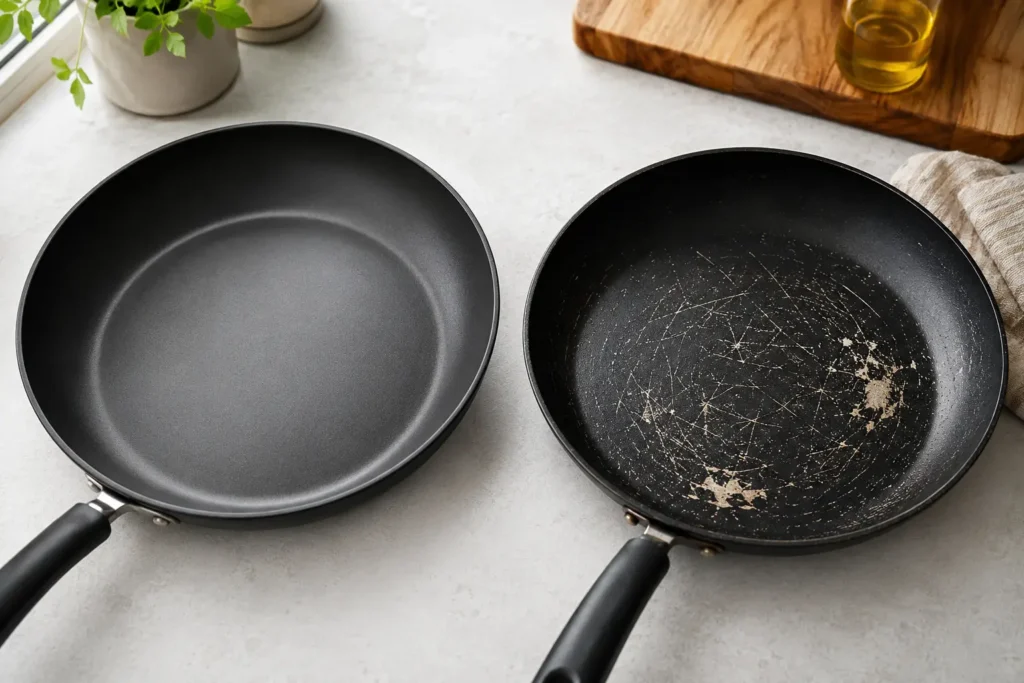
Before we get to what to buy, let’s talk about what to get rid of — because a new gadget sitting next to a compromised pan doesn’t actually upgrade your kitchen. Here’s what actually deserves the trash (or recycling) bin:
Two separate warnings, worth knowing apart: First, the FDA has issued an official safety alert steadily expanding a list of imported aluminum, aluminum-alloy, and brass cookware — often labeled Hindalium or Indalium — that tested positive for leaching measurable lead into food. Their guidance since the August 2025 alert has stayed blunt: throw it away, don’t donate it, don’t refurbish it. Second, and separately, cookware testing experts (Consumer Reports’ Breann Chai among them) have long said that once a nonstick pan’s coating is chipped or scratched, it should be tossed — the coating can flake into food, and some PFAS-related compounds can release as fumes once a pan is heated past roughly 500°F.
You’ll see this second point attributed to “a cardiologist” in a lot of search results — I couldn’t track down a single named cardiologist behind that specific framing, so I’m sourcing it to the food-safety and cookware-testing experts who’ve actually gone on record.
- Scratched or chipped nonstick pans. Once the coating is compromised, it’s not just less “nonstick” — it can flake into food, and heating it too hot makes it worse. This is consistently the number-one thing experts say to replace, not repair.
- Cracked mugs and chipped glassware. A hairline crack in a mug is a hazard waiting for hot liquid to finish the job.
- Warped pots and pans. If it wobbles on a flat burner, heat is distributing unevenly — which means undercooked spots and wasted energy.
- Unlabeled imported cookware — especially aluminum kadai-style pans or brass pots picked up from specialty grocers, which is exactly the category the FDA has been actively recalling since 2025.
- Wooden cutting boards with deep grooves that no amount of scrubbing gets clean.
None of this means panic-purging your whole kitchen tonight. Pick your one or two most-used problem pieces and replace those first. That’s a much less overwhelming way to do this — and it naturally leads into what to replace them with.
Building out a fully connected kitchen? Our Smart Home Ecosystem guide walks through how kitchen gadgets, lighting, and security fit into one app-controlled setup — and if you’re rethinking the lighting over your counters, our LED strip lighting roundup covers the under-cabinet options that make prep work so much easier.
How We Chose These Products
None of the picks below made the list just because they’re popular. I weighed each one against a handful of things that actually matter once a product is sitting on your counter instead of in a review:
- Performance. Does it actually do the job well, not just on paper?
- Durability. Will it hold up past the first few months, or is it a one-season gadget?
- Ease of use. Can you figure it out without digging through a manual?
- Cleaning. Dishwasher-safe parts matter more than people admit until they’re hand-washing a spiralizer blade at 10pm.
- Materials and safety. PFAS-free and PFOA-free where it’s relevant, especially for cookware.
- Storage footprint. A brilliant gadget you never pull out of the cabinet isn’t actually helping you.
- Value for money. Not “cheapest,” but whether the price matches what you actually get.
What Every Kitchen Actually Needs
Strip away the trend pieces and the gadget-of-the-month hype, and the “must-have” list is shorter than you’d think. Here’s the foundational layer — the stuff that shows up in basically every serious kitchen essentials list:
Must-Haves
- A reliable digital kitchen scale (for baking accuracy and portioning)
- An instant-read thermometer (for food safety, not just doneness)
- One good chef’s knife, kept actually sharp
- A cutting board you’re not embarrassed by
- PFAS-free cookware — stainless steel or cast iron for the pieces you use daily
- Airtight storage for pantry staples (this is also your best defense against pantry pests)
That’s the baseline. Everything past that is where “basic” turns into “genuinely upgrades how you cook.”
Useful Upgrades
- A multi-function pressure cooker, if you’re tired of five single-use appliances taking up cabinet space
- Good cleaning tools that don’t scratch what you just bought — a non-scratch scraper set does more for cookware lifespan than people think
- An oil sprayer, if you’re trying to cut down on how much oil actually hits the pan
- A multi-blade vegetable chopper, for anyone whose weeknight bottleneck is knife work
Comparison at a Glance
| Product | Best For | Rating | Where to Buy |
|---|---|---|---|
 Cosori 9-in-1 Pressure Cooker, 6QT
 | Replacing 5+ single-use appliances | Check Price on Amazon | |
 Mueller 12-Blade Vegetable Chopper
 | Faster weeknight prep | Check Price on Amazon | |
 VocVoi Tri-Ply Stainless Steel Cookware Set (10-pc)
 | PFAS-free daily cooking | Check Price on Amazon | |
 Teak Cutting Board Set (4-piece)
 | Everyday prep, meat and veg | Check Price on Amazon | |
 TrendPlain Glass Olive Oil Sprayer
 | Portion-controlled cooking oil | Check Price on Amazon | |
 5-Piece Non-Scratch Pan Scraper Set
 | Cookware maintenance/cleanup | Check Price on Amazon | |
 Air Fryer Parchment Liners, 125-pack
 | Easier air fryer cleanup | Check Price on Amazon |
Our Picks: Home Kitchen Products Worth Buying in 2026
These are the products I’d actually point a friend toward, not just what’s trending. Ratings and pricing below are current as of publication and pulled straight from Amazon — worth double-checking before you buy, since both can shift.
Best Overall

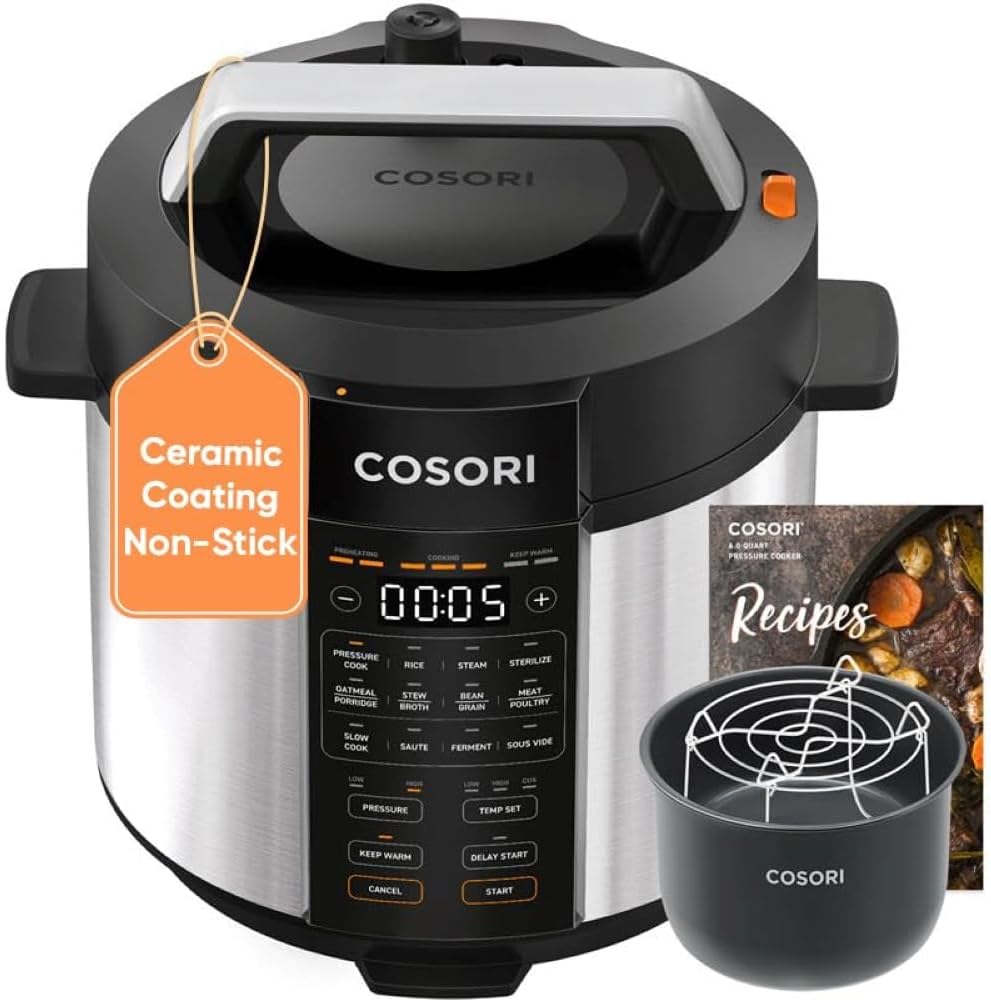
Cosori 9-in-1 Pressure Cooker, 6QT
If you only add one thing to your kitchen this year, this is the one worth the counter space. Nine functions — pressure cook, sauté, rice, steam, slow cook, sous vide, ferment, and a couple others — packed into one 6-quart unit with 13 presets and 12 safety features, including overheat protection.
The inner pot is ceramic-coated rather than stainless, which is worth knowing going in.
Best for: Anyone replacing three or four single-use appliances with one
Verdict: The strongest all-around pick on this list, and the rating backs it up.
Pros
- Genuinely replaces multiple appliances
- 13 presets take the guesswork out
- Dishwasher-safe lid and accessories
- 4.8-star rating across 7,300+ reviews
Cons
- Heavy at 11.9 lb
- Takes up real counter or storage space
- Ceramic coating needs some care to keep its nonstick surface
Best for Meal Prep

Mueller Home Ultimate 12-Blade Vegetable Chopper
This is the tool that turns “I don’t have time to cook” into a non-excuse. Twelve interchangeable blades handle chopping, slicing, dicing, grating, and spiralizing, and the whole thing packs into a 7-cup container with a safety blade lock.
Current star rating couldn’t be reliably confirmed from the live listing — check it on Amazon before treating it as a claim.
Best for: Meal-preppers doing a lot of onion, tomato, and vegetable prep in one sitting
Verdict: The most functional prep tool here for the price, once you’ve got room to store the accessories.
Pros
- Wide range of cuts in one tool
- Includes spiralizing
- BPA-free and PFAS-free components
- Dishwasher-safe parts
Cons
- More parts to store than a basic chopper
- Manual, so it still takes some effort
- Blades need careful handling
~$34.98–$39.99
View on Amazon
Best PFAS-Free Swap

VocVoi Tri-Ply Stainless Steel Cookware Set (10-Piece)
If you’re replacing a scratched or aging nonstick pan, this is where that budget should go. Ten pieces — two frying pans, two saucepans with lids, a sauté pan, and a casserole pot — all tri-ply stainless with no coating to chip, flake, or off-gas.
Best for: Anyone tossing a damaged nonstick set and wanting cookware that lasts decades, not years
Verdict: Solid, honest mid-range stainless set — not the flashiest, but it does the job.
Pros
- No coating to worry about long-term
- Works on induction and every other cooktop
- Oven and dishwasher safe
Cons
- Heavy — the full set runs close to 22 lb
- Stainless takes more technique for eggs and delicate foods than nonstick
- 4.3 rating is solid but not top-tier
~$149.99
View on Amazon
Best Everyday Prep Surface

Teak Cutting Board Set (4-Piece)
Four boards in different sizes, so you’re not using the same 17-inch board to slice a single lime. The teak construction is naturally more water-resistant than most cutting-board woods, and the non-slip feet actually keep it in place.
Best for: Anyone still using one overworked cutting board for everything
Verdict: An easy upgrade that solves a problem most people don’t realize they have.
Pros
- Right-sized board for every job
- Durable teak construction
- Built-in juice groove
- Strong 4.6-star rating
Cons
- Hand-wash only
- Four boards take more storage than one
- Needs occasional oiling to stay in good shape
Best Budget Pick

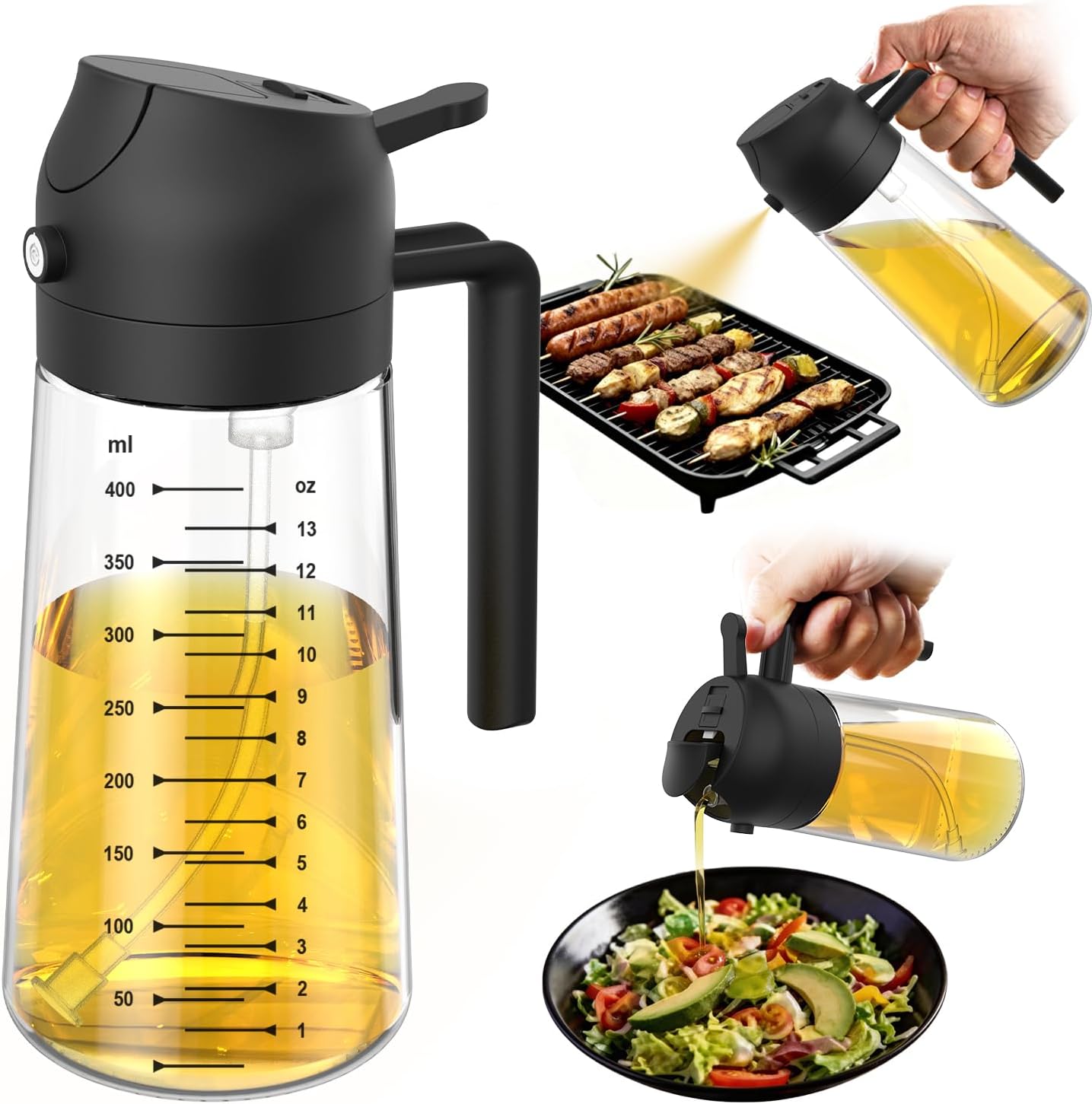
TrendPlain Glass Olive Oil Sprayer
This is the cheapest thing on this list and one of the most-used once it’s in rotation. It sprays for portion control on salads and air-fryer basics, or pours normally when a recipe calls for it — and the glass body means it doesn’t take on plastic taste over time.
Best for: Anyone trying to cut down on how much oil actually hits the pan
Verdict: Small purchase, genuinely useful — easy yes at this price.
Pros
- Very affordable
- Glass construction
- Works for cooking, salads, and BBQ
- Compact
Cons
- 16 oz runs out fast if you cook in bulk
- Manual sprayer, not automated
- Spray consistency depends somewhat on the oil
~$7.99–$8.99
View on Amazon
Best for Cookware Care

5-Piece Non-Scratch Pan Scraper Set
This one ties straight back to the toss-list — if you just invested in stainless or cast iron, this is what keeps you from scratching it back into “replace me” territory. Five different scraper shapes handle stuck-on food without metal scrubbers anywhere near your cookware.
Best for: Literally anyone who owns cast iron or stainless cookware
Verdict: Small, boring, and one of the best value-for-money picks on this whole list.
Pros
- Very affordable
- Protects cookware surfaces
- Safe on cast iron seasoning
- No batteries or setup
Cons
- Doesn’t handle deeply baked-on residue without soaking first
- Plastic wears down eventually
~$5.69
View on Amazon
Best Cleanup Shortcut

Air Fryer Parchment Liners, 125-Pack
If an air fryer is already part of your setup, this solves the part nobody enjoys — scrubbing grease out of the basket. Pre-cut, unbleached parchment squares sized for 5–8 quart baskets, rated to 428°F, and listed BPA- and PFAS-free.
Best for: Anyone who uses their air fryer often enough that cleanup has become a chore
Verdict: Not glamorous, but it’s the kind of $10 purchase that quietly saves you time every week.
Pros
- Makes cleanup nearly effortless
- Large 125-count pack
- Fits most 5–8 QT baskets
- Strong rating volume
Cons
- Disposable, so it’s ongoing waste
- Won’t fit every basket shape
- Stay within the 428°F limit
~$9.97–$9.99
View on Amazon
2026 Kitchen Trends Worth Knowing
A couple of things are shifting this year that are worth factoring into any kitchen refresh:
- AI-assisted cooking is moving mainstream. Countertop ovens that recognize food automatically and adjust cook settings are no longer a novelty — they’re becoming a normal mid-range purchase.
- Compact, multi-function tools are winning over single-purpose gadgets, largely because kitchen square footage isn’t growing but counter clutter has become a real pain point.
- PFAS-conscious cookware is going mainstream, not niche. Stainless and cast iron are showing up in more “starter kitchen” lists, not just specialty cookware guides.
Who Should Buy What?
- Small kitchens: Skip the full 10-piece cookware set and pick two or three pans, then lean on the olive oil sprayer and scraper set — they take up almost no space.
- Everyday cooks: The stainless steel set plus the pan scraper set covers you for years without much maintenance.
- Meal-preppers: The vegetable chopper and the pressure cooker together cut real time out of a weeknight.
- Air fryer households: The parchment liners alone are worth the ten dollars.
- Beginners replacing a scratched nonstick set: Start with the stainless steel set and keep one nonstick pan around for eggs while you get used to it.
- Budget-first shoppers: The oil sprayer, the scraper set, and the cutting boards give you the most improvement per dollar.
Buyer’s Guide: How to Choose What’s Actually Worth It
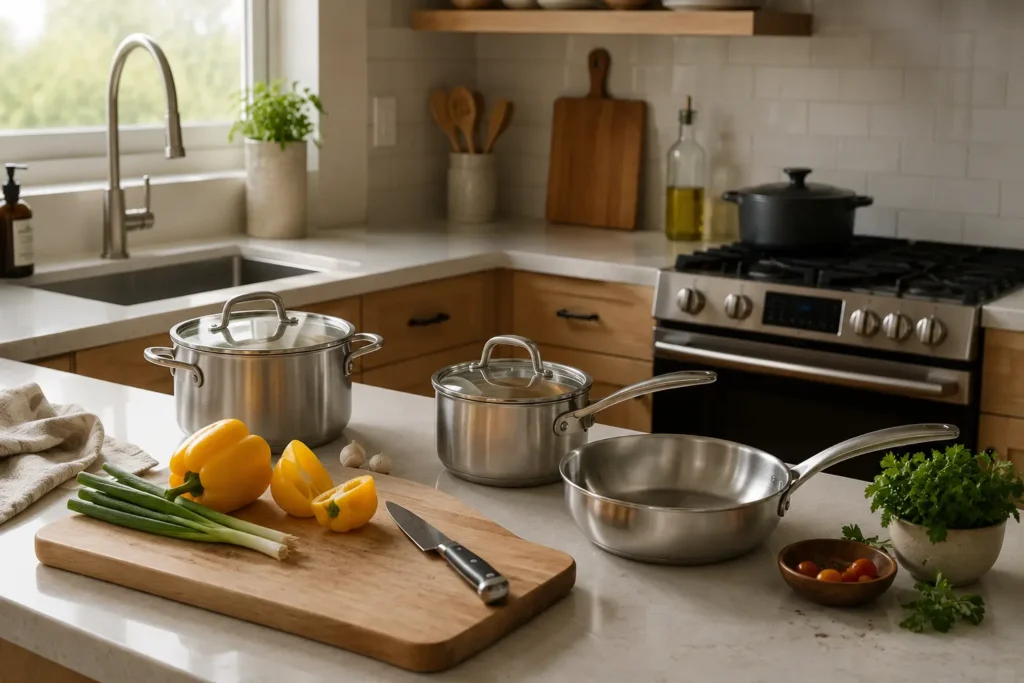
With so many “must-have” lists floating around, here’s how to filter what actually deserves your money:
- Ask what it replaces. The best kitchen products earn their space by replacing two or three single-purpose tools, not adding another one.
- Check the material, not just the price. A cheap nonstick pan you’ll replace in two years often costs more over time than one solid stainless or cast iron piece.
- Match it to how you actually cook — not how you imagine cooking on your most ambitious weekend.
- Look for app support you’ll actually use, not just a feature on the box.
Why trust this list? [TechNestDecor team] writes TechNest Decor’s home and kitchen coverage and updates this guide when FDA safety alerts, product availability, or pricing changes. Every product recommendation here is checked against its live Amazon listing for current price, rating, and review count before publishing — I don’t include a star rating unless it’s confirmed on the actual product page. Health and safety claims are sourced to the FDA and named cookware-testing experts (linked below), not paraphrased secondhand. Last verified: [August 13, 2026].
Quick answer: The kitchen products every home needs in 2026 are a digital scale, an instant-read thermometer, a sharp chef’s knife, PFAS-free cookware, and airtight pantry storage. Beyond that baseline, a multi-function pressure cooker earns its counter space by replacing several single-use gadgets at once. Any scratched or chipped nonstick pan should be replaced, and any unlabeled imported aluminum or brass cookware should be thrown away immediately — the FDA has documented lead-leaching risk in that specific category since August 2025.
Frequently Asked Questions
What must every kitchen have?
At minimum: a sharp chef’s knife, a reliable cutting board, a digital scale, an instant-read thermometer, and cookware free of damaged nonstick coatings. These five cover food prep, baking accuracy, and food safety without any specialty gadgets.
What common kitchen items should you throw away?
Scratched or chipped nonstick cookware, cracked mugs and glassware, warped pots and pans, and any unlabeled imported aluminum or brass cookware — the FDA has actively flagged several of these for lead contamination risk.
What kitchen item did a cardiologist urge people to throw away?
This claim circulates widely online, but a single named cardiologist behind it hasn’t been reliably verified. What is well-documented: cookware-testing experts, including Consumer Reports’ cookware lead, say that once a nonstick pan’s coating is chipped or scratched, it should be thrown away, since the coating can flake into food and PFAS-related compounds can release as fumes at high heat.
What are some basic kitchen products everyone needs?
A digital kitchen scale, a good chef’s knife, stainless steel or cast iron cookware, airtight pantry storage containers, and an instant-read thermometer form the essential starter kit for any kitchen.
What are the best kitchen products in 2026?
Multi-function pressure cookers, PFAS-free stainless steel cookware sets, and compact vegetable choppers rank among this year’s top picks for combining real usefulness with genuine counter-space efficiency.
What is the most used item in a kitchen?
For most households, that’s the chef’s knife — followed closely by the cutting board and whatever cookware handles daily meals, which is exactly why upgrading those pieces first makes the biggest everyday difference.
Is stainless steel better than nonstick?
It depends what you’re cooking. Stainless steel wins on durability — it has no coating to chip or degrade, so it can last decades with basic care. Nonstick still wins for eggs and delicate foods where sticking is the main problem. Most well-stocked kitchens end up with both, just used for different jobs.
How often should cookware be replaced?
Nonstick cookware typically needs replacing every two to three years, sooner if it’s scratched or chipped. Stainless steel and cast iron don’t have a real expiration date — with basic care, they can last decades, which is a big part of why they cost more upfront.
You May Also Like
| Best Kitchen Gadgets: The Only Guide You Actually Need | The gadget-focused companion to this list — smaller tools, same “no gimmicks” filter. |
| Smart Kitchen Appliances in 2026: What’s Actually Worth Buying | Where the pressure cooker pick above fits into the bigger smart-appliance picture. |
| Kitchen Ceiling Lighting Ideas (2026): Buying Guide | For anyone tackling the kitchen room by room, not just the counters. |
| 8 Genius Robot Vacuum Mop Combos Worth Buying in 2026 | Same “replace five gadgets with one” logic, applied to floors instead of counters. |
Bringing It All Together
Here’s what I took away from going through this myself: a genuinely great kitchen isn’t the one with the most gadgets — it’s the one where everything on the counter is either something you use weekly or something that’s quietly protecting your health. Start with the toss list. Replace the one pan or tool you use most. Then build outward from there.
If you’re already thinking about how your kitchen fits into a bigger connected home setup, our Smart Home Ecosystem guide is the natural next stop — and if you’re brightening up your prep space, don’t skip the under-cabinet lighting roundup next.
What’s the first thing you’re replacing in your kitchen this year? Drop it in the comments — I’d love to hear what’s on everyone’s list.
Leave a Reply