Make Your Home Smarter, One Step at a Time

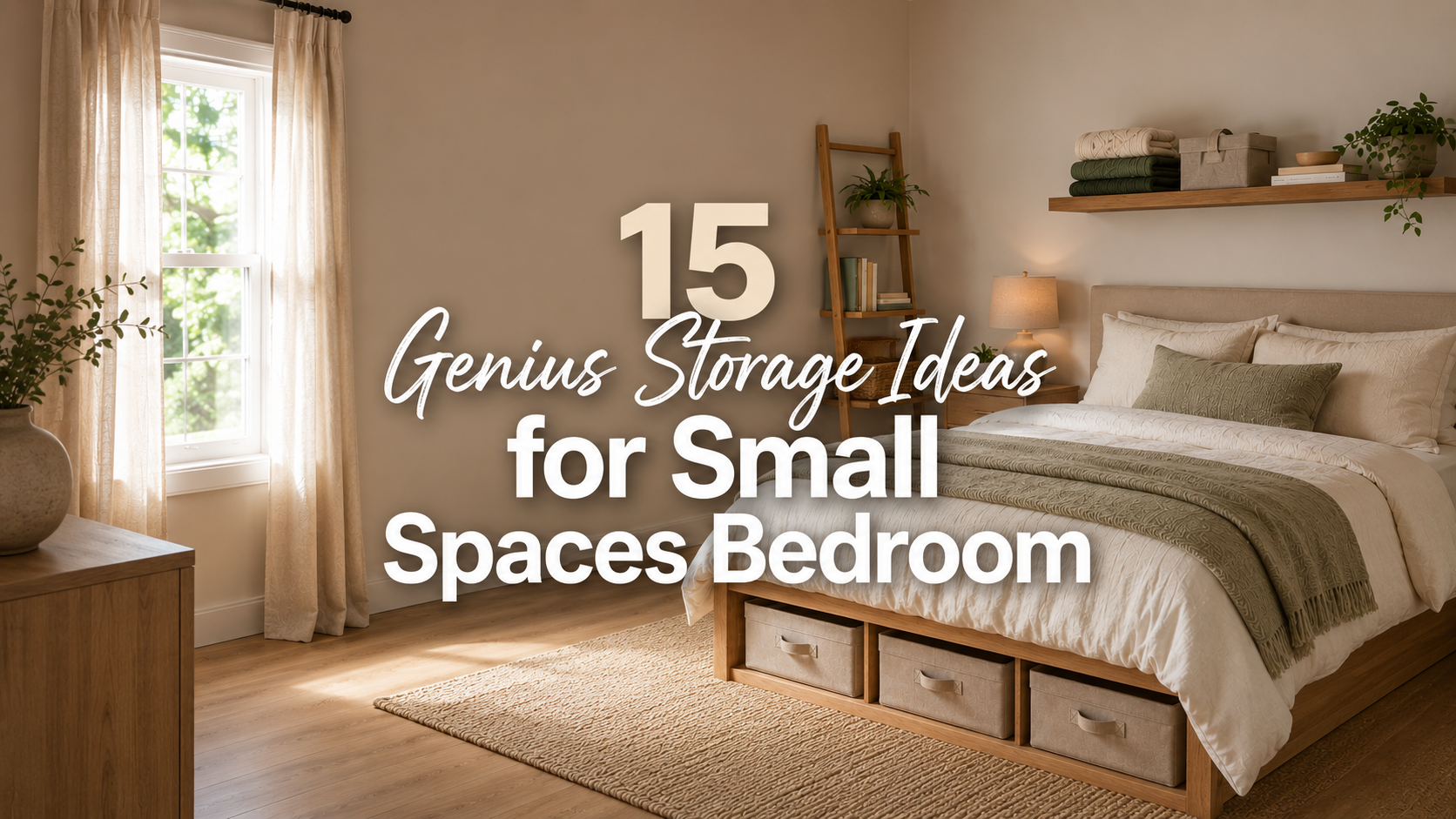
Table of Contents
I’ll be honest with you: the first time I tried to “maximize storage” in a tiny bedroom, I bought three of those stackable cube organizers, shoved them in a corner, and called it a day. Six months later, that corner was a black hole where socks went to disappear and nothing else fit. It looked worse than before I started.
Here’s the thing about small bedrooms — they don’t need more stuff to hold your stuff. They need a system. And once you understand the handful of principles that actually move the needle (instead of just buying organizers and hoping), a cramped bedroom can feel surprisingly open, calm, and functional.
This guide walks through everything you actually need to know about storage ideas for small spaces bedroom layouts: how to create storage where there is none, what to do with those awkward empty corners, how to squeeze more capacity out of a tight footprint, and how to organize when you feel like you have zero storage to work with. Let’s get into it.
Settings saved.
Key Takeaways
- Vertical space is almost always underused — walls and the area above furniture hold more than you think
- The 60/30/10 rule (and similar ratios) gives you a simple framework for balancing furniture, open space, and accent storage
- Dead space — under the bed, behind doors, above closets — is usually your biggest untapped resource
- Decluttering before organizing is non-negotiable; no amount of bins fixes too much stuff
- Multi-functional furniture (storage beds, ottomans, daybeds) solves two problems with one purchase
- If you’re looking for broader ideas to style and organize your small bedroom beyond just storage, check out our full guide on small bedroom style ideas for more inspiration on making the most of a tight space.
How to Create Storage in a Very Small Bedroom
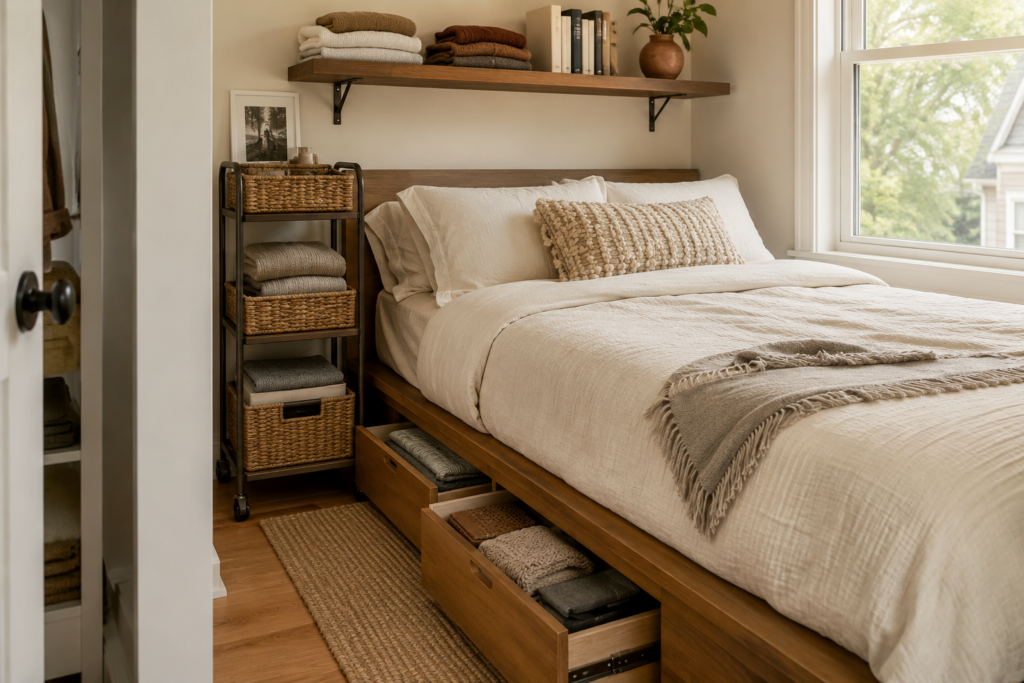
When people say “small bedroom,” they usually mean a room where the floor space is already spoken for — bed, maybe a dresser, and not much else fits. The mistake most of us make is assuming storage has to live on the floor. It doesn’t.
Look up first. Wall space is the most overlooked real estate in any small bedroom. Floating shelves above the headboard, a wall-mounted desk that folds away, pegboards for accessories — none of this competes with your floor plan. I’ve seen rooms transform just by adding two or three shelves at eye level and above; suddenly there’s a place for books, folded sweaters, and decorative boxes that used to live in a pile on the floor.
Use dead space deliberately. This comes up again and again in searches about small bedrooms, and for good reason — it’s the single highest-impact fix. Dead space includes:
- Under the bed (bins, drawers, or a bed frame with built-in storage)
- Behind the door (an over-door organizer or hooks)
- Above the closet (stackable bins for off-season items)
- The gap between furniture and the wall (slim rolling carts fit here perfectly)
If you’re wondering what can replace a dresser entirely, you have more options than you’d think. A storage ottoman at the foot of the bed, a tall narrow bookshelf with baskets instead of drawers, or even a closet system with built-in shelving can do everything a dresser does — often in a smaller footprint.
Avoid what makes a room look tacky. This is worth addressing directly, because it’s easy to overcorrect. A tacky small bedroom usually has one of three problems: too many clashing storage materials (wicker baskets next to plastic bins next to metal shelving), storage that’s visibly overflowing, or furniture that’s too large for the room and makes everything else look squeezed. The fix isn’t more storage — it’s more cohesive storage. Pick one or two materials and stick with them throughout the room.
To genuinely maximize storage in a tiny bedroom, combine vertical solutions with under-utilized furniture. A captain’s bed (built-in drawers under the mattress) plus wall shelving plus an over-door organizer can often replace an entire dresser and a closet’s worth of bins.
For more decor and lighting inspiration to carry this same approach throughout your home, browse our Decor & Lighting section for additional ideas.
What to Put in a Small Empty Space in a Bedroom
Every small bedroom has at least one weird leftover pocket of space — that sliver between the closet and the wall, the corner that’s too narrow for furniture, the gap beside the bed. What you put there depends on how you think about proportion, and this is where a couple of well-known design rules genuinely help.
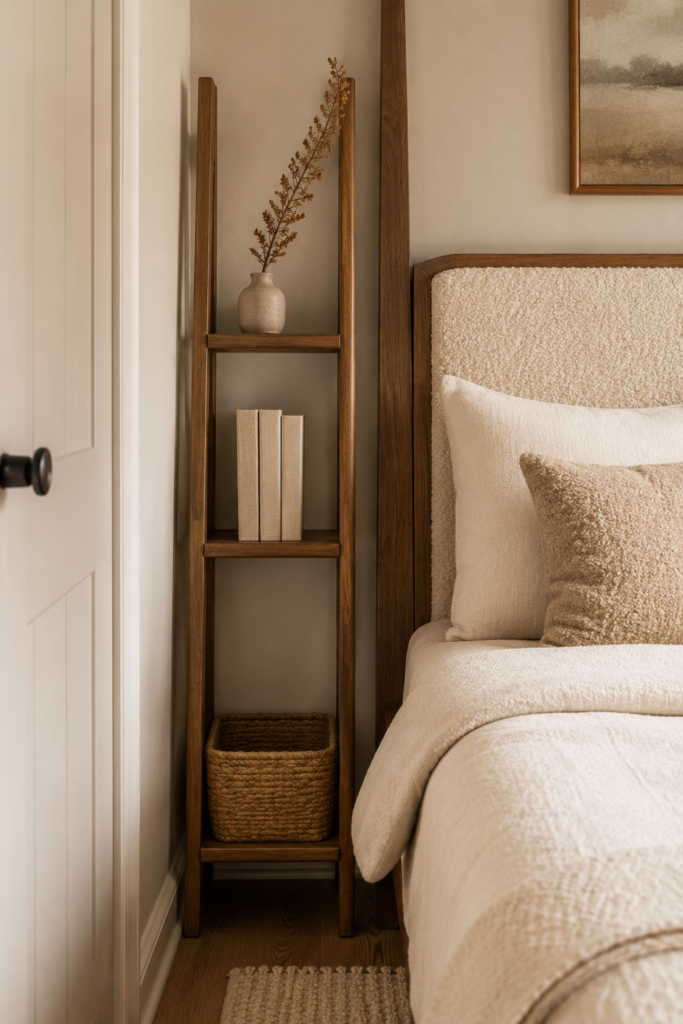
The 60/30/10 rule is a color and balance principle, but it applies just as well to storage. The idea: 60% of the room should feel like “primary” function (your bed, main storage), 30% should be secondary support pieces (a nightstand, a slim shelf), and 10% should be accent — a decorative basket, a plant, something visually light. Applying this to an empty corner means resisting the urge to cram a big piece of furniture in; instead, add something in proportion to the space, like a narrow ladder shelf or a single accent chair with a basket underneath.
If you’ve come across the 3-5-7 rule in decorating, it’s a styling guideline for grouping objects — typically used for shelves or vignettes — where odd numbers and varied heights (3, 5, or 7 items grouped together) look more intentional than even, uniform arrangements. For a small empty space, this means a single shelf with three thoughtfully chosen items (a stack of books, a small plant, a woven basket) looks far more finished than a row of identical bins.
For genuinely cozy small-bedroom ideas in that empty pocket, consider:
- A floor lamp with a small attached shelf for nighttime reading
- A slim bench with storage underneath, doubling as a seat
- A wall-mounted jewelry or accessory organizer
- A vertical garden or small plant shelf, if the space gets light
And if you’re chasing the latest trend in bedroom design, it’s worth knowing that the current direction is away from matchy-matchy furniture sets and toward curated, mixed pieces — vintage finds next to modern shelving, warm wood tones, and “quiet luxury” textures like linen and boucle. Functionally, this trend favors exactly the kind of flexible, mixed storage we’re talking about here, rather than one bulky matching bedroom set.
How to Increase Storage Space in a Small Room
Once the obvious spots are handled, increasing storage further is about creating illusions as much as it is about adding physical capacity.
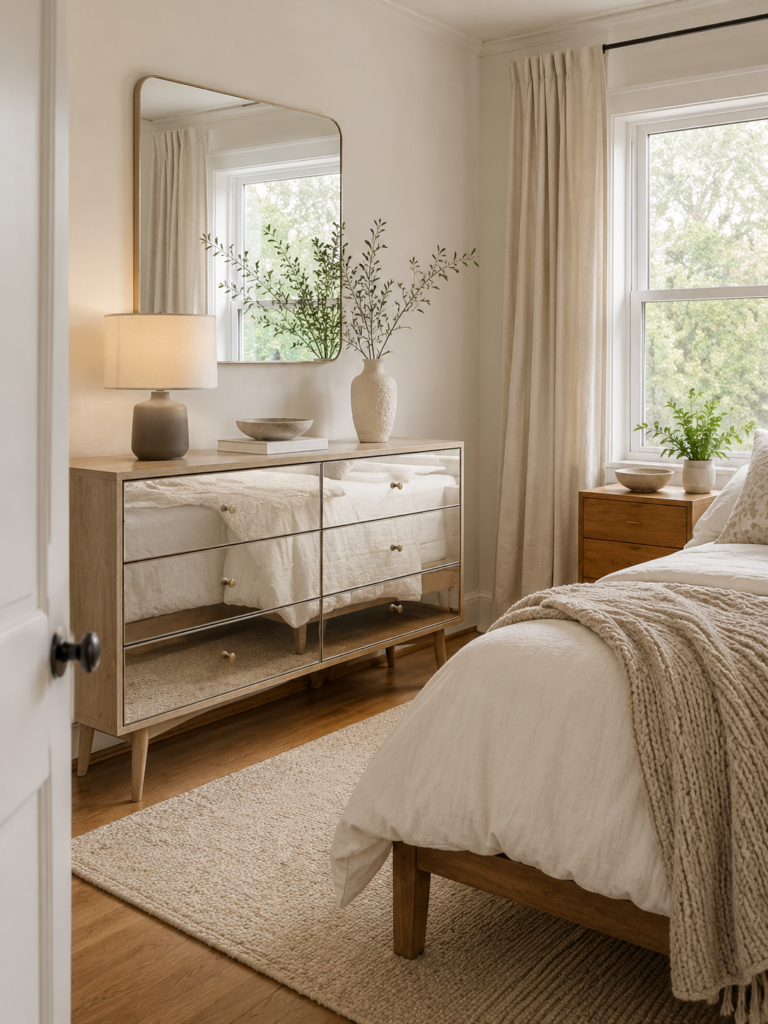
Create the illusion of space. Mirrors are the classic trick, but it goes beyond that — keeping storage at varying heights rather than one solid wall of furniture, choosing storage pieces with legs (so you can see floor beneath them) instead of furniture that sits flush to the ground, and sticking to a light, consistent color palette all make a room read as larger, even when the actual storage capacity has increased.
If you’ve outgrown your current storage and you’re tempted by an off-site storage unit, there’s a cheaper alternative worth considering first: a storage bed (with drawers or a lift-up base), a wardrobe organizer that doubles your closet’s hanging capacity using vertical dividers, or vacuum-sealed bags for off-season clothing and linens tucked under furniture. These solutions cost a fraction of a monthly storage unit rental and keep your belongings accessible.
For things that genuinely don’t have a designated place — odd cables, seasonal decor, sentimental items you’re not ready to part with — a labeled “miscellaneous” bin is a legitimate strategy, not a cop-out, as long as you commit to sorting through it every few months. The goal isn’t perfection; it’s knowing where to look.
The same small-space logic applies to other tight rooms in your home — if your laundry room feels just as cramped, our laundry room decorating guide covers similar space-saving tricks you can borrow.
How to Organize a Small Bedroom With No Storage
This is the toughest scenario, and also the most common search around this topic — a bedroom where there’s genuinely no built-in storage to work with. The good news: this is solvable, but it starts with decluttering before you buy a single organizer.
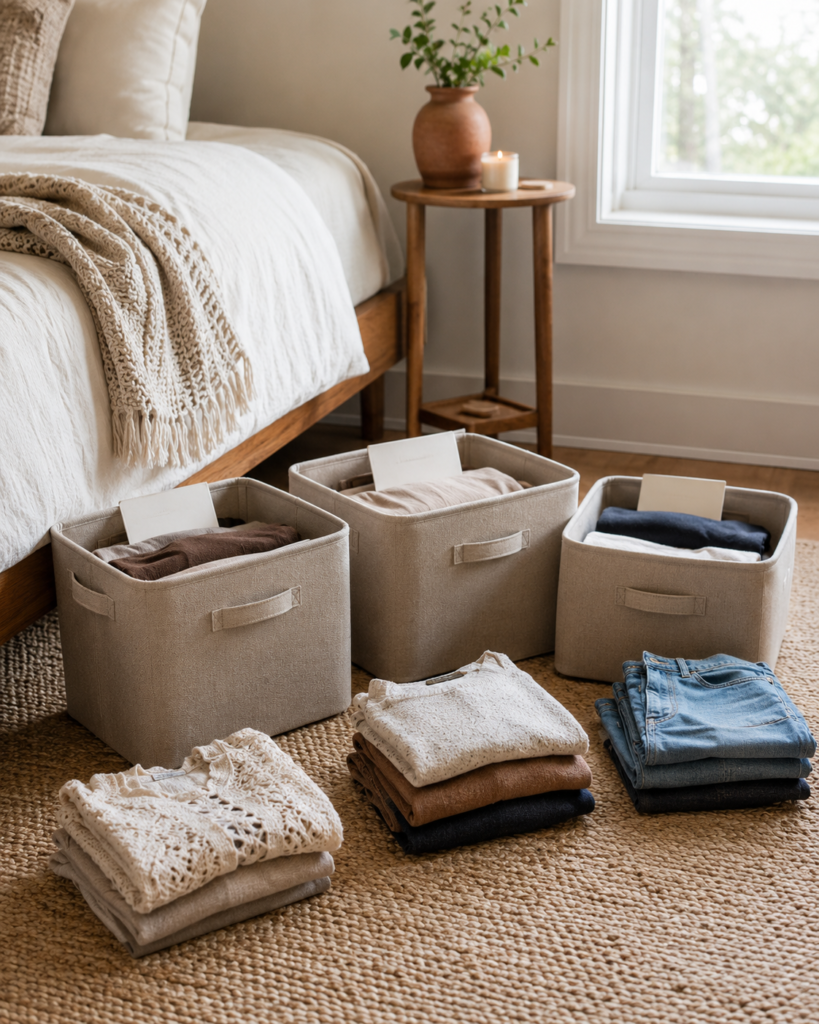
The 5-5-5 rule for decluttering is a simple, low-pressure method: pick five items to throw away, five to donate, and five to put away properly, then repeat the cycle. It works because it’s small enough to not feel overwhelming, but consistent enough to make real progress over a week or two.
When deciding what to remove first, professional organizers generally agree on a hierarchy: trash and obvious duplicates first, then anything you haven’t touched in a year, then anything that no longer fits your life (clothes that don’t fit, gifts you never use), and finally — the hardest category — sentimental items, which deserve a slower, separate decision process rather than getting lumped in with everything else.
Speaking of hard categories: the hardest things to get rid of when decluttering are almost always sentimental items, “aspirational” purchases (the workout equipment, the craft supplies for a hobby you haven’t started), and anything that still has the tags on. If you’re stuck on any of these, a useful trick is the “one year, unused” rule — if it’s been sitting for a full year without use, it’s very unlikely to suddenly become essential.
Minimalists who maintain genuinely clutter-free spaces tend to do a handful of small habits daily rather than one big declutter session: putting things back immediately after use, doing a one-minute surface reset before bed, recycling mail and packaging the same day it arrives, and asking “would I buy this again” before letting anything new stay. None of this requires furniture — it’s purely behavioral, which makes it the cheapest storage solution there is.
Once the clutter is reduced, organizing a no-storage bedroom comes down to the same dead-space principles from earlier: under the bed, behind the door, vertical wall shelving, and one or two flexible pieces like a storage ottoman. The difference is sequencing — declutter first, organize second. Skipping straight to bins and baskets without decluttering first is exactly how I ended up with that black-hole corner I mentioned earlier.
Frequently Asked Questions
What are the best storage ideas for small spaces bedroom layouts?
The best approach combines three things: vertical storage (wall shelves, over-door organizers), dead-space storage (under the bed, above the closet), and multi-functional furniture like storage ottomans or beds with built-in drawers. A slim rolling cart with bins is a great starter piece — you can check the current price on Amazon for options under $40 that slide neatly between a bed and wall.
How do I maximize storage in a small bedroom without making it feel cramped?
Keep storage at varying heights instead of one solid wall of furniture, choose pieces with visible legs so floor space still shows, and stick to a light, consistent color palette. Vacuum-sealed storage bags are especially useful here, since they shrink bulky items like comforters down to a fraction of their size — you can check the current price on Amazon for multi-packs that work well under a bed frame.
How can I create storage in a bedroom with no closet?
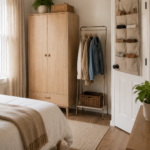
Start with a freestanding wardrobe or armoire, which essentially replicates closet function without renovation. Pair it with an over-door shoe organizer for accessories and a slim garment rack for frequently worn items. A canvas wardrobe with shelving is a budget-friendly stand-in — you can check the current price on Amazon for compact models designed for small footprints.
What is the cheapest way to add storage to a small bedroom?
Behavioral changes cost nothing — daily decluttering habits and the 5-5-5 rule reduce what you need to store in the first place. After that, the cheapest physical additions are repurposed items: shoe boxes as drawer dividers, tension rods as makeshift shelf dividers, and command hooks for hanging storage. For a low-cost upgrade, stackable fabric bins are inexpensive and versatile — you can check the current price on Amazon for sets under $25.
Is under-the-bed storage actually effective for small bedrooms?
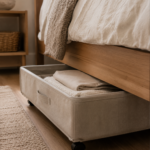
Yes — it’s one of the highest-impact storage zones in any small bedroom because it’s space that’s otherwise completely wasted. Flat under-bed bins work well for clothing and linens, while rolling drawers suit heavier or frequently accessed items. Just measure your bed’s clearance first, since gaps vary widely. Low-profile rolling bins are a reliable fit for most bed frames — you can check the current price on Amazon before buying.
Can storage furniture make a small bedroom look bigger?
Yes, when chosen carefully. Furniture with legs (rather than pieces that sit flush on the floor) lets light pass underneath and visually opens the room. Mirrored storage fronts and light wood tones also help. A storage ottoman with a mirrored or light-toned finish does double duty as seating and visual space-expander — you can check the current price on Amazon for options sized for tight rooms.
How do I organize a small bedroom with too much stuff and limited storage?
Declutter before organizing — no storage system fixes too much stuff. Use the 5-5-5 rule (five items to trash, five to donate, five to properly store) repeated over several sessions. Once volume is reduced, prioritize vertical wall storage and under-bed bins. A clear stackable bin system makes the remaining items easy to see and access — you can check the current price on Amazon for sets designed to fit under standard bed frames.
What should I do if my small bedroom has an awkward, narrow gap I can’t fill with normal furniture?
Narrow gaps (between a closet and wall, or beside a bed) are ideal for slim rolling carts, ladder shelves, or a single tall narrow bookshelf — all designed specifically for tight widths that standard furniture won’t fit. Measure the gap precisely before buying, since even an inch matters. A narrow rolling utility cart is a popular fix for these spots — you can check the current price on Amazon for models as slim as 6 inches wide.
Our Top Picks: Best Storage Products for Small Bedrooms
1. Under-the-Bed Rolling Bins
Our Pick: Low-Profile Rolling Storage Bins
If you’re only going to buy one storage product from this guide, make it this one. Under-bed space is the single most wasted square footage in any small bedroom, and a good rolling bin turns it into fully usable storage in under five minutes — no tools, no assembly headaches. We like models with smooth-rolling wheels and a clear or semi-clear lid so you can actually see what’s inside without digging. Just measure your bed’s clearance before ordering, since gaps vary by a few inches between frames. Check the current price on Amazon →
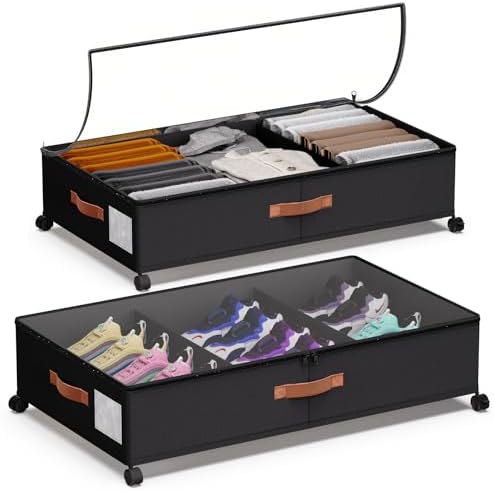
- [Large Capacity] – For Dorm, Apartment & Home Need more space? This under-bed storage fits perfectly under beds with 7-8…
- [Customizable Dividers] – Shoes, Clothes, Toys, All Neatly Separated Tired of digging through a messy bin? Use the adjus…
- [Heavy-Duty Metal Frame] – Holds 66LBS Without Sagging Worried about cheap bins collapsing? The thick 600D Oxford fabric…
2. Vacuum-Sealed Storage Bags
Our Pick: Vacuum-Sealed Storage Bag Multi-Pack
This is the cheapest, fastest space-win in the entire guide. A comforter that takes up half a closet shelf shrinks down to the size of a throw pillow once the air is out — and a multi-pack means you can do your whole off-season wardrobe in one afternoon. They’re especially good paired with under-bed bins, since flattened bags slide into tight clearances that bulky bins can’t. If you’ve got more stuff than space, start here before buying anything else. Check the current price on Amazon →

- 5-pack of Large size vacuum storage compression bags for storing off-season clothes, towels, linens, and more
- Vacuum seal bags save space by effectively compressing bulky textiles down 80% for compact, stackable storage under beds…
- Heavy-duty double-zip seals and triple-seal turbo valve for lasting airtight protection; follow instructions printed on …
$10.49
3. Storage Bed Frame (Captain’s Bed)
Our Pick: Storage Bed Frame with Built-In Drawers
If you’re furnishing a small bedroom from scratch, this is the one purchase that replaces a dresser entirely. A captain’s-style bed frame with built-in drawers turns dead space under the mattress into your main clothing storage, freeing up an entire wall for a desk, shelving, or just breathing room. It’s a bigger investment than the other picks here, but it solves the storage problem at the furniture level instead of patching it with bins — which is exactly the “system, not stuff” approach this whole guide is built around. Check the current price on Amazon →

- Handy Charging Station: This TIGUBFRE bed frame with headboard features 2 standard outlets, 2 USB ports and 1 Type-C por…
- Amazing LED Lighting Features: My wife and daughter like its style, particularly the LED lights that create a cozy atmos…
- Tons of Storage Space: I appreciate the storage space provided by 4 great-sized drawers underneath. This velvet bed fram…
$114.99
This post contains affiliate links. As an Amazon Associate, we earn from qualifying purchases
Putting It All Together
If there’s one thing I want you to take from this, it’s that small-bedroom storage isn’t really about buying more containers. It’s about three things, in order: decluttering what you don’t need, claiming vertical and dead space you’re not using, and choosing furniture that does double duty. Do those three things, in that order, and you’ll get more out of a small bedroom than any amount of stacked plastic bins ever could.
Start small. Pick one corner, one rule (5-5-5 is the easiest entry point), and one piece of dead space this week. You don’t need to redesign the whole room on Saturday — you just need to start, and the rest tends to follow.
What’s the trickiest spot in your bedroom right now — the awkward corner, the no-storage closet, or just too much stuff and nowhere to put it? Drop a comment and let’s troubleshoot it together; chances are someone else reading this has the exact same layout problem.
And if you want to keep the momentum going beyond your bedroom, take a look at our small bedroom styling guide for more practical, real-world ideas.